Moldova is the least-visited country in Europe and, for that reason alone, one of the more interesting ones to travel through. Landlocked between Romania and Ukraine, it sits at the eastern fringe of the Balkans, not Balkan in the strict geographic sense but close enough in culture, cuisine, and traveller routes to warrant a place in any serious Balkans-adjacent itinerary. The country produces some of the most underrated wine in Europe, has a capital that rewards curiosity, and contains one of the world’s stranger political anomalies in Transnistria.
Why Visit Moldova
The honest case for Moldova is not the sights. It does not have the obvious landmarks of its neighbours, but the experience of somewhere that has fallen off the European tourism map entirely is reason enough for many travellers. Chisinau is a post-Soviet capital that wears its history openly: Stalinist architecture alongside neoclassical churches, wide Soviet boulevards, and a genuine café culture that emerged from nowhere in the 2010s. The countryside is rolling and green, covered in vineyards, sunflower fields, and the kind of villages that have changed little in decades.
Moldova is also dramatically cheap. It is consistently the poorest country in Europe by GDP per capita, and that translates directly into travel costs that are lower than anywhere else covered in this guide, including Kosovo and Albania.
Chisinau
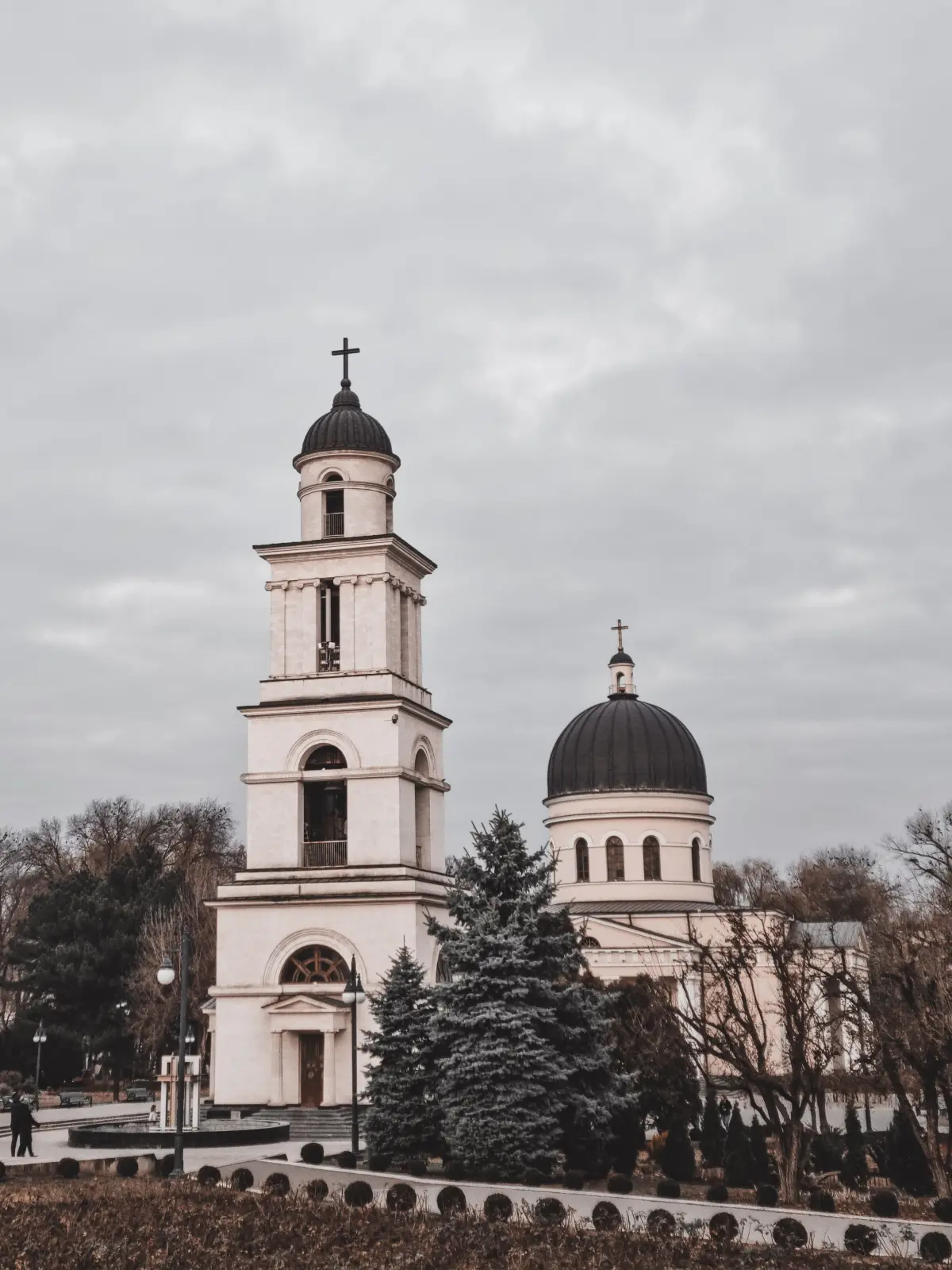
The capital is the starting point for almost all visitors and the most accessible side of the country. The city centre is walkable and built around a grid of tree-lined Soviet-era boulevards, softened by Cathedral Park (the green heart of the city), where the Cathedral of Christ’s Nativity and the Triumphal Arch form a surprisingly photogenic ensemble.
Key points of interest:
National Museum of History of Moldova: the best single introduction to the country’s layered past: Dacian, Roman, medieval Moldavian, Ottoman, Russian, Romanian, Soviet. Covers the period from prehistoric times through independence in 1991. Entry approximately 30 MDL (approximately €1.50).
Pushkin Museum: the house where Alexander Pushkin lived during his 1820-1823 exile from Saint Petersburg. A small, well-maintained museum in a city that takes its literary heritage seriously. Entry approximately 30-40 MDL.
National Wine Cellar (Cricova): technically 15km outside the city, but reachable by taxi in around 20 minutes (approximately 60-80 MDL each way). Cricova is a 120km network of underground wine tunnels carved into limestone, housing over 1.2 million bottles. Guided tours with tastings run approximately €15-30 per person depending on the tasting package; bookings recommended in advance.
A good restaurant meal in central Chisinau costs approximately €6-10 per person including wine. A coffee at a central café runs 25-35 MDL (approximately €1.25-1.75). A mid-range hotel near the centre charges approximately €40-65 per night for a double room.
Wine Country
Moldova is one of the largest wine producers in the world relative to its size and has been producing wine for over 5,000 years. The main wine regions are in the centre and south of the country: Codru (around the capital), Valul lui Traian (south), and Stefan Voda (southeast, near the Ukrainian border).
The largest and most visited cellars are Cricova and Milestii Mici. Milestii Mici holds a Guinness World Record for the largest wine collection in the world, with over 2 million bottles in 55km of underground galleries. Guided tours run approximately €12-25 per person with tastings.
For independent exploration, the road through the Codru region south of Chisinau passes through rolling vine-covered hills with small family wineries that welcome visitors, often with no advance booking needed.
Transnistria
Transnistria (officially the Pridnestrovian Moldavian Republic) is an unrecognised breakaway state along Moldova’s eastern border with Ukraine. It has operated as a de facto independent territory since 1992, when a brief armed conflict followed the Soviet collapse. No UN member state recognises it.
As a travel experience, Transnistria is extraordinary: a Soviet time capsule where Lenin statues still stand in the main squares, the currency (Transnistrian ruble) exists nowhere else on earth, and the atmosphere combines genuine hospitality with visible military presence. The capital Tiraspol is the main destination: its main boulevard, 25 October Street, contains enough Soviet-era architecture and statues for several hours of walking.
Crossing into Transnistria from Moldova is generally straightforward for Western passport holders. You register at the border, receive a migration card that you must retain, and are expected to depart within 24-48 hours (extendable). Do not attempt to enter Ukraine via the Transnistrian side; this crossing is not open to foreign nationals. The Transnistrian ruble cannot be exchanged outside the territory; bring Russian rubles or USD as backup currency, as these are accepted alongside the local currency.
From Chisinau, marshrutka (shared minibus) services to Tiraspol run every 30-45 minutes from the central bus station; the journey takes approximately 1.5 hours and costs around 50-60 MDL (approximately €2.50).
Getting to Moldova
Moldova is most naturally reached from Romania to the west or, for travellers already in the Balkans, as an add-on after visiting Bulgaria, Romania, or Ukraine.
From Bucharest, Romania: The journey by overnight train takes approximately 12-14 hours, or a daytime train around 10-12 hours. Bus services (Flixbus and regional operators) cover the route in approximately 8-10 hours; fares from €12-25. Flying from Bucharest to Chisinau takes 45 minutes; budget carrier prices can be competitive with bus fares when booked early.
From Iasi, Romania: The closest major Romanian city to Chisinau, Iasi is approximately 2 hours from Chisinau by bus or shared taxi (around €10-15). This is the most practical overland entry point for anyone approaching from central Romania or from the northern Balkans.
From Odesa, Ukraine: Chisinau is approximately 3 hours from Odesa by bus under normal conditions. As of 2026, the security situation in Ukraine should be checked carefully before planning this route; check current UK Foreign Office, US State Department, or your own government’s travel advice before travelling.
From Sofia or Bucharest: A practical routing is Sofia-Bucharest by bus or train (approximately 9-10 hours), then Bucharest to Chisinau. This extends a Balkans trip eastward with Romania as a natural midpoint.
How Much Does Moldova Cost?
Moldova is the cheapest travel destination in this guide.
Budget traveller (hostel or cheap guesthouse, local food): €15-25 per day Mid-range (mid-range hotel, restaurant meals): €35-55 per day Comfortable: €55-80 per day
The Moldovan leu (MDL) is the currency. As of 2026, approximately 18-20 MDL equals €1. ATMs are widely available in Chisinau; smaller towns may have limited ATM coverage. Card payments are accepted in most central Chisinau hotels and restaurants but not reliably in markets or smaller establishments outside the capital.
Practical Information
Visa: Moldova is not in the Schengen Area. EU, UK, US, Canadian, and Australian passport holders enter visa-free for up to 90 days. Time in Moldova does not count against the Schengen allowance. Check current entry requirements for your specific nationality before travelling, as Moldova has adjusted its visa regime several times in recent years.
Language: Romanian is the official language (referred to officially as Moldovan, though linguistically identical). Russian is widely spoken as a first or second language, particularly among older residents and in the east. English is spoken among younger Moldovans in Chisinau and in the hospitality sector, but less reliably in smaller towns and villages.
Currency: Moldovan leu (MDL). Euros and USD are not accepted in ordinary transactions (unlike Kosovo, which uses the euro). Exchange counters are plentiful in Chisinau. Avoid exchanging currency at the airport if possible.
Safety: Chisinau is safe for travellers. Street crime is not a significant concern in the city centre. Transnistria is also safe for day visitors; follow standard guidelines for countries with military presences: do not photograph military installations or personnel without explicit permission.
When to visit: May through September is the most comfortable period. July and August can be hot (above 35C), but the wine harvest in September and October is a good reason to visit in autumn, as many wineries offer harvest experiences. Winter is cold and grey, but accommodation prices are low and Chisinau’s café culture is most active in the colder months.
What Moldova Is Not
Moldova does not have the coastline, the medieval fortresses, or the dramatic mountain scenery of other Balkans destinations. It is not a place for beach holidays or multi-day hiking itineraries. It rewards travellers who are interested in post-Soviet history, wine, or simply the experience of a country that the mainstream Europe travel circuit has largely overlooked.
It works best as a 2-4 day add-on to a Romania, Bulgaria, or Ukraine trip rather than a standalone destination. Combined with Bucharest and possibly Iasi (Romania’s second city and one of the most underrated cities in eastern Europe), Moldova makes a compelling eastern extension of a Balkans itinerary for travellers who have already covered the main circuit and want to go further.
Browse tours and activities in Moldova to book wine tours, Transnistria day trips, and guided city walks in Chisinau.