Greece sits at the southern edge of the Balkan peninsula and functions as a natural complement to any trip through Albania, North Macedonia, or Bulgaria. It is one of the most visited countries in the world — and for good reason. Ancient ruins, Aegean and Ionian islands, outstanding food, and a coastline that stretches for thousands of kilometres make it genuinely hard to leave disappointed. From a Balkans travel perspective, the question is less whether to add Greece to a trip and more how to slot it in.
Why Greece Works Well with a Balkans Trip
Albania and Greece share the Ionian coast. Saranda, Albania’s southernmost resort town, sits directly across the water from Corfu. The ferry crossing takes 35 minutes. That single detail makes Greece almost frictionless to reach for anyone travelling through southern Albania — and it turns what would otherwise be two separate trips into one coherent itinerary.
Travellers moving through the western Balkans — Albania, Kosovo, North Macedonia — often find Thessaloniki a natural exit point northward or a gateway into Greece from the Albanian or Macedonian side. From Tirana, the overland bus journey to Thessaloniki runs approximately 7–9 hours, operating via Ohrid and the Florina border crossing. From Skopje, the journey is around 3 hours by bus.
Combining the two regions creates a useful contrast. Albania offers rough edges, striking natural scenery, and some of the cheapest travel costs in Europe. Greece offers world-class archaeological sites, island hopping, and a food culture refined over millennia. The budget gap between them is significant — daily costs in Greece typically run 50–70% higher than equivalent choices in Albania — but that gap is manageable if you plan ahead. For a detailed side-by-side, see our Albania vs Greece comparison.
The Two Main Entry Points from Albania
Saranda to Corfu: The Island Gateway
The Saranda–Corfu ferry is the fastest and most popular crossing. Operators including Ionian Seaways and Finikas Lines run year-round, with additional summer sailings. The crossing costs approximately €15–22 one way depending on season and operator. Corfu Town (Kerkyra) is the arrival point — a UNESCO-listed Venetian old town that warrants at least a day of walking before moving further into Greece.
From Corfu, ferries continue to Igoumenitsa on the Greek mainland, and from there buses connect to Ioannina, Athens, and Thessaloniki. The Corfu–Igoumenitsa ferry runs throughout the day and takes around 1.5 hours. Ioannina itself — a lake city with a well-preserved old bazaar and a castle island — is undervisited by international travellers and worth an overnight stop.
Tirana or Skopje to Thessaloniki: The Overland Route
For travellers moving through the Balkans overland, Thessaloniki is the natural Greek anchor. It is Greece’s second-largest city, widely considered to have better food than Athens, and sits within easy reach of both the country’s northern border crossings and of ancient Macedonian sites including Vergina (royal tombs of Philip II, father of Alexander the Great) and Pella (Alexander’s birthplace).
Several bus operators run the Tirana–Thessaloniki route, departing Tirana International Bus Station. Return fares typically run €25–40. Air Albania and other carriers fly the route in approximately one hour; flights booked in advance can undercut the bus on price.
For a full breakdown of how the two cities compare — cost of living, food scene, nightlife, accessibility — see Tirana vs Thessaloniki.
Thessaloniki: Greece’s Second City
Thessaloniki punches well above its weight as a travel destination. Founded by Cassander in 315 BC and named after Alexander the Great’s half-sister, it has accumulated layers of history — Roman, Byzantine, Ottoman, Sephardic Jewish — that give it a richer texture than many more-visited Greek cities.
Key highlights:
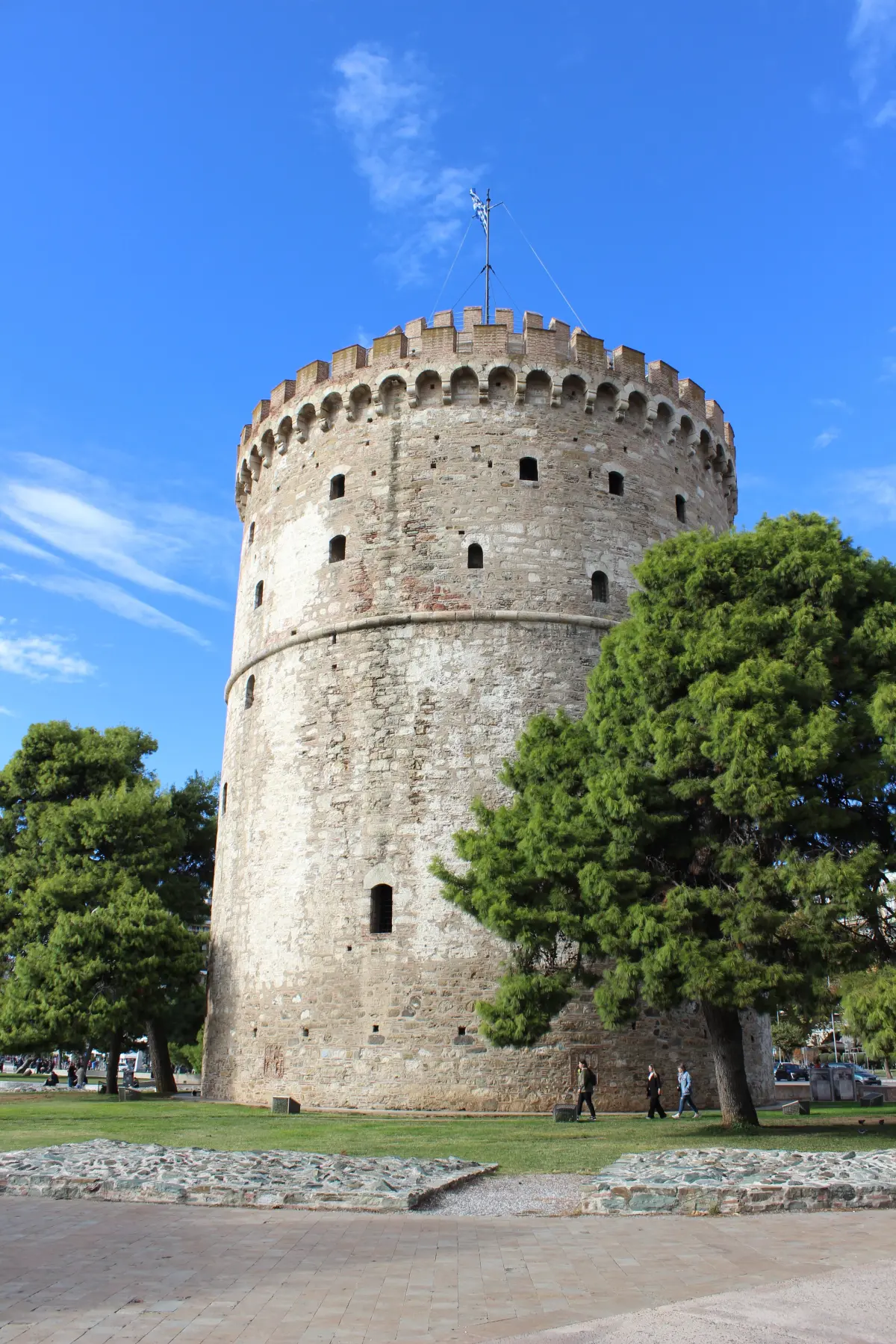
- The White Tower — the city’s symbol, a 15th-century Ottoman fortification on the waterfront. Entry approximately €4; the view from the top over the Gulf of Thessaloniki is worth the climb.
- Ano Poli (Upper Town) — the old Byzantine quarter with surviving city walls, small churches, and some of the best neighbourhood tavernas in the city. A plate of grilled octopus at a waterfront meze restaurant runs approximately €12–16.
- Rotunda — a Roman mausoleum built for Emperor Galerius around 300 AD, later converted to a Byzantine church and then an Ottoman mosque. One of the most layered monuments in Greece; entry approximately €4.
- Modiano and Kapani markets — the city’s covered markets, alive with fish stalls, cheese shops, and spice sellers. Thessaloniki’s street food (bougatsa, koulouri, grilled corn) is among the cheapest and best in Greece.
Accommodation in Thessaloniki runs higher than Albanian equivalents but is reasonable by Greek standards. A clean mid-range hotel near the waterfront typically costs €65–95 per night in shoulder season. For specific hotel recommendations across budget and mid-range options, see our where to stay in Thessaloniki guide.
Corfu: The Ionian Island Introduction
Corfu Town is the most intact Venetian old town in Greece — narrow lanes, peeling ochre plaster, Italianate campaniles — and looks almost nothing like the whitewashed-walls-and-blue-domes image that dominates Greece’s brand. It is also one of the greenest of the Greek islands, with Venetian-era olive groves covering much of the interior.
Beyond the old town:
- Achilleion Palace — a 19th-century neoclassical palace built for Empress Elisabeth of Austria (Sisi), set in formal gardens overlooking the sea. Entry approximately €10.
- Paleokastritsa — a series of coves on the northwest coast with clear water and a functioning 13th-century monastery above the bay. Boat hire from the beach approximately €15–20 per hour.
- Kanoni and Mouse Island — the small islet with a chapel (Vlacherna) photographed millions of times from the viewpoint at Kanoni; 10 minutes from Corfu Town by taxi.
Budget accommodation in Corfu Town runs €45–75 for a double room in a guesthouse or small hotel during shoulder season (May, September, October). Summer peak prices climb substantially.
What Greece Costs
Greece is not cheap by Balkan standards. Daily budgets depend heavily on whether you are island-hopping (ferries and island accommodation add quickly) or staying on the mainland.
Mainland/Thessaloniki rough daily budget:
- Budget: €50–70 per person (hostel or cheap guesthouse, eating at markets and tavernas)
- Mid-range: €100–140 per person (mid-range hotel, sit-down meals)
- Accommodation alone in peak summer can push these figures significantly higher
Corfu rough daily budget:
- Budget: €60–85 per person in shoulder season
- Peak July/August: budget beds are scarce; €90–130 is more realistic
For comparison, equivalent costs in Albania run 40–55% of these figures. The Albanian Riviera — directly across the water — offers beaches of comparable quality at substantially lower prices. Whether that trade-off matters depends on what the trip is for. If the Greek islands and ancient sites are the draw, the premium is worth it. If beaches and affordability are the priority, Albania competes hard.
Practical Logistics
Visa: Greece is part of the Schengen Area. EU, UK, US, Canadian, and Australian passport holders enter visa-free. Time in Greece counts against the 90-day Schengen allowance; time in Albania does not.
Currency: Euro (€). ATMs widely available. Card payments accepted in most hotels and restaurants; village tavernas and market stalls are often cash-only.
Getting around: Buses (KTEL) cover mainland routes reliably. For islands, Blue Star Ferries and Hellenic Seaways operate the main routes. Renting a car makes sense for mainland day trips to sites like Vergina or Vikos Gorge. Domestic flights (Athens to Thessaloniki approximately 55 minutes) are inexpensive when booked early.
When to visit from the Balkans: May to June and September to October offer the best combination of warm weather, manageable crowds, and lower prices. July and August are peak season — expensive, busy, and hot. If your trip through the Balkans runs June–August, consider entering Greece from the north (Thessaloniki) before the hottest weeks and finishing on the islands in September.
Combining Greece with a Balkans Itinerary
The most common configurations:
Albania + Corfu (7–10 days): Drive or bus through Albania’s Riviera — Saranda, Ksamil, Himara, Gjirokaster — then take the ferry to Corfu for 2–3 nights before returning north or flying home from Corfu International Airport.
Albania + Thessaloniki (10–14 days): Start in Tirana, work south through the Albanian Riviera, cross overland via the Kakavijë border crossing near Gjirokaster into the Greek town of Ioannina, then continue east to Thessaloniki. Return by bus or fly from Thessaloniki Macedonia Airport.
North Macedonia + Thessaloniki (5–7 days): Skopje and Ohrid pair naturally with Thessaloniki — a short bus from Ohrid to Florina and then into the city. Ancient Macedonian sites (Vergina, Pella) sit between the border and the city and are easy day trips from Thessaloniki.
Browse tours and activities across Greece to plan guided visits to the major archaeological sites.