Zagreb’s food is the food of continental Croatia - an Austro-Hungarian and Slavic inheritance rather than a Mediterranean one. Where Split and Dubrovnik serve grilled fish with olive oil and Dalmatian herbs, Zagreb cooks with lard and butter, braises meat in heavy pots, stuffs peppers and pastries with cottage cheese, and drinks continental white wine rather than coastal rosé. It is a distinct regional cuisine that most visitors to Croatia never experience because they never come this far inland. All prices are in euros (€) and approximate as of 2026.
Štrukli - Zagreb’s Signature Dish
Štrukli (štrukle in plural) is the defining dish of Zagreb and the Zagreb region - a pasta-dough pastry filled with a mixture of fresh cottage cheese (svježi sir), eggs, and sour cream. It comes in two forms: kuhani štrukli (boiled, softer, dressed with additional sour cream) and pečeni štrukli (baked, firmer, with a golden crust). Some versions are sweet (topped with sugar and served as dessert); the savoury version is more common as a starter or main.
Štrukli is deeply associated with Zagreb specifically - you find it throughout the region but less frequently on the coast. At a traditional Zagreb restaurant, ordering štrukli as a first course is the single most local thing you can eat.
Price: €4–9 as a starter portion at a traditional restaurant. Where to eat it: Stari Fijaker, La Štrukle (a dedicated štrukli specialist near Dolac market), and most traditional konoba-style restaurants in the city centre.
Punjena Paprika (Stuffed Peppers)
Punjena paprika is a Central European and Balkan staple - sweet bell peppers stuffed with a mixture of minced pork and rice, slow-cooked in a tomato sauce until the filling is soft and the pepper has collapsed into the surrounding sauce. It is comfort food at its most direct: warm, filling, and deeply savoury.
This is a dish you are more likely to eat at a family-run konoba than at a tourist-facing restaurant - it requires long cooking and is typically a lunch special rather than an evening menu item.
Price: Approximately €8–14 as a main course with bread. Best time to order it: Lunch, at a traditional konoba where it has been cooking since morning.
Juha od Gljiva (Mushroom Soup)
Continental Croatia has extensive forests and a strong mushroom-gathering culture. Juha od gljiva (mushroom soup) appears on most traditional restaurant menus in Zagreb - a thick, cream-enriched soup of wild or cultivated mushrooms, typically served with bread. In autumn it is made with fresh porcini and chanterelle; in other seasons it uses cultivated varieties.
Price: €4–7 for a bowl. Best season: Autumn (September–November), when wild mushrooms are freshest.
Kremšnita
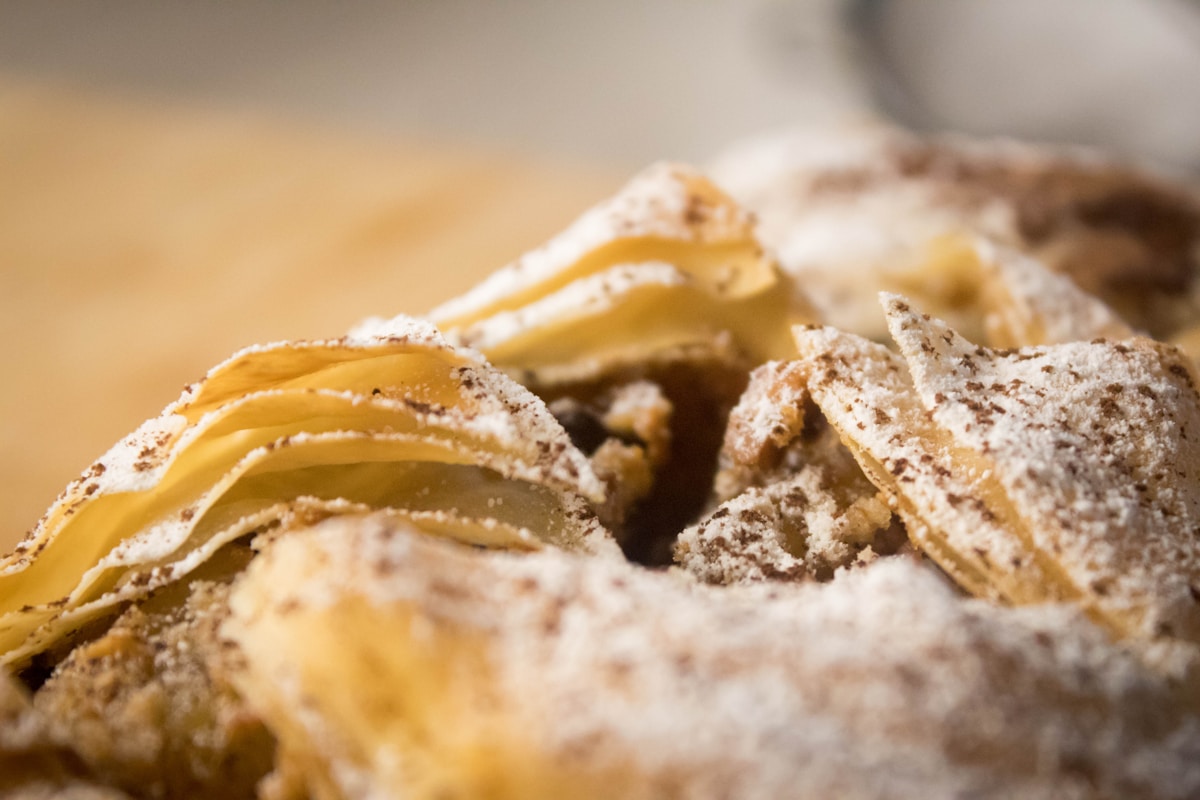
Kremšnita is a vanilla custard slice - a thick layer of baked vanilla custard between two sheets of puff pastry, dusted with powdered sugar. It is found across the former Austro-Hungarian sphere (known as Cremeschnitte in German, krempita in Serbian), but in Croatia it is most closely associated with the town of Samobor, 20 km west of Zagreb.
The kremšnita pilgrimage to Samobor is a Zagreb tradition - the town’s cafes have been serving the local version (Samoborska kremšnita) since the 1940s and claim a specific recipe and texture that cannot be replicated elsewhere. A day trip to Samobor (30–40 minutes by bus from Zagreb’s main bus station) for lunch and kremšnita is a genuine local tradition.
Price: €2–4 per slice at a traditional café; Samobor versions at comparable prices. In Zagreb: Available at traditional cafes throughout the city centre - not quite the Samobor version, but accessible.
Zagorski Odrezak (Zagreb-Style Escalope)
Zagorski odrezak or Zagrebački odrezak (Zagreb schnitzel) is a veal escalope pounded thin, rolled around a filling of cooked ham and melted cheese, breaded, and fried. The result is a crescent-shaped, golden cutlet with a molten interior. It is Croatia’s contribution to the Central European schnitzel tradition and appears on most traditional restaurant menus in Zagreb.
Price: Approximately €12–18 as a main course at a traditional restaurant.
Rakija
Rakija is the fruit brandy of Croatia and the wider Balkans - in Zagreb, typically grape-based (lozovača) or plum-based (šljivovica). It is the pre-dinner drink at any traditional konoba, served chilled as a small shot.
Price: €2–4 per shot at a restaurant or bar; Croatian rakija from local producers is sold by the bottle at Dolac market. Note: Croatian rakija is often home-produced - quality and strength vary enormously. The commercial versions (Badel, Zvečevo) are more consistent; the home-distilled versions can be very strong (50–60% ABV or higher).
Graševina Wine
Graševina (also known as Welschriesling in Austria and Laški Rizling in Slovenia) is Croatia’s most widely planted white grape variety, grown in the Slavonian wine region east of Zagreb. A well-made Graševina is dry, fresh, and lightly aromatic - an excellent match for the food of the Zagreb region.
Croatian wine knowledge is significantly underrated in international markets. A bottle of quality Graševina from a reputable Slavonian producer costs €8–15 at a wine shop; mark-up at restaurants is reasonable by European standards.
Where to drink it: Any traditional restaurant or konoba in Zagreb will have at least one Graševina by the glass or carafe.
Karlovačko Beer
Karlovačko is Croatia’s most widely drunk domestic lager - produced in the city of Karlovac, 55 km southwest of Zagreb. A reliable, easy-drinking lager that accompanies grilled meats and market lunches throughout the city. Not a craft beer, but an honest European pilsner at around €2.50–4 per half-litre in a Zagreb bar.
Dolac Market for Fresh Shopping
Dolac market (above Ban Jelačić Square, open mornings daily) is the best place in Zagreb to experience the food culture directly - seasonal vegetables, fresh eggs, local cheese (particularly fresh cow’s milk cheese and smoked cheese from the Zagorje region), honey, herbs, and fresh fruit. The market vendors are predominantly from the surrounding countryside rather than wholesale suppliers.
For restaurant recommendations, see our best restaurants in Zagreb guide. For the full city overview, see the Zagreb travel guide.
See also
- Zagreb city guide
- Best restaurants in Zagreb
- Things to do in Zagreb
- Croatia travel guide
- Best food in Croatia
- Balkan food guide
- Belgrade vs Zagreb
Plan your trip: Browse tours and activities in Zagreb - food tours and guided walks are a great way to get into the eating scene. Sort travel insurance before you fly, and grab a Balkans eSIM for data when you land.