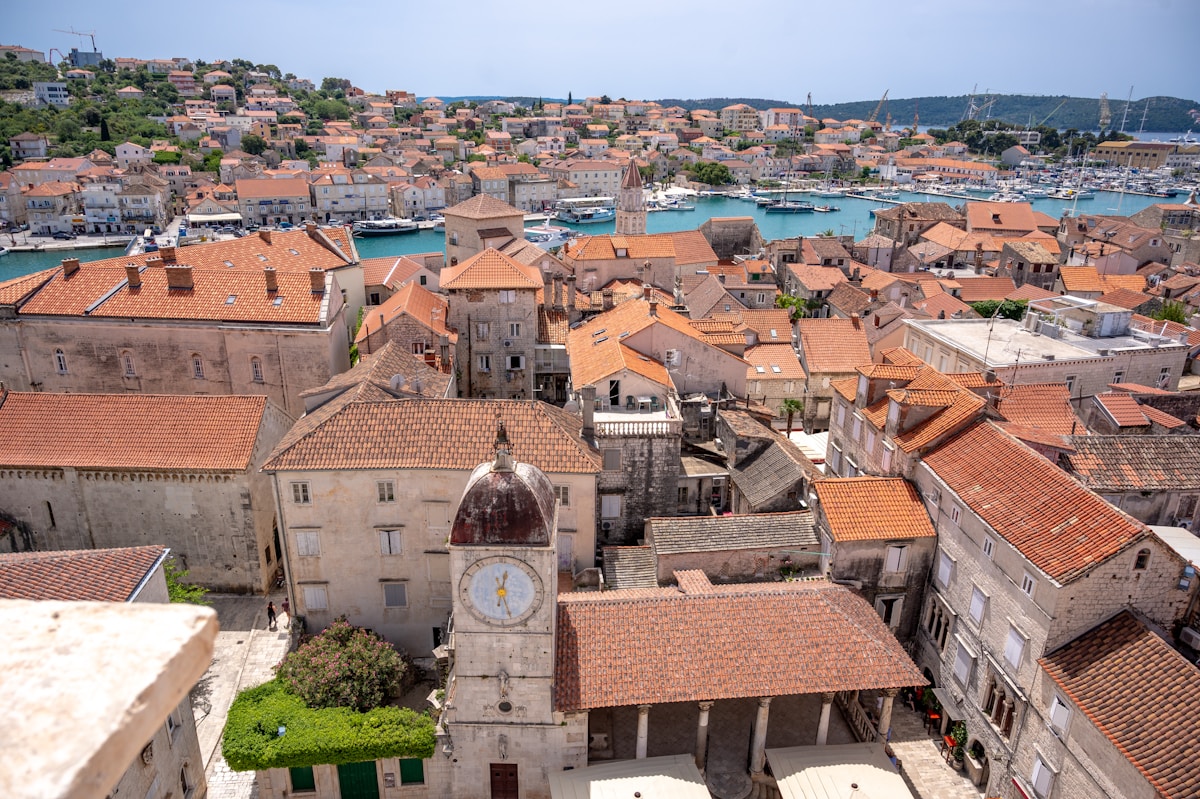
Croatian food splits sharply by region: the Dalmatian coast is built on Adriatic seafood, slow-cooked meat stews, and olive oil; Istria adds truffles, pasta, and Italian-influenced ingredients; the islands lean toward simple grilled fish and shellfish. All prices in euros (€).
Must-try dishes
Crni rižot (black risotto)
A squid-ink risotto with cuttlefish or squid, olive oil, garlic, and white wine - one of the most recognisable dishes on the Dalmatian coast. Available everywhere from Split to Dubrovnik to Zadar. Good crni rižot should be creamy and well-seasoned - it should coat the back of a spoon.
- Typical price: €12–22 depending on restaurant
Peka (meat or octopus under the bell)
Meat, octopus, or vegetables slow-cooked under a bell-shaped lid buried in hot embers. The octopus version - whole octopus cooked with potatoes, garlic, rosemary, and olive oil - is the signature dish along the Dalmatian coast. The result is deeply flavoured, tender, and distinctly Dalmatian. Most konobas require ordering a day in advance (typically 24 hours); ask when booking.
- Typical price: €15–30 per person as a sharing portion
Pašticada (Dalmatian beef stew)
Slow-braised beef marinated for 24 hours in wine and vinegar, then braised with prunes and served over homemade gnocchi. The signature meat dish of the Dalmatian coast - the sauce is dark and sweet-sour in a way that has no equivalent elsewhere in the Balkans. Dalmatian households traditionally cook it only for weddings and celebrations; a good konoba makes it available year-round.
- Typical price: €12–22
Štrukli (Zagreb cheese dough)
Zagreb’s signature dish - dough pockets filled with fresh cottage cheese, either boiled or baked. The baked version gets a golden crust; the boiled version is softer and richer. The question of boiled versus baked divides Zagreb locals. Works as a starter, a main, or a snack.
- Typical price: €6–12 in Zagreb restaurants; cheaper at traditional gostionica
Buzara (shellfish in white wine)
Mussels, clams, or shrimp cooked in white wine, garlic, parsley, and breadcrumbs. Found throughout the coast; the Bay of Kotor and Dalmatian variants are both excellent.
- Typical price: €10–18
Istrian truffles (with fuži pasta)
Black and white truffles from the Motovun forest area are shaved over fuži (hand-rolled pasta tubes), risotto, or eggs. Autumn brings white truffle season; black truffles are available year-round. A defining Istrian experience.
- Typical price: €25–45 for truffle pasta or risotto
Fuži and pljukanci pasta
Handmade pasta shapes unique to Istria. Fuži are hollow diamond-shaped rolls typically filled with boskarin (Istrian ox); pljukanci are thinner spindle shapes served with scallops, truffles, or seafood sauces.
- Typical price: €18–32
Paški sir (Pag cheese)
Hard, salty sheep’s milk cheese from Pag Island - the sea-wind-influenced grass gives it a distinctive flavour. Served as a starter with olives and pršut at most Dalmatian restaurants.
- Typical price: €8–15 as part of an antipasto platter
Dalmatian pršut
Air-cured ham, typically unsmoked (unlike Slovenian varieties), served thin-sliced as a starter. A fixture at every konoba along the coast.
- Typical price: €7–12 as a starter plate
Šporki makaruli (Dubrovnik pasta)
A local Dubrovnik speciality - macaroni with a rich meat sauce flavoured with cinnamon, cloves, and orange. Only available in Dubrovnik.
- Typical price: €10–15
Soparnik (Dalmatian chard pie)
A thin, savoury pie of Swiss chard, olive oil, and garlic - a traditional peasant dish from the Dalmatia region. Simple and inexpensive.
- Typical price: €3–7
Regional differences
| Region | Defining flavours |
|---|---|
| Dalmatia (Split, Dubrovnik, Zadar) | Grilled fish, peka, pašticada, buzara, crni rižot |
| Istria (Rovinj, Pula) | Truffles, fuži, Malvazija wine, olive oil |
| Dalmatian Islands | Grilled fish, seafood, lighter cooking |
Drinks to order
- Malvazija: Istrian white wine - dry, mineral, pairs with seafood and truffles
- Vranac / Plavac Mali: Croatian reds, well-suited to meat dishes
- Rakija (grappa-style): Offered at traditional konobas as an aperitif or digestif
- Espresso: Croatian coffee culture is strong; standalone espresso is standard
Useful Croatian food phrases
| Croatian | English |
|---|---|
| Bez mesa | Without meat |
| Bez sira | Without cheese |
| Danas ulov | Today’s catch |
| Preporuča se | Recommended |
Where to eat - named restaurant picks
Dubrovnik
Konoba Colentum (Masarykov Put 3, Lapad) - Good-value Dalmatian cooking away from the old-city premium: grilled fish, black risotto, peka (order ahead). Mains approximately €18–28. Popular with visitors and locals alike.
Nishta (Prijeko 30, Old Town) - Dubrovnik’s best-known vegetarian and vegan restaurant, with creative Mediterranean dishes and no meat or fish. Mains €14–20. The reliable option when the old city’s meat-heavy menus feel repetitive.
Konoba Lokanda Peskarija (Na Ponti, Old Town) - Excellent mussels and seafood stew at a low premium for an old-city location. The mussel buzara is the main event. Mains €12–22. Best at lunch.
A guided food tour of Dubrovnik’s Old Town is the best way to navigate the restaurant options — or the authentic 8-dish tasting tour for broader coverage.
Split
Konoba Matoni (Ul. Grgura Ninskog 3) - Neighbourhood konoba a short walk from Diocletian’s Palace. Pašticada, peka, and grilled fish at honest prices. Mains €14–24.
Fife (Trumbićeva Obala 11) - Long-running, no-frills seafront restaurant beloved by Split locals for cheap, generous portions. The fish and peka are exceptional value. Mains €10–18. Expect a queue at lunch.
Apetit (Subićeva 5) - More polished than most Split konobas, with a good list of Dalmatian wines. The crni rižot and pašticada are well-executed. Mains €18–28.
Zagreb
Vinodol (Nikole Tesle 10) - Zagreb institution open since 1975. Traditional Croatian cooking in a stone-walled restaurant with a covered terrace. Štrukli, roast lamb, and duck with mlinci (thin pasta baked dry in meat juices). Mains €14–26.
Lari & Penati (Petrinjska 42a) - Small, lively restaurant specialising in pasta and traditional Zagreb dishes with a contemporary edit. Štrukli are excellent. Mains €12–20.
Practical notes
- Reserve peka in advance: Most restaurants require 24–48 hours’ notice - ask when booking
- Bakeries (pekara) open from 06:00 and are the cheapest breakfast option anywhere on the coast
- Fish pricing: Check whether menu prices are per portion or per 100g - the difference matters when ordering a whole grilled fish
- Wine: The Plavac Mali grape along the Dalmatian coast and Hvar produces structured reds starting at €12–20 per bottle in restaurants; in Istria, local Malvazija (dry white) is the standard house wine at most konobas
Plan your trip: Browse tours and activities across Croatia - food tours are the fastest way into the local eating scene. Travel insurance and a Balkans eSIM are worth sorting before you fly.