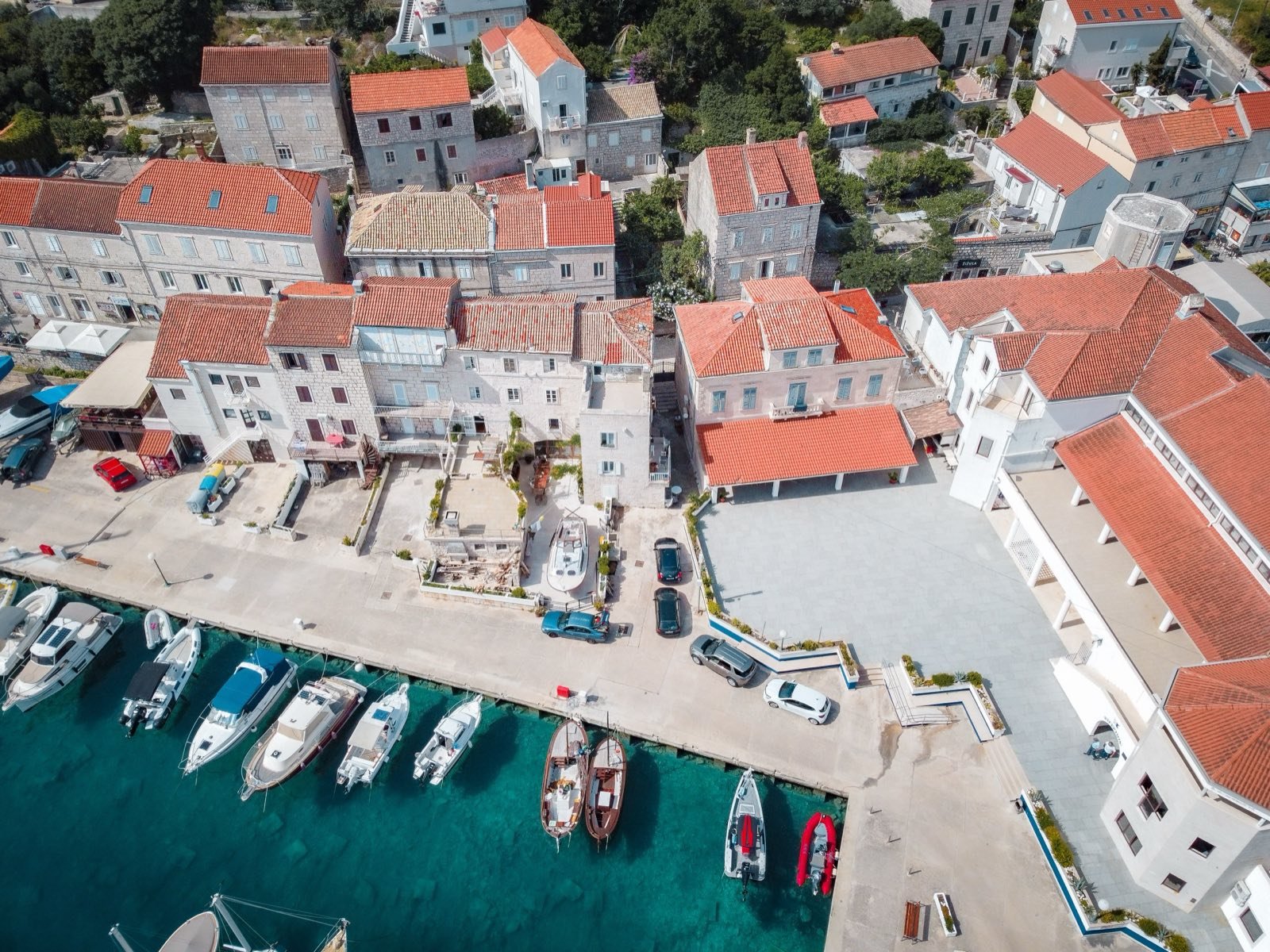
Korčula Travel Guide: Old Town, Moreška, Wine and Beaches
Korčula travel guide: the walled old town, Moreška sword dance, Pošip and Grk wine, Lumbarda beaches and how to reach the island by ferry.
Guides for Korčula Travel Guide
Korčula is the sixth-largest island in the Croatian Adriatic, around 46 km long and 7 km wide, and it feels more rural and slower than its famous neighbours. The main town sits on a small peninsula on the northeast coast, enclosed by Venetian-era walls and laid out in a herringbone pattern of streets, which is why it is often called “Little Dubrovnik”. Beyond the walls are wine villages, sandy beaches and pine forest. Use this page to plan the island, then go deeper with our things to do in Korčula and where to stay in Korčula guides. All prices are in euros (€) and approximate as of 2026.
Why go to Korčula
Korčula suits travellers who want history, food and swimming in one place without the crowds of Hvar Town or Dubrovnik. The old town can be walked end to end in 15 minutes, evening life revolves around waterfront terraces, and the island produces two of Croatia’s most distinctive white wines. It also works as a stop between Split and Dubrovnik, and as a quieter alternative to the busier islands covered in our Dalmatian Islands guide and Hvar guide.
Korčula Town in brief
The old town’s street plan is deliberate: streets running east-west are angled to break the strong bora wind, while those running north-south are stepped, so rain and sea breezes move through the town in a controlled way. The result is a compact medieval centre with surprising shade in summer.
- St Mark’s Cathedral: a Gothic-Renaissance cathedral built from local stone between the 15th and 16th centuries, with a distinctive bell tower you can climb for roofline views. Entry and tower fees are small, roughly €5 to €8 as of 2026.
- Marco Polo House: a tower in the old town marketed as the family home, with a rooftop view. Treat the attribution cautiously.
- Town Museum: housed in the Gabrielis Palace, covering local shipbuilding, stone carving and island history.
- Land Gate and walls: the main entrance, with a flight of steps and the sea on both sides.
Moreška sword dance
The Moreška is a staged sword dance depicting a battle between the Black and White kings over a captured princess. It has been performed in Korčula for centuries and is the island’s signature event. In 2026 performances run in the evening at the open-air cinema, with adult tickets about €20 and children aged 4 to 14 about €10. Dates vary by month, so check the official Visit Korčula events listing before you plan around a specific night.
Beaches and the rest of the island
- Lumbarda: a village about 6 km southeast of Korčula Town, known for sandy beaches such as Przina and for Grk, a rare white wine grown on the sandy soil. Our things to do page covers it in more detail.
- Vela Luka: the western port with the Jadrolinija ferry to Split, a long bay and Vela Spila cave.
- Pupnat and Račišće: quieter pebble coves reached by road or boat.
- Badija: a small island with a Franciscan monastery, a short boat ride from the old town.
Wine and food
Korčula’s wine villages Smokvica and Čara produce Pošip, a dry, textured white that is the island’s best-known bottle, and Lumbarda produces Grk. A cellar visit and tasting usually costs around €10 to €25 per person. On the table look for žrnovski makaruni (hand-rolled pasta in a meat or rabbit sauce), grilled fish, black risotto and local olive oil. Our best food in Croatia guide has more on what to order.
Getting there
Korčula is reached by sea; there is no airport on the island.
- From Split: the Jadrolinija car ferry to Vela Luka takes about three hours, and foot-passenger fares are roughly €8 to €11 as of 2026. In the summer season fast catamarans also serve Korčula Town.
- From Dubrovnik: a seasonal catamaran, or a bus to Orebić on the Pelješac peninsula and then the car ferry to Dominče, about 20 minutes, from roughly €2.50 to €4.50 for foot passengers.
- From Hvar: a summer catamaran links the two islands.
Check timetables and fares on Jadrolinija before you travel, because schedules change by season. Our Croatia ferry guide explains the main operators and booking tips.
When to go
June and September are the best months: warm sea, lively but not overcrowded, and the full Moreška schedule. July and August are hot and busy, and accommodation prices peak. Many restaurants and rooms close from November to March.
Plan your Korčula days
Browse Korčula tours and activities for guided old town walks, wine tastings and boat trips, and book your base through our Korčula accommodation guide. If you are moving on to the mainland, Šibenik and Krka National Park sit on the northern Dalmatian coast.
Book an experience
Top experiences in Korčula Travel Guide
Explore the best tours and activities in Korčula Travel Guide - instant confirmation, free cancellation on most bookings.