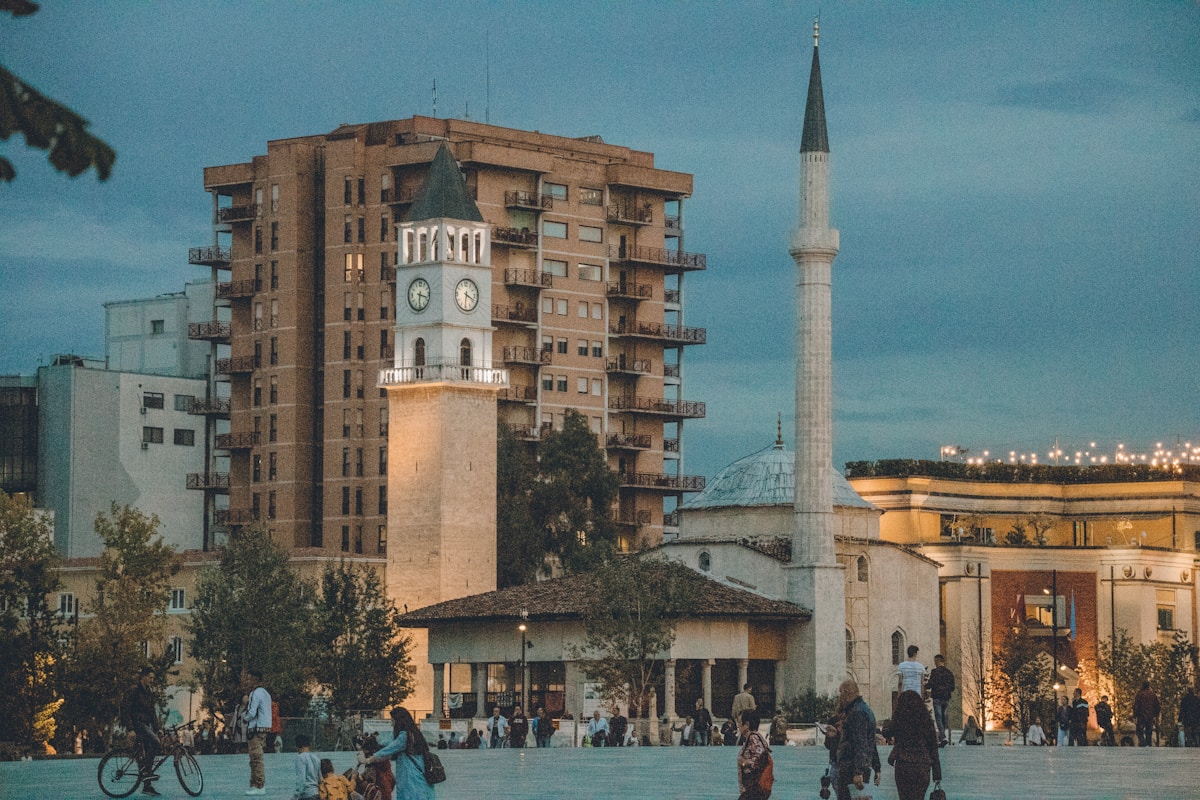
The Balkans has quietly become one of the most attractive regions in the world for location-independent workers. Low costs, fast internet, visa-free access from most Western passports, and a non-Schengen status that frees up Schengen days - for the right traveller, spending three to six months in the region makes practical and financial sense. Some countries have formalised this with dedicated digital nomad visa programmes; others are simply easy to stay in for extended periods without a specific visa.
This guide covers each country’s current options, the practical requirements, and which countries suit different working styles.
Albania - The Dedicated Digital Nomad Visa
Albania introduced one of the more accessible digital nomad visa programmes in Europe. The Albanian Digital Nomad Visa is available to non-EU nationals who work remotely for clients or employers outside Albania. It allows stays of up to one year with the possibility of renewal.
Requirements (as of 2026):
- Proof of remote employment or freelance income from non-Albanian sources
- Minimum monthly income of approximately €800 (this threshold is lower than comparable programmes in Western Europe)
- Valid health insurance covering the stay
- Clean criminal record
- Accommodation address in Albania
Applications can be submitted through Albanian consulates or, for some nationalities, directly in-country after arriving on a standard visa-free entry. The process is relatively straightforward compared to EU equivalents.
Tirana is the obvious base - the city has a growing co-working scene centred around Blloku neighbourhood, reliable fibre internet in most accommodation, and a cost of living that compares favourably with any other Balkan capital. Expect to pay approximately €400–600/month for a one-bedroom apartment in Blloku, and €5–10 for a co-working day pass.
Saranda and the Albanian Riviera attract digital nomads who want coastal living from May to October, though internet reliability outside major towns is patchier.
Serbia - The Unofficial DN Hub
Serbia does not have a formal digital nomad visa, but Belgrade has become one of the most established remote work destinations in Europe. The combination of factors that make it work: no Schengen membership (time in Serbia does not consume your 90-day European allowance), long-stay friendliness under standard visa-free rules, low costs, and a tech scene that has produced one of Europe’s higher concentrations of co-working spaces per capita.
Most Western passport holders can stay in Serbia for 90 days in a 180-day period visa-free. After 90 days, many nomads make a border run to Bosnia, North Macedonia, or Hungary and re-enter - though the Serbian authorities have become more attentive to repeat short exits and entries. For genuine long-term stays, a temporary residence permit is available for those who can demonstrate ties to Serbia (employment, property rental, or other grounds).
Belgrade in practice:
- One-bedroom apartment in Vracar or Savamala: approximately €500–700/month
- Co-working spaces: Hub385, StartIT Centre, and Mokrin House (rural retreat) are well-established
- Monthly transport pass: approximately €30
- Fast fibre internet is standard in most apartments
Novi Sad is a quieter alternative to Belgrade - smaller, with a strong café culture and a university population that keeps the city lively year-round.
Croatia - Digital Nomad Residence Permit
Croatia introduced a dedicated Digital Nomad Residence Permit in January 2021, and it has been refined since. This is relevant primarily for nationalities who cannot simply stay visa-free for extended periods - but EU nationals entering Croatia also benefit from clarity on their long-stay status.
For non-EU nationals (including US, UK, Australian, and Canadian citizens), the permit allows stays of up to one year and is not renewable from within Croatia - you would need to leave and apply again.
Requirements:
- Proof of remote employment or self-employment for clients outside Croatia
- Monthly income of approximately €2,539 or equivalent (significantly higher than Albania’s threshold)
- Valid health insurance
- Accommodation in Croatia
- Application through Croatian embassy or consulate before entry (or via the Ministry of Interior after initial visa-free entry, within a strict window)
One practical note: Croatia joined the Schengen Area in January 2023, which means time spent in Croatia now counts toward your 90-day Schengen limit. The Digital Nomad Residence Permit sidesteps this - permit holders are not subject to the 90/180 Schengen calculation for the duration of their permit.
Split and Dubrovnik are the most popular coastal bases; Zagreb suits those who prefer a capital-city working environment with better year-round infrastructure.
Montenegro - Flexible Without a Formal Programme
Montenegro has no dedicated digital nomad visa but is popular for exactly the reasons Serbia is: it is not in Schengen, it is visa-free for most Western passport holders for 90 days per entry, and the cost of living is lower than Croatia or Slovenia.
The Bay of Kotor has become a genuine digital nomad cluster, particularly in Kotor and Tivat (the latter benefiting from Porto Montenegro and its marina infrastructure). Internet speeds in the main coastal towns are reliable; more remote areas can be slower.
After 90 days, the same border-run dynamic applies as in Serbia. Longer-term residence is possible through temporary permit applications, but this requires more administrative effort than in Croatia or Albania.
Cost guide (Kotor/Tivat):
- One-bedroom apartment: approximately €500–800/month
- Co-working spaces are fewer than in Belgrade or Tirana; most nomads work from cafes or private apartments
- Groceries: moderately priced; eating out is affordable by Western European standards
North Macedonia - Budget Base with Growing Infrastructure
North Macedonia is one of the cheapest countries in the Balkans to live in, and Skopje has a reasonable infrastructure for remote workers. No digital nomad visa exists, but visa-free entry for most Western passport holders allows 90-day stays that are entirely separate from the Schengen calculation.
The main limitation is connectivity - fibre internet is available in central Skopje apartments but less reliable elsewhere. Ohrid is popular in summer but effectively closes down for remote workers in winter.
Average apartment costs in central Skopje run approximately €300–450/month, making it one of the most affordable capital cities in Europe for extended stays.
Bosnia and Herzegovina - Sarajevo as an Emerging Base
Bosnia has no formal long-stay visa programme beyond standard visa-free entry, but Sarajevo has developed a small but active community of location-independent workers. The combination of a fascinating city, low costs, and non-Schengen status makes it worth consideration.
Monthly apartment rental in Baščaršija or Marijin Dvor: approximately €400–600. Internet quality varies by building - fibre is available but coverage is less consistent than in Belgrade or Tirana.
Kosovo - Budget Option, Entry Caveats Apply
Pristina is genuinely cheap and has fast internet. Kosovo is not a Schengen member and most Western passport holders enter visa-free. However, Kosovo is not recognised by all countries, and Serbian passport holders cannot enter Kosovo directly - they would need to enter via a third country.
For those who can enter freely, Pristina offers one of the lowest costs of living of any European capital with reliable urban infrastructure.
Comparison Table
| Country | Formal DN Visa | Schengen? | Min Income (approx) | Average 1BR (monthly) | Best Base |
|---|---|---|---|---|---|
| Albania | Yes (1 year) | No | €800 | €400–600 | Tirana |
| Serbia | No | No | - | €500–700 | Belgrade |
| Croatia | Yes (1 year, no renewal) | Yes | €2,539 | €800–1,200 | Split/Zagreb |
| Montenegro | No | No | - | €500–800 | Kotor/Tivat |
| North Macedonia | No | No | - | €300–450 | Skopje |
| Bosnia & Herzegovina | No | No | - | €400–600 | Sarajevo |
| Kosovo | No | No | - | €300–500 | Pristina |
Practical Essentials for Working in the Balkans
Connectivity: Most Balkan capitals have reliable 4G/LTE coverage and fibre in central accommodation. For work that depends on consistent speeds, stay in city-centre apartments and verify internet quality before booking for a full month. An eSIM keeps you connected from day one without hunting for a local SIM - get an eSIM for the Balkans before you fly.
Health Insurance: Albania’s digital nomad visa requires it, and it is wise for any extended stay regardless. A single policy covering multiple countries is more practical than arranging separate cover for each country. Compare travel insurance options for the Balkans - a multi-country policy valid across the entire region is the most flexible choice for a nomad itinerary.
Banking: Revolut, Wise, and N26 all work well across the Balkans. ATMs are widely available in capital cities; smaller towns and villages may have limited access. Serbia, Bosnia, Kosovo, and North Macedonia use different currencies, so a multi-currency account saves on exchange fees.
Taxes: The Balkans offers no specific tax incentives for digital nomads beyond low local tax rates. If you are a freelancer or contractor, your tax obligations follow your country of residence - spending time in the Balkans does not automatically create tax residency there. Check with a tax adviser if you plan to stay for more than six months in any single country.
The Balkans rewards nomads who plan ahead. Albania and Croatia offer the clearest formal visa pathways; Serbia and Montenegro work well for flexible long stays without paperwork; Bosnia, North Macedonia, and Kosovo suit budget-focused nomads who do not need formal status. Most importantly, the non-Schengen majority of the region means you can spend months here without eating into the time you might want to spend elsewhere in Europe.