The Balkans attracted tens of millions of tourists in 2023, with Croatia alone surpassing 20 million arrivals and smaller markets like Albania posting dramatic year-on-year gains. Tourism is one of the region’s most significant economic drivers, contributing anywhere from around 10 percent to over 22 percent of GDP depending on the country. The figures below draw on national statistics offices, the UN World Tourism Organization (UNWTO), and respective tourism boards for the 2023 reporting year.
Croatia
Croatia registered approximately 20.6 million tourist arrivals in 2023 according to the Croatian National Tourist Board, generating around 108 million overnight stays. This returned arrivals to near the 2019 pre-pandemic level. Tourism contributes approximately 20 percent of Croatian GDP, making it the most tourism-dependent economy of any EU member state.
Top source markets (2023): Germany accounted for roughly 22 percent of all foreign arrivals, followed by Austria, Slovenia, Poland, and the Czech Republic. Those five EU-adjacent markets together represent around 55 percent of total foreign arrivals.
Peak season: July and August account for approximately 60 percent of annual overnight stays. The Dalmatian coast and Istria drive coastal demand; Zagreb draws city-break visitors year-round, with a secondary spike in December around its Christmas market.
Accommodation: Croatia held approximately 630,000 registered accommodation units in 2023, including hotel beds, private rentals, and camping pitches. Registered capacity in Split-Dalmatia and Istria counties alone exceeded 200,000 units.
Slovenia
Slovenia’s Statistical Office (SURS) recorded approximately 6.3 million tourist arrivals in 2023, generating around 15 million overnight stays. Tourism contributes approximately 14 percent of GDP. The leading source markets are Austria, Germany, Italy, the Netherlands, and the UK. Ljubljana, Lake Bled, and the Soca Valley account for the largest share of international visits.
Serbia
Serbia received approximately 3.3 million foreign visitors in 2023 according to the Statistical Office of the Republic of Serbia. Belgrade accounted for an estimated 55 percent of all foreign overnight stays in the country. The leading source markets include Germany, Bosnia and Herzegovina, North Macedonia, China, and Austria. Business and conference tourism represents a proportionally larger share of the Serbian market than in coastal Balkans destinations.
Albania
Albania’s national statistics institute INSTAT recorded approximately 9.4 million visitor arrivals in 2023. This figure includes day visitors and cross-border arrivals from Kosovo and North Macedonia, which inflate the total relative to overnight-only counts used by most international bodies; overnight foreign visitors are estimated at approximately 5 to 6 million. Albania showed the sharpest growth of any Balkans destination: arrivals were approximately 6.4 million in 2019, fell sharply during the pandemic, and recovered to well above pre-pandemic levels by 2023. Kosovo, North Macedonia, Italy, and Germany are the top source markets. Tourism contributes approximately 10 percent of Albanian GDP.
Montenegro
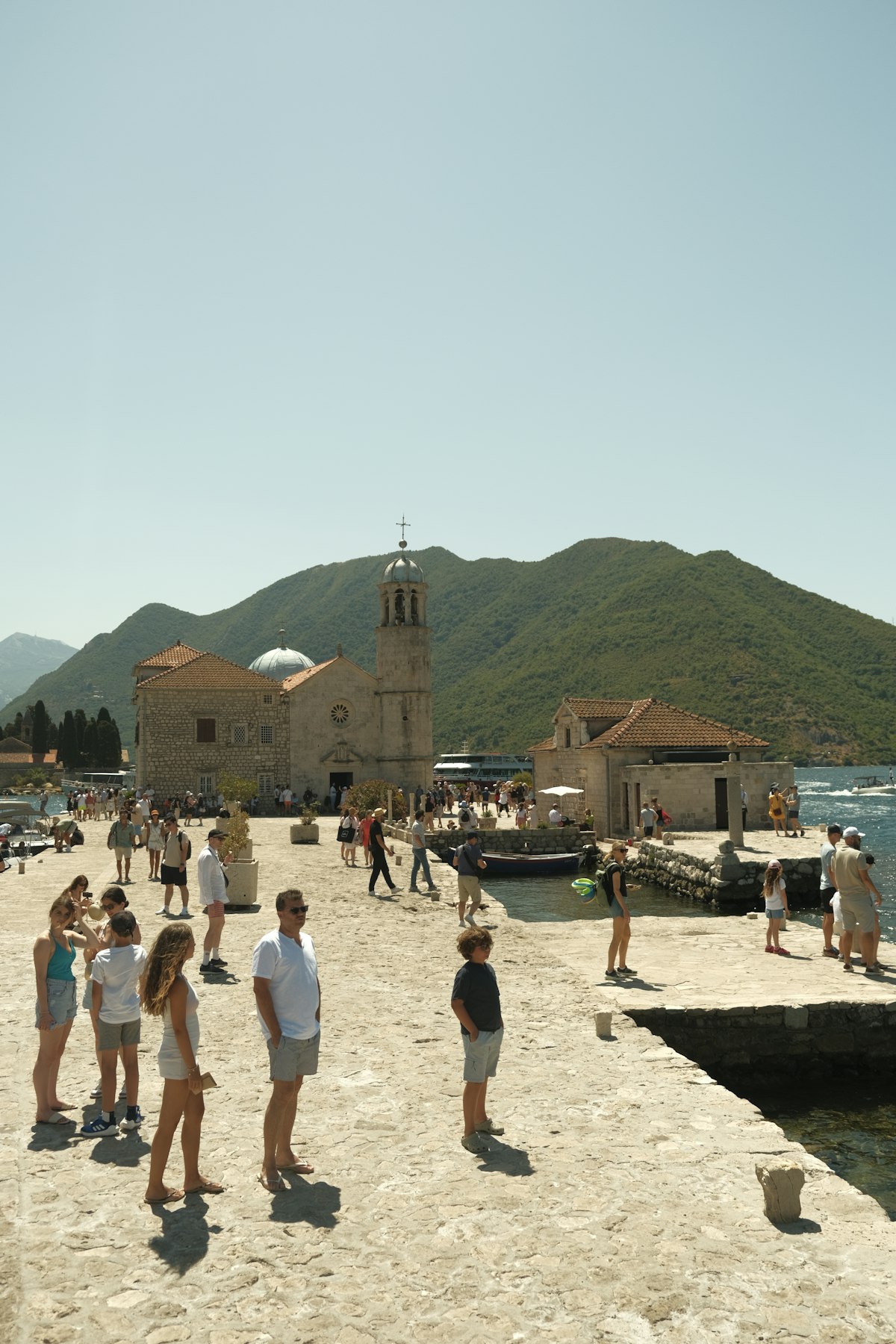
Montenegro’s tourism authority reported approximately 2.4 million tourist arrivals in 2023, with more than 17 million overnight stays recorded. Tourism contributes an estimated 22 percent of GDP, the highest share in the region. Serbia and Bosnia and Herzegovina are the two largest source markets, followed by Germany, the UK, and Ukraine. Approximately 85 percent of overnight stays fall between May and September, concentrated on the Bay of Kotor coast and the Budva Riviera.
Accommodation: Montenegro held approximately 80,000 beds in categorized accommodation in 2023, supplemented by a large private-rental sector particularly in Budva municipality.
Bosnia and Herzegovina
The Agency for Statistics of Bosnia and Herzegovina recorded approximately 1.5 million foreign tourist arrivals in 2023. Sarajevo receives the largest share of foreign visitors, followed by Mostar and the Blagaj area. Croatia, Turkey, Germany, and the UAE are among the leading source markets for overnight stays. The overall total remained below the 2019 pre-pandemic figure as of end-2023, with recovery slower than in coastal markets.
North Macedonia
North Macedonia’s State Statistical Office recorded approximately 850,000 foreign tourist arrivals in 2023. Ohrid and Lake Ohrid account for a disproportionate share of overnight stays relative to the country’s size. Kosovo, Serbia, Bulgaria, and Albania are the primary source markets, reflecting short-haul regional demand rather than long-haul traffic. Tourism contributes approximately 4 to 5 percent of GDP.
Kosovo
Kosovo received approximately 2.3 million visitor arrivals in 2023 according to Kosovo Agency of Statistics data. A significant share of arrivals are diaspora visits from Germany, Switzerland, Austria, and Scandinavia, classified by tourism agencies as VFR (visiting friends and relatives) travel rather than conventional leisure tourism. Prizren’s historic old city and Pristina’s growing food and nightlife scene attract the largest share of leisure visitors.
Peak Season Overview
Coastal destinations (Croatia, Montenegro, the Albanian Riviera) peak sharply in July and August, with May, June, and September classified as shoulder season across all three. City-break destinations (Belgrade, Ljubljana, Sarajevo) show more distributed demand with peaks around Easter, summer, and the Christmas and New Year period. Albania’s riviera season typically runs from mid-June to early September, shorter than the Croatian coast due to infrastructure constraints at smaller resort towns.
Regional Accommodation Stock
Croatia’s 630,000 registered accommodation units represent the region’s largest capacity base. Montenegro and Slovenia each hold approximately 70,000 to 80,000 beds in categorized properties, while Serbia’s hotel sector in Belgrade accounts for around 25,000 rooms. Albania is expanding capacity rapidly, with new hotel openings along the riviera accelerating since 2021. Bosnia and Herzegovina and North Macedonia remain underserved by international hotel chains, which limits accommodation capacity relative to visitor demand.
Growth Trends
The Balkans recovered from COVID-19 pandemic disruption faster than many European regions. Croatia returned to near-2019 arrival volumes by 2022 and matched or marginally exceeded the pre-pandemic figure in 2023. Albania showed the strongest growth trajectory, with 2023 arrivals well above any pre-pandemic year. Montenegro and Slovenia also returned to pre-pandemic volumes. Bosnia and Herzegovina and North Macedonia followed slower recovery curves, both markets still approaching 2019 baseline as of end-2023.
Low-cost airline capacity is the primary structural growth driver: Tirana, Dubrovnik, Split, and Podgorica all added new routes and seat capacity in 2022 and 2023. Road infrastructure improvements across the Western Balkans corridor, particularly the Bar-Boljare motorway in Montenegro and the A2 in Albania, are reducing overland travel times that historically compressed the shoulder season for interior destinations.
Sources: Croatian National Tourist Board, SURS Slovenia, Statistical Office of the Republic of Serbia, INSTAT Albania, Tourism Organization of Montenegro, Agency for Statistics of Bosnia and Herzegovina, North Macedonia State Statistical Office, Kosovo Agency of Statistics, UNWTO (2023 reporting year).