The Blue Eye (Syri i Kaltër in Albanian) is a deep karst spring in southern Albania, where water wells up from a shaft more than 50 metres deep and turns from pale turquoise at the rim to dark cobalt in the centre. It sits near the village of Muzinë, between Saranda and Gjirokaster, and it is one of the most visited natural sights in the country. This guide covers what changed in the last two seasons, what you pay, and the easiest ways to reach it.
The swimming ban: what changed
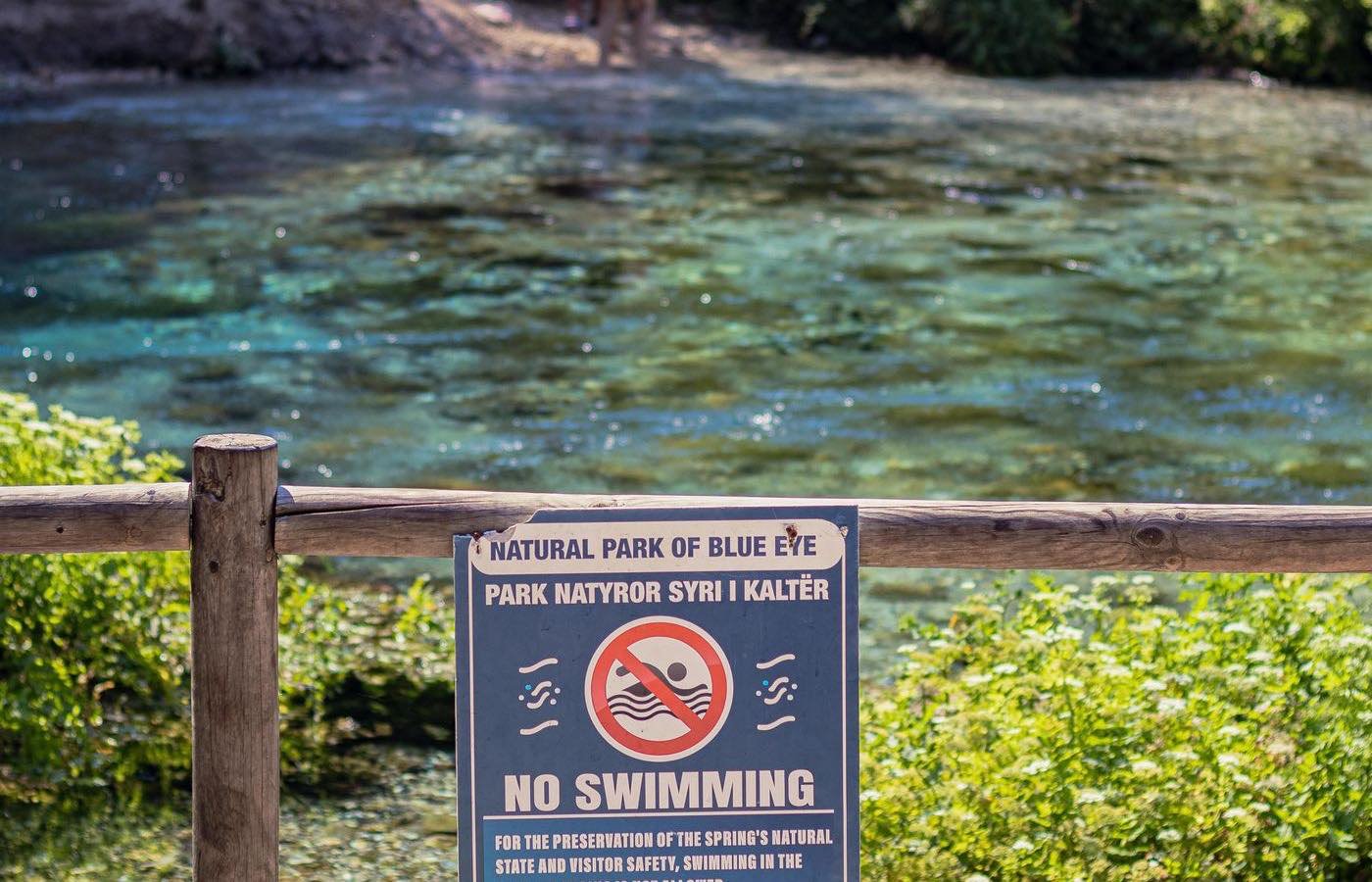
For years visitors jumped from rocks into the spring. That is no longer allowed. As of 2026 signs at the water state that swimming is not permitted, “for the preservation of the spring’s natural state and visitor safety.” Reports from 2024 and 2025 describe wardens patrolling the edge, although some visitors still ignore the rule. We would not plan a swim here. The spring stays at roughly 10-12 C all year and the current is strong enough to be a real hazard.
If you want a swim on the same day, Ksamil’s beaches are the usual follow-up, and our Butrint guide covers the combination.
Entry fee, parking and opening hours
Prices at the Blue Eye have changed more than once, and sources disagree. The most recent reports we found (as of 2026) are:
| Item | Approximate cost |
|---|---|
| Entry per adult | 50 lek (about €0.50), cash |
| Car parking | about 200 lek (up to 3 hours; some reports say 100) |
| Minibus parking | around 300 lek |
| Campervan | around 800 lek |
Opening hours are commonly listed as 07:00-19:00. Bring cash, because card machines are not reliable. The official site, theblueeyealbania.com, is the place to check for changes.
The walk to the spring
Private cars stop at a car park about 2 km from the water. The walk follows a shaded road through oak and plane trees and takes around 20 minutes each way. It is flat and easy, with a few cafes and a small ticket office along the route. Wear proper shoes, since the final path to the viewing platforms is uneven and wet.
How to get there from Saranda
By organised shuttle. A minibus shuttle runs between Saranda and the Blue Eye, with morning departures from around 8:30am. The most recent report we found (2025) quotes about 1,400 lek (roughly €14) return, and we could not confirm a 2026 price, so treat 1,400-1,500 lek as the range. Frequency rises in summer. Confirm the timetable at your hotel the day before.
By taxi. A taxi from Saranda costs approximately €20-35 return including a waiting time of about an hour. Agree the price before you set off.
By rental car. The drive of approximately 22 km takes 35-40 minutes along the main road towards Gjirokaster. Having a car lets you stop at Butrint or Ksamil on the way back.
By public bus. Saranda to Gjirokaster buses exist (about 300 lek and 45 minutes to the junction, then a walk of about 2 km), but many now use the Kardhiq bypass and skip the turn for the spring. Ask the driver before boarding, or pick a shuttle instead.
For a guided option that handles transport, browse Saranda tours and day trips, where the Blue Eye is often bundled with Gjirokaster or Butrint.
Combining the Blue Eye with Gjirokaster
The most efficient southern Albania day is Saranda to the Blue Eye in the morning, then on to Gjirokaster for the castle and the Ottoman bazaar:
- Leave Saranda by 8am and reach the spring before the coach groups.
- Spend about 90 minutes at the Blue Eye, including the walk.
- Continue roughly 25 minutes to Gjirokaster for lunch, the castle and the old bazaar.
- Return to Saranda by late afternoon or stay overnight in Gjirokaster.
If you are based in Gjirokaster, the Blue Eye is an easy short trip, and tours from Gjirokaster often include it. See our Saranda things to do page for the wider coastal options, and the 7-day Albania itinerary for where the Blue Eye fits in a longer trip.
Combining the Blue Eye with Butrint and Ksamil
An alternative is a full coast day: Blue Eye first, then Butrint’s ruins and an afternoon swim at Ksamil. This is a long day by car (allow 8-9 hours) but it works well in shoulder season. In peak summer, split it into two half days.
Tips for visiting
- Arrive early. By 11am in July and August the platforms are crowded and parking fills.
- Bring water, a hat and cash in lek.
- The colours look strongest in full sun around midday, but morning light is calmer and the crowds are smaller.
- Respect the barriers and the swimming ban, and take rubbish with you.
- Prices and shuttle times shift between seasons, so treat the figures above as a guide only.
Is the Blue Eye worth it?
Yes, as a short stop. It is not a place to spend half a day, but the colour of the water is striking and it takes little time to add to a trip between Saranda and Gjirokaster. Pair it with another sight and you get good value from a single drive.