Thessaloniki has a serious, well-earned reputation as the best food city in Greece — better than Athens, according to most Greeks. The city’s position as a crossroads between Greek, Ottoman, Sephardic Jewish, and Macedonian culinary traditions has produced a regional food culture that is distinct from the rest of the country. This guide covers where to eat in Thessaloniki, from the specialist bougatsa shops open at 06:00 to the lively meze tavernas of Ladadika and the neighbourhood spots in Ano Poli. Prices are as of 2026.
What Makes Thessaloniki Food Different
The 1917 fire that destroyed much of the lower city, and the 1923 population exchange that brought hundreds of thousands of Greek refugees from Smyrna (modern Izmir) and Constantinople, reshaped Thessaloniki’s food culture dramatically. Smyrni-origin recipes — particular spice combinations, specific pastry techniques, ways of preparing offal and lamb — are woven into the city’s restaurant culture in ways that are not found in Athens or the islands. Separately, Thessaloniki’s Sephardic Jewish community (one of the largest in the Ottoman Empire before the Second World War) left a culinary imprint that survives in the pastry and bread traditions.
Iconic Thessaloniki Foods
Bougatsa
The definitive Thessaloniki food experience. Bougatsa is a filo pastry filled with either semolina custard or fresh white cheese, baked in large trays, sliced to order, and served warm with icing sugar and cinnamon. The custard version is the classic; the cheese version is savoury. Every city in Greece has bougatsa, but Thessaloniki is the spiritual home — the pastry is heavier, crisper, and more substantial than elsewhere.
Bougatsa Bantis (Komninon 1, near Modiano Market) — one of the most cited specialist shops in the city; open from early morning and usually sees a queue from 07:00 onwards. Portions approximately €2.50–3.
Bougatsa Thessaloniki (Eleftherias Square) — the other frequently recommended specialist. Slightly more tourist-facing than Bantis but equally serious about the product. Portions approximately €2.50–3.
Opening hours for both: approximately 06:00–14:00; they often sell out before closing.
Trigona Panoramatos
Filo pastry triangles filled with fresh cream, invented at the Trigono pastry shop in the upper Panorama neighbourhood. The original shop — Trigono (Navarino 5, Panorama) — is worth a separate visit even from the city centre; approximately €2 per piece. The Panorama neighbourhood itself sits above Ano Poli and has a clutch of cafes with views over the city.
Koulouri Thessalonikis
The city’s version of the sesame-encrusted bread ring, larger and crispier than the Athens equivalent. Sold from street vendors and market stalls throughout the city from early morning; approximately €0.50. A koulouri from a market vendor with a small portion of fresh cheese from the Kapani stalls is the cheapest and best breakfast Thessaloniki offers.
Loukoumades
Fried honey doughnuts, freshly cooked to order and served with honey and cinnamon. Multiple specialist shops around the market area; approximately €3 for a portion of 8–10. Best eaten immediately.
Restaurants by Area
Ladadika
The old warehouse district west of the port, converted in the 1990s from derelict storage buildings into the densest concentration of restaurants and bars in the city. The streets are narrow and pedestrianised in the evening; the atmosphere is relaxed and genuinely local. Ladadika is where Thessaloniki residents eat out rather than tourist-targeted dining.
Zythos (Katouni 5, Ladadika) is the most consistently recommended traditional taverna in the city. Excellent mezze selection — saganaki (fried cheese), tzatziki, taramosalata, grilled vegetables — alongside charcoal-grilled meats and draught beer. Mains approximately €10–16 as of 2026. The interior is in a converted warehouse with wooden beams; outdoor seating fills up on warm evenings. Reservations advisable Thursday–Saturday.
Peri Orexeos (Komninon 23, central, near Modiano) — popular taverna with a large mezze menu and an emphasis on market-fresh ingredients; excellent value for a full sit-down meal. Mains approximately €9–14 as of 2026.
Near Modiano Market
Myrovolos Smyrni (Komninon 32) — a long-established restaurant serving Smyrni-origin recipes brought to Thessaloniki by the 1923 refugees. The lamb dishes (braised shank, lamb kokinisto in tomato sauce) and grilled fish are particularly reliable. The interior is atmospheric with old photographs and memorabilia. Mains approximately €10–18 as of 2026. One of the most distinctive restaurant experiences in the city — the Smyrni-origin food culture is specific to Thessaloniki and not easily found elsewhere in Greece.
Ouzeri Thessaloniki (near Modiano) — traditional ouzeri format: small plates of mezze and seafood served with ouzo or tsipouro (the northern Greek grape spirit). Expect to spend approximately €15–22 per person for a full ouzeri spread. The format is designed for sharing and slow eating; arrive hungry and unhurried.
Kapani Market Area (Vlali)
The covered Kapani market (also called Vlali) in the heart of the city is surrounded by small tavernas and specialist food shops. The most interesting way to eat here is to combine a market walk — buying fresh cheese, olives, and cured meats from the stalls — with a sit-down meal at one of the old-school tavernas that have been operating at the same address for decades.
To Makedonomaheion (Proxenou Koromila, city centre) — reliable and inexpensive; daily specials on a chalk board, home-cooking format, very popular with locals at lunchtime. Mains approximately €8–13 as of 2026.
Ano Poli (Upper Town)
The upper town has several neighbourhood tavernas with terrace seating and views over the lower city. The quality is uneven but the setting compensates.
O Thanasis tou Achilleas (Kassandrou, Ano Poli) — unpretentious neighbourhood taverna in the upper town; strong on grilled meats and slow-cooked casseroles. Mains approximately €9–14 as of 2026.
Taverna Ano Poli — generic name but look for the terrace tavernas along Eptapyrgiou and Kassandrou streets for outdoor seating in summer. Views down to the bay; mains approximately €10–15 as of 2026.
Waterfront and City Centre
Ergon House (Nikis 2, waterfront) — a large modern food hall and Greek delicatessen concept: high-quality Greek produce, charcuterie, cheese, fresh bread, and prepared foods available as a deli or sit-down meal. Good for a casual lunch or a quality picnic assembled from the deli counter. Approximately €10–18 per person as of 2026.
To Elliniko (near Aristotelous Square) — traditional Greek kitchen in a central location; solid rather than exceptional, but reliable and convenient for a lunchtime meal between sightseeing. Mains approximately €9–14 as of 2026.
Seafood
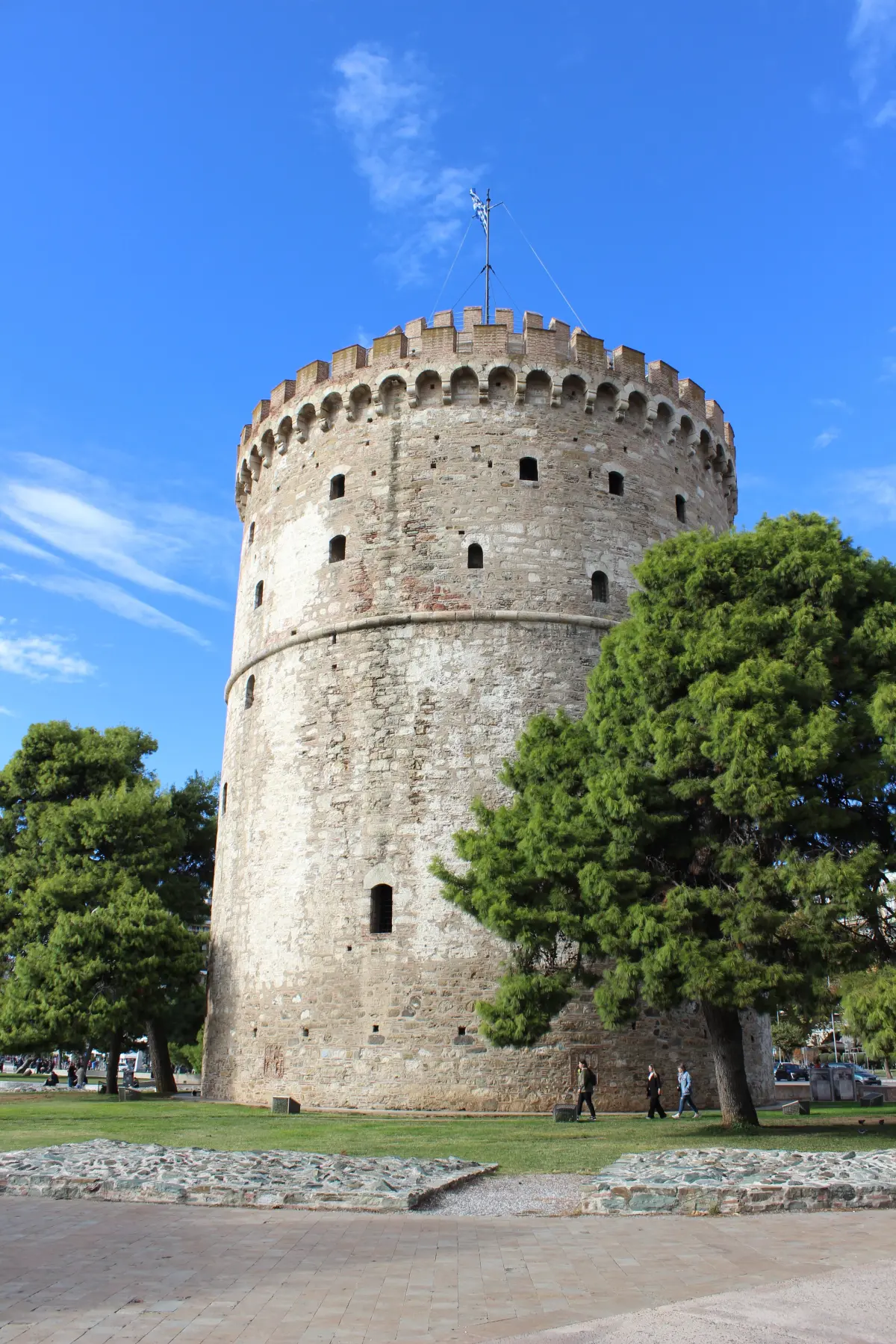
Thessaloniki is not as prominent a seafood city as the islands or Halkidiki, but the Thermaic Gulf supplies the city’s restaurants with fresh fish. The best spots for grilled octopus, fish soup, and fresh seafood are the seafront tavernas east of the White Tower towards the Halkidiki turnoff.
Grilled octopus is consistently available across most waterfront and Ladadika tavernas; approximately €12–16 as of 2026 depending on size. Bourdeto (spiced fish stew) and kakavia (fishermen’s soup) appear on the menus of the more traditional seafood restaurants. A full seafood dinner at a waterfront restaurant: approximately €25–40 per person as of 2026.
Coffee, Pastries, and Drinks
Thessaloniki takes coffee seriously in the Greek tradition — long, unhurried sessions with a small cup of espresso or Greek coffee and a glass of water. The Kamara neighbourhood (around the Arch of Galerius) has the best concentration of independent coffee shops with a local rather than tourist clientele.
Tsipouro bars — the northern Greek grape spirit, stronger than ouzo and typically served neat with mezze on the side, is Thessaloniki’s drink. The area around the Kapani market and Ladadika has several specialist tsipouro bars; a small carafe with mezze typically costs €8–14 per person as of 2026.
Pastry shops are everywhere in the city centre; look for shops selling baklava (walnut and pistachio filo pastry in honey syrup), galaktoboureko (custard filo pie), and melomakarona (honey and walnut cookies). Prices from €1.50–3 per piece at a good pastry shop.
Take a Guided Food Tour of Thessaloniki
Thessaloniki is widely regarded as the best food city in Greece — a claim Athenians dispute but that Thessalonians defend with conviction — built on a combination of Jewish, Ottoman, Sephardic, and Macedonian-Greek culinary layers that produced dishes found nowhere else. A guided food tour of the Modiano Market, Ladadika district, and the waterfront meze bars covers that history in 3–4 hours, with tastings of bougatsa, taramosalata, smoked mackerel, and local wines, costing approximately EUR 45–65 per person. Book a food tour in Thessaloniki.
Practical Notes
When to eat: Greek lunch runs 14:00–16:00; dinner starts late by Northern European standards — locals typically eat dinner from 21:00, and the best tavernas do not fill up until 21:30–22:00. Arriving at 19:30 will feel early and the atmosphere will build around you.
Budget benchmarks (2026): Koulouri + bougatsa breakfast under €4. Market lunch (mezze, bread, cheese) approximately €8–12 per person. Sit-down taverna lunch €12–18 per person. Evening meal at Zythos or Myrovolos Smyrni with wine or tsipouro: €22–35 per person.
Tipping: Rounding up the bill or leaving 10% is standard in table-service restaurants; not expected at market stalls or bougatsa shops.
Explore more of Thessaloniki: Things to do in Thessaloniki for sightseeing and day trips. Find accommodation in Thessaloniki for current hotel rates and availability. Get travel insurance for the Balkans before you go.