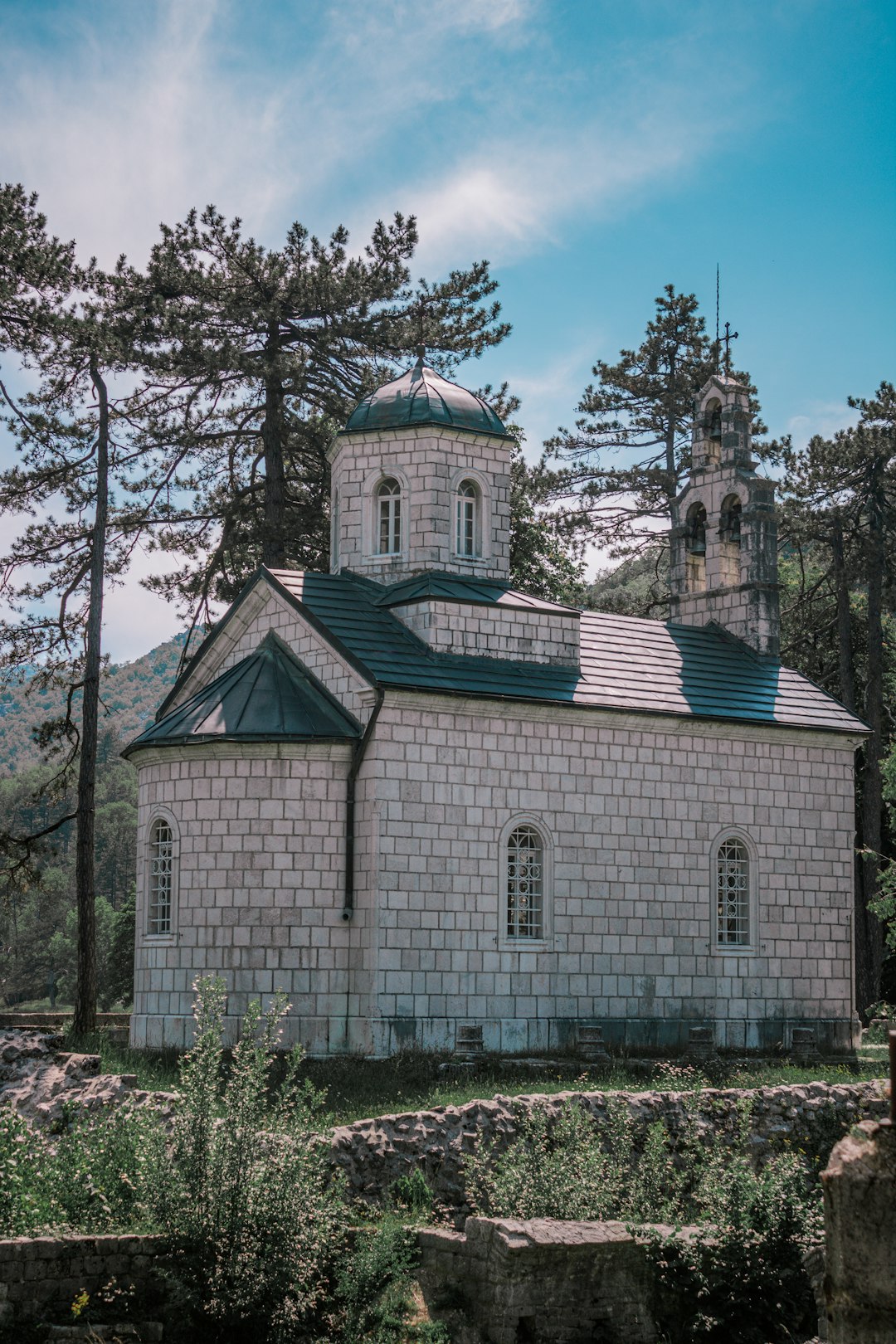
Cetinje was Montenegro’s royal capital until 1946 and remains the country’s cultural heart — home to the national museum, the royal palace, and several historic embassies. The town sits on a high plateau surrounded by the Lovćen mountain, which shapes both the landscape and the food: this is inland highland cooking, not coastal seafood. Lamb, game, aged cheese, and smoked prosciutto dominate the menus, with prices significantly lower than Kotor or Budva despite being just 35 km from the coast.
Most visitors pass through Cetinje on a day trip from Kotor, which means most restaurants operate with a lunchtime focus. Come hungry and order the slow-cooked specialities that need advance preparation.
Best for Montenegrin Highland Cooking
Restaurant Belveder
One of the better-known restaurants in Cetinje for traditional Montenegrin cooking with mountain views. Lamb under sač is the signature order here — call ahead to request it, as it requires several hours to prepare and is not always available without advance notice. Strong on kajmak, Njeguški pršut starters, and Montenegrin red wine.
- Lamb under sač: approx. €18–28 per person (often for groups; call ahead)
- Starter platter: approx. €8–14
- Best for: The best traditional Montenegrin roast in Cetinje
Konoba Stara Čitaonica (Old Reading Room)
A konoba whose name references Cetinje’s intellectual history — the old reading rooms that were centres of culture in the 19th-century royal town. Traditional Montenegrin menu: grilled meats, prosciutto boards, cicvara, and local wine by the carafe. Reliable and fairly priced.
- Prosciutto and cheese starter: approx. €7–11
- Grilled meat mains: approx. €12–18
- Best for: Traditional konoba atmosphere with local historical context
Restaurant Šoć
A local-facing restaurant popular with Cetinje residents rather than tourists — a good indicator of value and honest cooking. Strong on lamb dishes, Montenegrin sides (roasted peppers, kajmak, fresh salad), and simple grilled meats. Less polished than Belveder but often better value.
- Lamb mains: approx. €14–20
- Grilled meats: approx. €12–16
- Best for: Where Cetinje locals eat, fair prices
Cafés and Lighter Meals
Cetinje Town Square Cafés
The main square (Dvorski trg) and surrounding streets have several kafanas and café-bars open from morning into the evening. Good for Bosnian-style coffee (džezva, served thick and unfiltered), breakfast pastries, and watching the relaxed pace of the old capital.
- Coffee: approx. €1.20–2
- Breakfast: approx. €4–7
- Best for: Morning start, afternoon coffee break, people-watching
Pizzerias and Grills on the Main Road
The main road through Cetinje has several pizza and grill restaurants that serve the local population. No atmosphere but reliable food at low prices — useful if the traditional konobas are full or you need a quick meal.
- Pizza or grill mains: approx. €8–13
- Best for: Affordable casual meal
Must-Try Dishes in Cetinje
Jagnjetina ispod sača (lamb under sač) — The defining Montenegrin slow-roast: lamb or veal seasoned with salt, placed in a cast-iron pot with potatoes and vegetables, then covered with the sač (a domed metal lid) and buried under glowing embers for 4–6 hours. The result is impossibly tender, infused with wood smoke. Only available if pre-ordered; ask when booking.
Cicvara — A dense cornmeal porridge cooked with kajmak (clotted cream) and local cheese until thick and stringy. Humble but deeply comforting; a traditional Montenegrin breakfast or side dish. Better in the mountain towns than on the coast.
Kajmak — A slow-heated clotted cream made from unpasteurised milk, with a mild, slightly fermented tang. Served alongside almost everything in Montenegro — with ćevapi, on bread, next to roasted meat. Cetinje and the Lovćen plateau produce particularly good kajmak due to the high-altitude pastures.
Njeguški pršut — Smoked prosciutto from Njeguši, a village visible from the Lovćen pass road between Cetinje and Kotor. The production method involves first salting the ham, then cold-smoking it over beech wood for several months. The result is drier and smokier than Italian prosciutto. Every good Montenegrin meal starts with a plate of this alongside local cheese.
Njeguški sir (Njeguši cheese) — Hard, aged cheese from the same village as the prosciutto, with a dry texture and concentrated flavour from the mountain milk. Served alongside pršut as a standard starter, or eaten on bread.
Vranac — Montenegro’s main red wine grape, producing deeply coloured, tannic wine with earthy notes. The best producer is Plantaže, a large estate near Podgorica with over 2,000 hectares of vineyards. Cetinje restaurants typically offer Plantaže Vranac or a local house carafe.
Eating Areas in Cetinje
- Dvorski trg (main square) and surrounding streets: Cafés, kafanas, and lighter lunch spots. Most atmospheric part of town for eating.
- Near the national museum and former royal palace: A few tourist-oriented restaurants and cafés, convenient for lunch during a museum visit.
- Main road through town: More functional restaurants and grills; lower prices, less atmosphere.
- Lovćen mountain road (Kotor side): Several small roadside restaurants serve food to travellers on the dramatic switchback road. Worth stopping for coffee and a view.
Seasonal Notes
- Summer (June–September): Cetinje sees day-tripper traffic from Kotor. Most restaurants are open and busy at lunchtime; evenings are quieter.
- Autumn (October–November): Excellent season for highland cooking — mushrooms, game, and good lamb. The Lovćen scenery is at its most dramatic with autumn colour.
- Winter: Cetinje can receive snow at altitude. Some restaurants reduce hours; the kafanas stay open year-round. Lamb under sač is at its best in cold weather.
Practical Tips
- Call ahead for lamb under sač — most restaurants require a minimum of 24 hours’ notice and a minimum number of people (typically 2–4)
- Montenegro uses the euro (€) despite not being an EU member
- Cetinje is a 40-minute drive from Kotor via the mountain pass or around 30 minutes from Podgorica. An easy lunch stop on either route
- Market day: a small open market operates near the main square with local produce including cheese, vegetables, and honey
- Prices as of 2026
Plan your trip: Browse guided tours of Montenegro’s royal capital and Lovćen national park — the drive from Kotor to Cetinje via the Lovćen pass is one of the great Balkans road experiences. Sort travel insurance before you fly, and grab a Balkans eSIM for data on arrival.