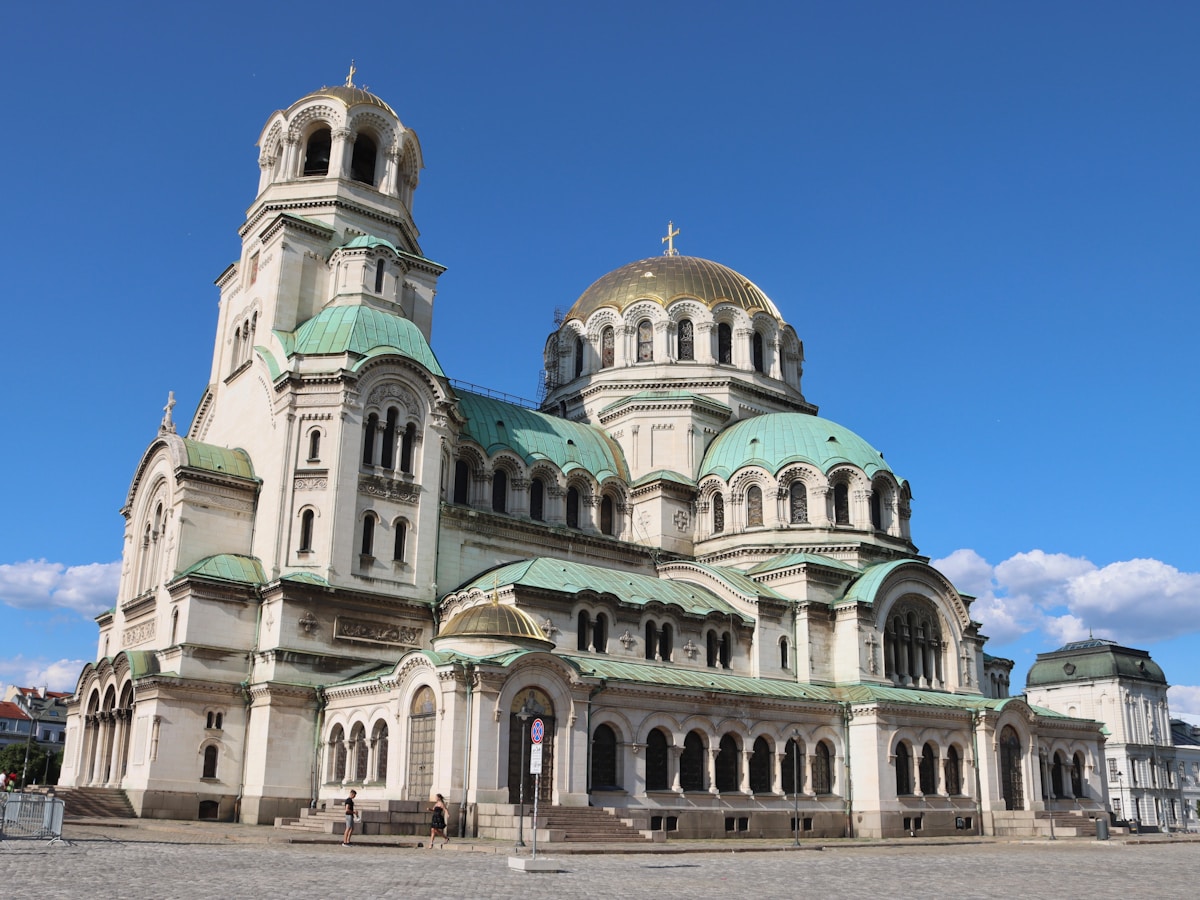
Sofia is the smallest capital in the EU by population density but one of its cheapest — and among the most underrated. At its centre is a palimpsest of empires: a Roman rotunda built into an Ottoman mosque built into a communist-era piazza, with a medieval church buried under the Serdika metro station. The free walking tour is the best entry point; the Seven Rila Lakes day trip is the most rewarding excursion.
Here is a breakdown of the best tours in 2026 by traveller type.
Top Sofia Tours at a Glance
| Tour | Duration | From (approx) | Best For |
|---|---|---|---|
| Free Walking Tour | 2 hrs | Free (tip) | First-timers, budget travellers |
| Food Markets Tour | 2.5 hrs | €20 | Food lovers, local culture |
| Communist-Era Tram Food Tour | 3 hrs | €35 | History & food enthusiasts |
| Wine and Food Walking Tour | 3 hrs | €30 | Wine lovers, afternoon visitors |
| Seven Rila Lakes Day Hike | Full day | €35 | Hikers, nature lovers |
| Plovdiv Day Trip | Full day | €30 | Cultural visitors, architecture fans |
| Rila Monastery Day Trip | Full day | €30 | History lovers, Orthodox architecture |
| Private Sofia Walking Tour | 2.5 hrs | €85 | Private groups, families |
Browse all Sofia tours on GetYourGuide
For First-Time Visitors: The Free Walking Tour and Alexander Nevsky
Sofia’s free walking tour departs daily at 11am and 6pm from in front of the Palace of Justice (ul. Vitosha 2) and covers the city’s headline sites in 2 hours: Alexander Nevsky Cathedral (the largest Orthodox cathedral in Bulgaria, built 1882–1912 to honour Russian soldiers killed in the Russo-Turkish War), the Presidency building and its changing of the guard (hourly), the Rotunda of St. George (Sofia’s oldest building, a 4th-century Roman rotunda), and the Serdika Roman ruins beneath the metro station. Guides are licensed; recommended tip €5–10.
Alexander Nevsky Cathedral (free entry as of 2026) is the dominant monument and worth a slow look inside — the frescoes cover 5,000 square metres, the neo-Byzantine interior seats 5,000, and the crypt contains Bulgaria’s most important collection of Orthodox icons. The antique market in the square outside runs on weekends.
For the full commercial and cultural picture: Sofia city guide.
For Food Lovers: Markets, Trams and Wine Tastings
Sofia’s food culture draws on Ottoman, Bulgarian, and Jewish culinary traditions — the Central Market Hall (Centralni Hali), built in 1909, is the best single building for surveying the mix. Banitsa (cheese pastry), kavarma (slow-cooked meat stew), tarator (cold yoghurt and cucumber soup), and Bulgarian wines from the Thracian Valley and Melnik are the staples.
The Flea and Food Markets Tour (approximately €20, 2.5 hours) covers the Central Market Hall, the Sunday flea market at Aleksander Nevsky Square, and one or two neighbourhood market stalls with tastings. Good for visitors who want a local, informal experience rather than a curated tasting format.
Book directly: Sofia: Flea and Food Markets Tour — approximately €20 per person as of 2026, includes Central Market Hall, antique flea market, and food tastings.
The Communist-Era Tram Food Tour (approximately €35, 3 hours) uses a restored tram from the 1970s to connect five food stops — banitsa bakeries, meze tavernas, and a local wine bar — while guides explain how the food culture evolved under communism. This is the most original tour format in Sofia and one of the more memorable experiences in the Balkans.
Book directly: Sofia: 5-Stop Food & Culture Tour by Communist-Era Tram — approximately €35 per person as of 2026, includes tram ride, five food stops, and historical commentary.
The afternoon wine and food walking tour (approximately €30, 3 hours) takes a slower approach — three wine stops with local pairings, cheese, cured meats, and seasonal produce from the market. Best suited for afternoon arrivals or a relaxed second day.
Book directly: Sofia: Afternoon Walking Tour with Wine and Food Tasting — approximately €30 per person as of 2026, includes three wine venues and guided food pairings.
For more options, see our food tours in Sofia guide.
For History Lovers: Communist Architecture and Ancient Sofia
Sofia has more layers of ancient archaeology per square kilometre than almost any other European capital — the city sits on a Roman settlement (Serdica, founded 1st century AD), an Ottoman administrative centre, and a post-liberation Bulgarian capital redesigned by Austrian architects in the 1880s.
The Communist Sofia walking tour (approximately €15, 2–3 hours) covers the NDK (National Palace of Culture), the former Communist Party Headquarters building on Battenberg Square, the Soviet Army Monument, the Monument 1300 Years Bulgaria, and the Lenin statue that was removed in 1990. Good guides provide the before/after context that makes the architecture legible.
Boyana Church (approximately €10 entry as of 2026, UNESCO World Heritage Site since 1979): a 10th–13th century church 8km from the city centre, with 13th-century frescoes that art historians consider among the best examples of medieval painting in Europe. Visit independently or as part of a combined Boyana Church and Rila Monastery tour (approximately €30–40).
Best Day Trips from Sofia
Seven Rila Lakes (110km south, full day): a high-altitude glacial lake circuit at 2,000–2,500 metres in the Rila Mountains. The chairlift from Panichishte handles the hardest part of the ascent; the trail between the seven lakes (each named for its shape — Tear, Eye, Kidney, etc.) takes 3–4 hours at a comfortable pace. Guided day tours (approximately €35–45) are the most efficient way to go.
Book directly: From Sofia: Seven Rila Lakes Full-Day Hiking Tour — approximately €35 per person as of 2026, includes transport, chairlift guidance, and a hiking guide for the trail.
Rila Monastery (117km south): founded in the 10th century, rebuilt after a fire in the 14th century, and expanded to its current form in the 19th century — the largest Orthodox monastery in Bulgaria and a UNESCO World Heritage Site since 1983. The frescoes on the exterior arcades are among the most photographed in the Balkans. Day tours from Sofia (approximately €30) usually combine the monastery with Boyana Church.
Plovdiv (130km east, 2 hours by train): the best single day trip from Sofia. The Old Town’s three hills of National Revival architecture, the Roman amphitheatre, and the Kapana arts and café district make Plovdiv one of the most walkable cities in Bulgaria. See our day trips from Sofia guide for transport and timing.
Practical Tips for Booking Sofia Tours
- The free walking tour is the logical starting point — it orients the city efficiently and is genuinely good. Tip €5–10 per person.
- Book the communist tram tour at least 3 days ahead — capacity is limited by the tram size and it fills consistently in summer.
- Best timing for Rila Lakes: July–September when the mountain trail is clear of snow. Snow can linger at 2,500m until late June.
- Plovdiv independently vs. guided: train travel is cheap and reliable enough that most visitors do Plovdiv independently. A guide is worth it for the Old Town’s architectural history specifically.
- Vitosha Mountain (the mountain visible behind Sofia, 2,290m at its peak) has cable car access to the plateau and hiking trails from the city’s southern suburbs. No tour needed; the cable car from Simeonovo (approximately €8 return) deposits walkers at 1,800m.
Browse all Sofia tours and activities
For a full stay plan, our Sofia city guide covers neighbourhoods, transport, and the best months to visit. If you’re continuing south, see the Balkans 2-week itinerary for onward route options.