Guided Tours from Split: Comparison
Three of the most-booked options on GetYourGuide for the Split–Plitvice route, ranked by group size:
| Tour | Duration | Format | Price | Includes | Book |
|---|---|---|---|---|---|
| Guided Tour with Entry Tickets | ~12 hours | Large group | From ~€80/person | Coach, guide, park entry, boat, train shuttle | Book |
| Small-Group Tour — max 14 people | ~12 hours | Small group | From ~€70/person | Coach, guide, park entry, boat | Book |
| Self-Guided Day Trip with Boat Ride | ~12 hours | Independent | From ~€45/person | Coach, boat ride, train shuttle — no guide, no entry | Book |
Which to choose: The small-group option (max 14) gives the most breathing room at viewpoints and lets the guide adjust pace. The self-guided option suits independent travellers who want to set their own route inside the park — note that entry tickets must be purchased separately on arrival (approximately €20–40 depending on season, cash only at the gate). The large-group guided tour is the best-value option if entry is your main concern — tickets are typically included and the guide handles the route decisions.
Prices are approximate as of 2026 and vary by season and availability. Check current prices at the links above.
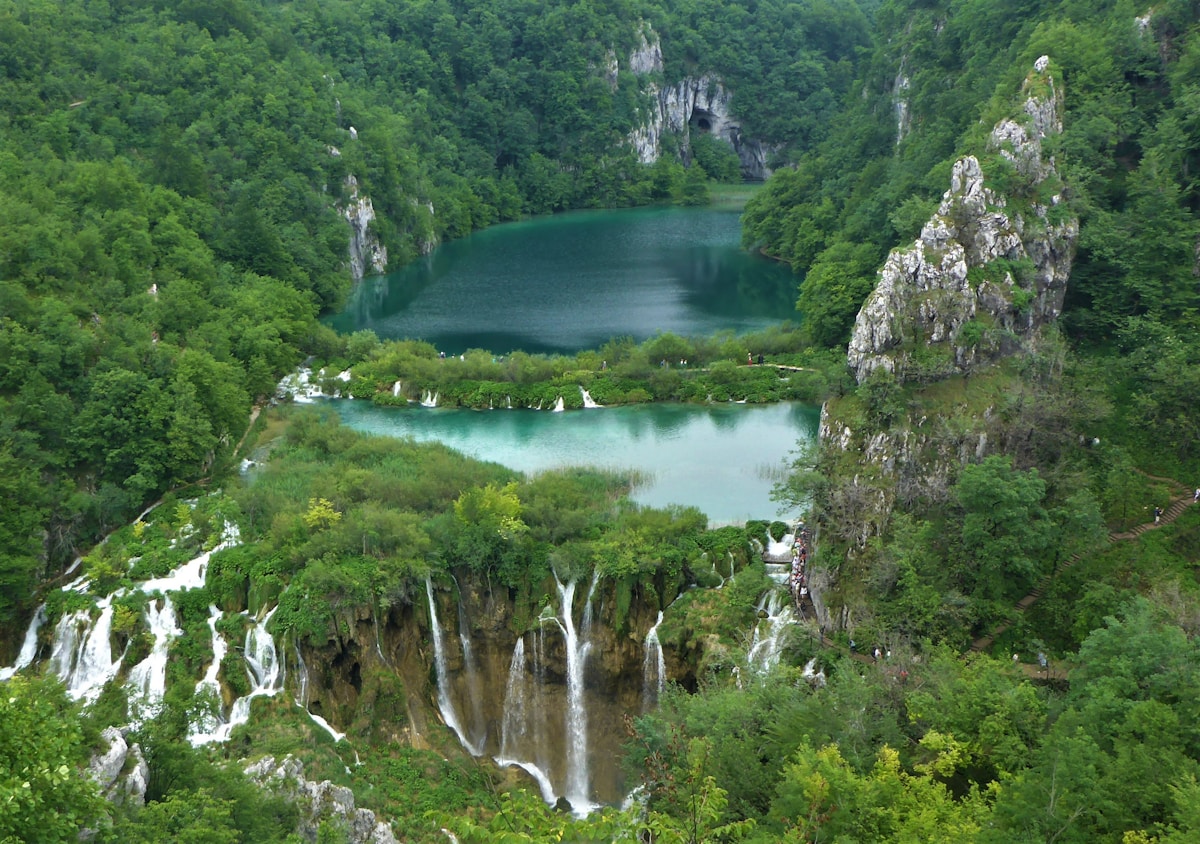
Plitvice Lakes National Park contains sixteen terraced lakes connected by waterfalls across a limestone karst landscape. The travertine formations that create the natural dams are still actively growing - the park’s terrain is measurably different from decade to decade as mineral deposits build new barriers and redirect water. UNESCO added Plitvice to the World Heritage List in 1979, and it remains Croatia’s most visited natural site.
The park sits in the Lika region of central Croatia, roughly equidistant between Zagreb (to the north) and Split (to the south), which makes it a natural stop on the coast-to-capital route. Day trips from both cities are well-established.
Entry Fees and Tickets
Plitvice uses dynamic seasonal pricing. As of 2026, approximate fees per adult:
- Peak season (July–August): €35–40
- Shoulder season (May–June, September–October): €20–30
- Off-season (November–April): €10–20
Children under seven: free. Students and seniors: reduced rates with valid ID.
Tickets should be booked online in advance at np-plitvicka-jezera.hr, particularly in July and August when the park imposes daily visitor caps. Turning up on the day in peak season risks being turned away at the gate.
The entry ticket covers the park’s boat service across Kozjak Lake and the train shuttles between the Upper and Lower Lakes sections. Both are worth using - the boat crossing is scenic, and the shuttle saves considerable walking on the connecting road section.
Route Options Inside the Park
The park designates six marked routes (A through F) of varying lengths and difficulty. All are clearly signed.
Route A or B (2–3 hours): Lower Lakes only. Takes in the Grand Waterfall and the best turquoise pools. Best for half-day visitors or those who prioritise the most dramatic scenery. Route A is 3.5km; Route B is 4km.
Route C (3–4 hours): Lower Lakes plus Kozjak Lake crossing. Adds the boat ride across the main lake and extends into the Upper Lakes briefly. Good balance for most visitors.
Route F (4–6 hours): Full circuit of both Upper and Lower Lakes. Approximately 18km total, mostly flat to gentle gradients on boardwalks. Requires a full day; bring lunch or use the Plitvice restaurant near the Entrance 2 area.
Boardwalks run directly above the water between lakes on the main sections. In wet weather they become slippery. Sturdy shoes are strongly recommended over sandals or flip-flops.
Guided Tour from Split (approximately 4.5 hours each way)
The drive from Split to Plitvice takes approximately 4 hours 15 minutes to 4 hours 45 minutes via the A1 motorway and then regional roads. This is a long day - departures are typically 6:30–7:30am with returns by 9–10pm.
Organised tours from Split are available from approximately €60–90 per person as of 2026, with most operators including the park entry ticket in the price. Operators to look for on GetYourGuide and direct booking sites include Split Excursions, Adriatic Lines, and Atlas Croatia. The pricing difference usually reflects whether lunch is included and how much time the tour spends at the park (3–4 hours inside is typical).
What a good Split–Plitvice tour includes: Transport in a modern coach or minibus, a guide who covers the geological background during transit, park entry, and free time inside to walk the Lower Lakes route. Some operators also stop at Rastoke village near Slunj (a small town built across watermill channels) on the return, which adds colour without much extra time.
What it does not include on budget options: Lunch, any Upper Lakes walking time, or flexibility on departure time.
Guided Tour from Zagreb (approximately 2 hours each way)
Zagreb is the more logical base for Plitvice. The drive is around 2 hours on the A1, making a genuine full-day trip viable without pre-dawn starts.
Guided day tours from Zagreb run from approximately €35–55 per adult as of 2026, and the shorter transit time means operators can include a longer park visit - typically 4–5 hours inside. Several Zagreb city tour operators run Plitvice daily in summer — search GetYourGuide for Zagreb-based Plitvice tours and filter by group size to find the right fit.
The Zagreb option works particularly well if you are spending time in the capital and want a single-day escape into nature before returning. Split visitors doing the drive north, or those heading from Dubrovnik to Zagreb overland, can use Plitvice as a logical stop rather than a dedicated out-and-back trip.
Self-Guided: Driving to Plitvice
For independent travellers who hire a car in the Balkans, Plitvice is straightforward to reach and does not require a guide. The main considerations:
Parking: Two large car parks serve the park - one at Entrance 1 (near the Upper Lakes, main visitor centre) and one at Entrance 2 (near the Lower Lakes). Cost approximately €10 as of 2026 for a full day. In peak season, arrive before 9am; both car parks fill by mid-morning in July and August.
Which entrance: Most self-drivers use Entrance 2 for the Lower Lakes first (the most photographed section), then take the shuttle and boat to the Upper Lakes. Entrance 1 works if you want to start at the Upper Lakes and work downhill.
Navigation inside: The route signs are clear. Download the park’s app or pick up a map at the entrance. Mobile signal is patchy in the canyon sections.
Fuel: Fill up before arriving. The nearest petrol station is in Mukinje, a small village immediately adjacent to the park. The park itself has no fuel.
Best Season to Visit
May and June: Lower visitor numbers, full water flow (snowmelt feeds the falls into June), moderate entry prices. Ideal for photography - the boardwalks are not crowded and the light is good.
July–August: Peak season. Maximum crowds, highest entry prices, early car park queues. The park is still spectacular, but the boardwalk experience is compromised by congestion. If visiting in peak season, arrive at gate opening (7am in summer).
September–October: Foliage colour builds from mid-September. One of the best times photographically, with autumn tones and lower visitor numbers than summer. Water levels are lower but still impressive.
November–March: Off-season prices, quiet, and the park has a stark beauty with ice formations on some falls in December–February. Not all routes are accessible in winter - check the park website before travelling.
Browse guided tours to Plitvice from Split and Zagreb, including small-group and private options: Best Tours in Croatia
See also: Plitvice Lakes guide | Croatia travel guide