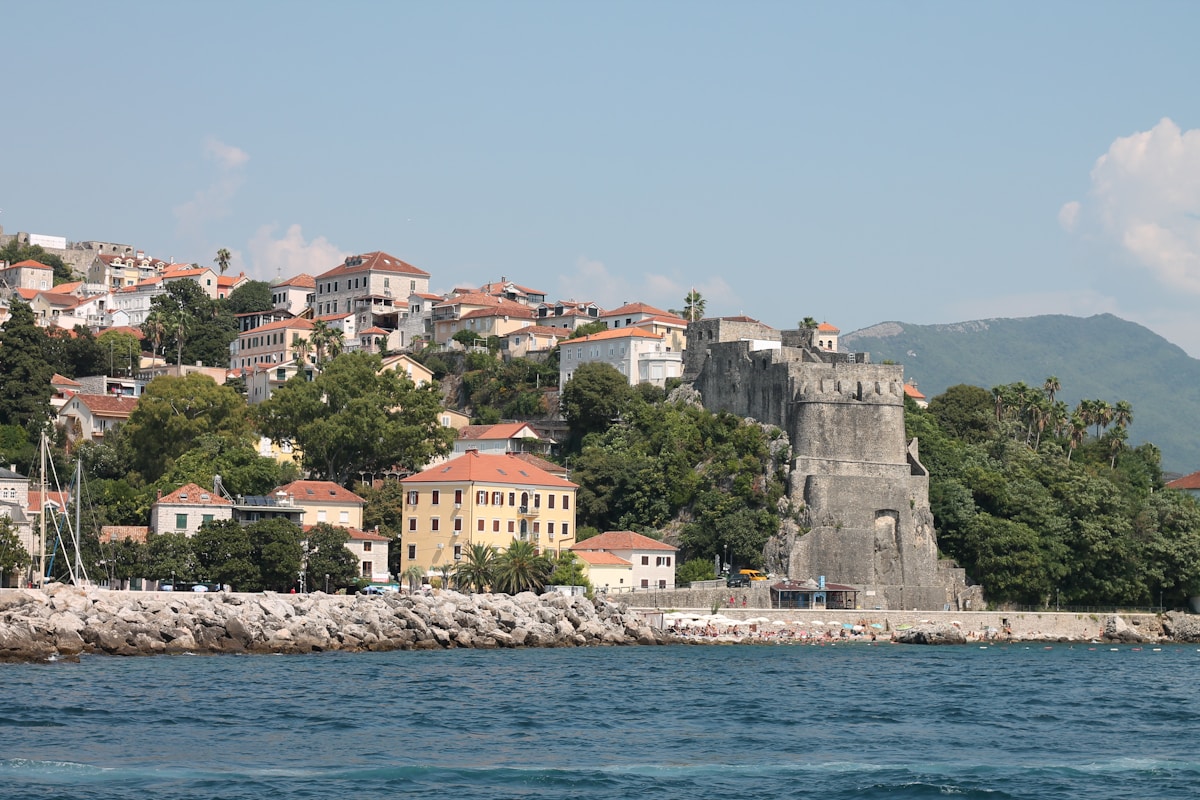
Herceg Novi Montenegro Travel Guide
Herceg Novi travel guide - medieval fortresses, a flower-lined seafront, the Igalo mineral spa, and easy day trips to Kotor and Dubrovnik.
Guides for Herceg Novi Travel Guide
Herceg Novi sits at the western entrance of the Bay of Kotor, where the open Adriatic narrows into the long inland fjord. It’s the first significant town you reach when crossing from Croatia (or Bosnia’s coastal strip), and it has a different character from the Venetian-influenced towns further inside the bay.
Founded in 1382 by the Bosnian king Tvrtko I, Herceg Novi passed through Ottoman, Spanish, Venetian, and French control before becoming part of Montenegro in 1918. Each period left something behind: the Ottoman clock tower, the Venetian gate, the French-era promenade. It’s compact, manageable, and considerably less crowded than Kotor.
Getting to Herceg Novi
From Dubrovnik: The bus journey takes approximately 1 hour and costs €8–12. The route passes through the Neum corridor - a short stretch of Bosnian territory. Passport control is quick and the crossing adds about 15 minutes. Several daily buses run this route in summer; fewer in winter.
From Kotor: 1 hour by bus, approximately €5. Buses run every 1–2 hours. A summer ferry service also connects Kotor with Herceg Novi; check current schedules locally as times vary by season.
From Podgorica: 2.5 hours by bus, approximately €10.
By car: The drive from Dubrovnik takes around 1 hour. Parking in Herceg Novi’s old town area is limited; the main parking areas are along the seafront promenade. To explore the wider Bay of Kotor at your own pace, car hire in the Balkans is the most flexible option.
The Old Town
Herceg Novi’s old town is compact - you can cover the main sights in 2–3 hours. It rises steeply from the waterfront and is best explored on foot. The streets are narrow, stone-paved, and mostly car-free.
The main square (Trg Herceg Stjepana, also known as Belavista Square) is the hub: outdoor café tables, a Venetian clock tower from 1667, and views down to the promenade. From the square, stairs lead up to Kanli Kula and down toward the seafront fortifications.
Entry to the old town streets and squares is free. Roaming with no fixed itinerary for an hour or two works well here - there are no queues and few crowds outside August.
Forte Mare (Sea Fortress)
Forte Mare sits directly on the waterfront at the base of the old town. Built during the Venetian period in the 15th century, it was reinforced multiple times and still has its original gun embrasures facing the bay entrance. Entry costs approximately €2 as of 2026. The ramparts give clear views across the bay to Croatia’s Pelješac peninsula on a clear day.
The fortress occasionally hosts evening events in summer - check locally for current programming.
Kanli Kula (Bloody Tower)
Kanli Kula stands on the hill above the old town. The name comes from its use as a prison and execution site during Ottoman rule. Entry costs approximately €2. The climb from the old town takes about 15 minutes on steep steps; the views from the top over the old town, bay, and surrounding hills justify the effort.
Summer concerts are held in the fortress courtyard from June through August - an atmospheric setting for live music. Tickets typically cost €10–20; check locally for the current programme.
Savina Monastery
Savina Monastery is a short walk east of the old town along the waterfront. Founded in the 16th century and rebuilt multiple times since, it consists of two churches within a walled garden. Entry is free.
The smaller, older church (Mala Savina) dates to the late medieval period; the larger one was built in the 18th century. The cloistered garden is particularly peaceful on weekday mornings. Modest dress is required - shoulders and knees covered.
Belavista Promenade
The 1km seafront promenade runs from the old town south toward the Topla area. It’s lined with palm trees, outdoor café tables, and views across the bay. Entry is free. It’s the main evening stroll for locals and the best place to watch the ferry and yacht traffic in the bay entrance. Well-maintained and pleasant in any season.
Igalo Mineral Spa
Igalo is a small settlement 3km west of Herceg Novi, best known for the Igalo Institute - a Yugoslav-era spa facility that has operated since the 1950s. The mineral-rich sea mud found in this section of the bay has been the basis of therapeutic treatments for joint and skin conditions.
Treatment sessions at the Institute start from approximately €15 as of 2026; the full overnight wellness packages are substantially more. Day visitors can access some treatments independently. The town of Igalo is quiet and residential - the spa is the main reason to visit.
Where to Eat
Stari Grad restaurant - reliable seafood and Montenegrin food in the old town. Mains €12–22. Popular in summer; book ahead for evenings.
Konoba Feral - a local favourite for grilled fish and shellfish. Mains €14–25. Located close to the waterfront, slightly outside the main tourist strip.
Grill Bar Jadran - budget option for grills and seafood. Mains €8–15. Casual atmosphere, quick service, good value for a lunch stop.
Coffee in the main square runs approximately €1.50–2.00.
Where to Stay
| Hotel | Area | From (per night, 2026) |
|---|---|---|
| Hotel Perla (4-star) | Old Town adjacent | €100 |
| Hotel Sun Resort | Seafront | €80 |
| Private apartments | Various | from €40 |
See the full breakdown in our Herceg Novi where-to-stay guide.
Day Trips from Herceg Novi
Kotor is 1 hour by bus (€5) - the most popular day trip, and rightly so. Perast and the Our Lady of the Rocks island are 45 minutes away. Budva can be reached in about 1.5 hours.
Dubrovnik is 1 hour in the other direction - manageable as a day trip but most visitors prefer to stay at least one night. For organised excursions from Herceg Novi, browse tours and activities in Montenegro.
The full logistics are in the Montenegro travel guide.
Practical Notes
- Currency: Euro. Cards accepted widely; carry cash for small cafes and market stalls.
- Language: Montenegrin (similar to Serbian). Some Italian spoken in tourist areas, a legacy of the Venetian period.
- Mimosa Festival: Held in February - Herceg Novi’s most distinctive annual event, when the hills are covered in yellow mimosa blossom. Accommodation books out early.
- Climate: Herceg Novi is one of the rainiest spots on the Adriatic coast in winter (the Orjen mountains trap precipitation), but summer is dry and sunny.
For activities, see our Herceg Novi things-to-do guide.
Book an experience
Top experiences in Herceg Novi Travel Guide
Explore the best tours and activities in Herceg Novi Travel Guide - instant confirmation, free cancellation on most bookings.