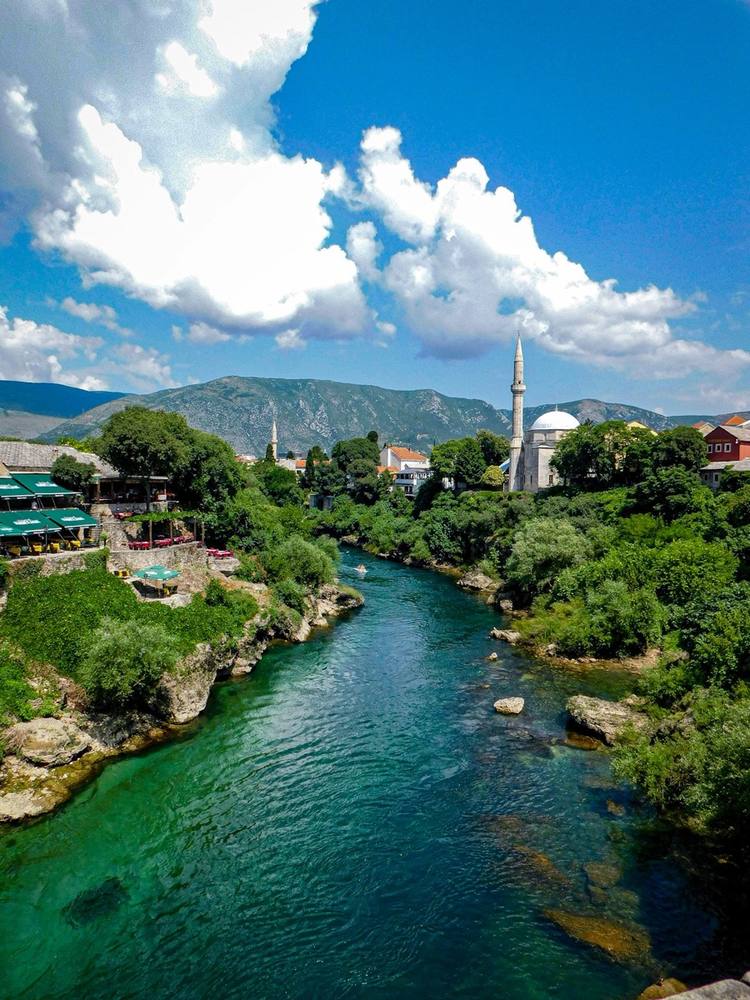
Mostar’s food is Bosnian food, shaped by the same Ottoman foundations you find in Sarajevo but eaten in an older, smaller, more concentrated Old Town. The Kujundžiluk bazaar street, the lanes around Stari Most bridge, and the quieter blocks just north of the tourist flow are where the best eating happens. Prices in the Old Town restaurants are low by any European comparison. Bosnia uses the convertible mark (BAM), pegged to the euro at approximately 1.96 BAM = 1 EUR; many restaurants in the tourist areas also quote prices in euros.
What to Eat in Mostar
Ćevapi
The Bosnian grilled sausage that runs through every meal of the day in Mostar. Finger-shaped cylinders of minced beef (the Bosnian recipe traditionally excludes pork), mixed with a small amount of lamb, grilled over charcoal until slightly charred on the outside and juicy inside. Served in warm somun flatbread with raw onion and kajmak cream cheese. A standard portion of six pieces with bread costs approximately EUR 3-4. A ten-piece portion, enough for most appetites as a main, costs approximately EUR 4-6. The quality difference between a dedicated ćevabdžinica and a tourist-facing restaurant is substantial; go to a specialist.
Burek
Flaky filo pastry stuffed with minced beef and baked in coils until golden. In Bosnian terminology, burek means specifically the meat version. Zeljanica (spinach and cheese), sirnica (white cheese), and krumpiruša (potato) are the parallel pastry variations. Eaten for breakfast, mid-morning, or as a late snack. A large piece from a traditional buregdžinica costs approximately EUR 1.50-2.50. Eat it with a glass of cold kiselo mlijeko (yogurt). The best burek in Mostar comes from the smaller bakeries in the lanes north of the bazaar, not the Old Town restaurants.
Bosanski Lonac
Slow-cooked meat and vegetable stew simmered for hours in a sealed clay pot: beef or lamb layered with potato, carrot, cabbage, and tomato, cooked until the broth is thick and the meat is entirely tender. The unhurried cooking method is the point. Found at traditional restaurants rather than fast-food spots. Approximately EUR 8-13 for a main portion with bread. Order it when you have time to sit with it.
Where to Eat: Old Town (Baščaršija)
Tima-Irma (Onešćukova 1, Old Town) is the address most locals cite when asked where to eat ćevapi in Mostar. Small, busy at peak times, no frills. The ćevapi are charcoal-grilled, the somun is fresh, and the kajmak is the real thing. A full portion with all the accompaniments costs approximately EUR 4-6. The restaurant sits slightly back from the main tourist flow, which keeps the quality honest. Open from around 8am, closes when they run out.
Hindin Han (Jusovina 10, Old Town) is a traditional Bosnian restaurant in a stone building just off the Old Town’s main walking lane. Bosanski lonac, klepe (Bosnian dumplings), stuffed peppers, and grilled meats served in a calm, wood-panelled interior. Good choice for a longer dinner at reasonable prices. Mains approximately EUR 8-13. The staff are helpful with explaining dishes to first-time visitors.
Sadrvan (Jusovina 11, Old Town) sits almost directly opposite Hindin Han and has a larger outdoor terrace overlooking the lane. The menu covers the same Bosnian ground: ćevapi, pljeskavica, grilled fish, stuffed vine leaves. The setting is pleasant and prices are fair for the location. Mains approximately EUR 8-14. A reliable fallback if Hindin Han is full.
Restoran Labirint (Onešćukova, above the Old Town) is worth climbing to for the terrace views across the rooftops and the Neretva river. The food is solid Bosnian cooking rather than exceptional, but the location overlooking Stari Most bridge makes it one of the best places in the city to have a long lunch. Grilled meats and Bosnian dishes approximately EUR 9-16 per person. Book ahead in summer for the best terrace tables.
Where to Eat: Away from the Old Town
Žapuž (Donjih Šantića 4, across the Neretva) is on the western side of the river, away from the main tourist circulation. A local-facing restaurant known for good grilled meats, roasted lamb, and solid Bosnian home cooking. Prices noticeably lower than the Old Town equivalents. Mains approximately EUR 7-11. Worth the ten-minute walk for the combination of quality and value.
Konoba Taurus (Mala Tepa, Old Town) is a smaller, quieter option near the bazaar. Good for a relaxed lunch rather than a full evening meal. Ćevapi, pita pastries, and a short menu of Bosnian dishes. Mains approximately EUR 6-10.
Coffee in Mostar
Bosanska kafa follows the same ritual as in Sarajevo: strong, unfiltered coffee served in a džezva with a sugar cube and often a lokum (Turkish delight). Mostar has numerous kafanas and coffee shops in the Old Town where the coffee costs approximately EUR 1-2 and the expectation is that you sit slowly. The coffee culture is as much social practice as caffeine delivery. Rakija (fruit brandy, usually šljivovica or dunja) is offered before meals at traditional restaurants.
Practical Notes
Restaurants in Mostar’s Old Town are open from morning through late evening in summer, typically until 10pm or 11pm. Many places operate cash only or strongly prefer it; carry BAM or euros. English menus are standard in the Old Town. Tipping is customary at 10% in sit-down restaurants. Mostar’s Old Town is small enough to walk completely in under an hour, so scouting restaurants before choosing is practical. For more on what to do in the city, see our guide to Mostar’s bridge jumping and activities and the full where to stay in Mostar guide for accommodation options.