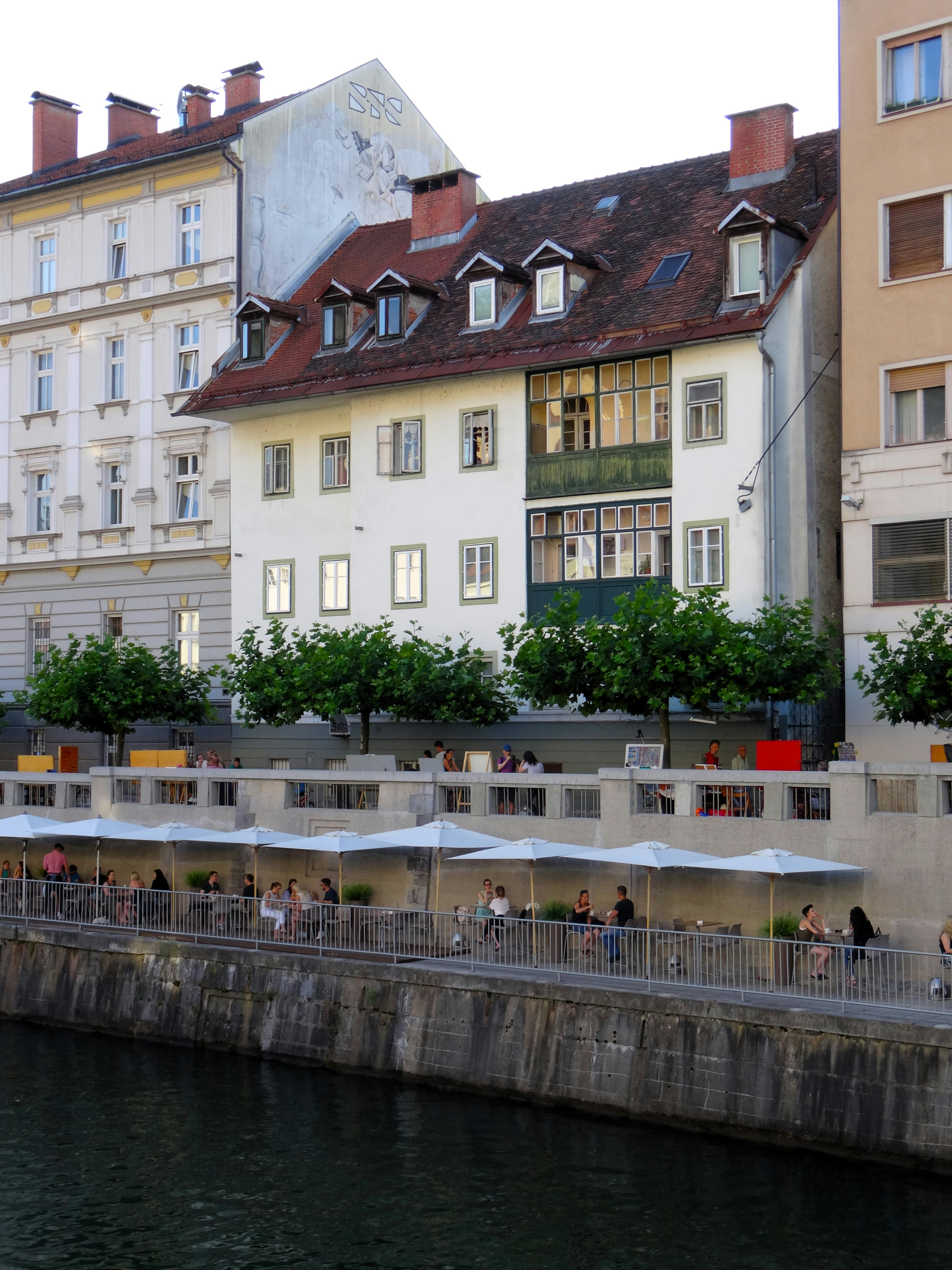
Ljubljana is a small, self-possessed capital with a food scene that punches above its size. The city sits at the convergence of Central European, Mediterranean, and Balkan culinary traditions — Slovenia’s position between Italy, Austria, Hungary, and Croatia means the kitchen has absorbed influences from all four directions and built something of its own. Slovenian food is less widely known than Croatian or Serbian cuisine, which works in the visitor’s favour: restaurants here are often genuinely trying to show off local ingredients rather than serving an international version of Balkan food. It is the most expensive city in this guide, but the quality is commensurate. All prices are approximate as of 2026; Slovenia uses the euro.
What to Eat in Ljubljana
Kranjska Klobasa (Carniolan Sausage)
Slovenia’s most protected food product (it has PDO status) and the dish most associated with Ljubljana street food. A thick, coarsely ground pork sausage (with a small proportion of beef), lightly smoked and simmered — never grilled — until the skin snaps when you bite. Served with mustard, horseradish, and a piece of country bread. Available from the market sausage vendor at the Central Market on Vodnikov trg. A full sausage with bread costs approximately EUR 3-5. The Central Market stall is the definitive version.
Štruklji
Rolled dumplings made from a thin pastry dough, filled and either boiled, baked, or steamed. The sweet versions (walnut, cottage cheese with raisins, tarragon with butter) are eaten as dessert or as a main dish. The savoury versions (mushroom, cheese, roasted garlic) are served as starters or sides. A specifically Slovenian dish with no direct parallel elsewhere in the region. Found at traditional gostilnas and some markets. Approximately EUR 5-9 for a portion.
Jota
A thick, slow-cooked stew of beans, sauerkraut (and sometimes pickled turnip), smoked pork or sausage, and potatoes. A distinctly Slovenian winter dish with Karst region origins, shared across the border with Trieste, Italy, where a similar version is eaten. Warming, filling, and complex in flavour from the slow sourcing of the fermented vegetables. Found at traditional restaurants from autumn through spring. Approximately EUR 7-12.
Prekmurska Gibanica
A layered baked pastry from the Prekmurje region of eastern Slovenia — layers of cottage cheese, poppy seeds, walnuts, and apple wrapped in a filo-like dough, baked until golden. The national dessert of Slovenia and one of the great traditional pastries of Central Europe. Found at good gostilnas and patisseries throughout Ljubljana. Approximately EUR 3-6 for a slice.
Local Slovenian Wine
Slovenia is a genuinely interesting wine country, less famous than its neighbours but producing excellent whites from Goriska Brda (Slovenian Collio — sharing the same terroir with Italian Friuli), Vipava Valley, and the Karst. Orange wines, produced from extended skin-contact maceration of white grapes, were practised in Slovenia for centuries before the contemporary natural wine movement. Look for Rebula, Malvazija, and Zelen. A glass of local wine at a mid-range restaurant costs approximately EUR 4-7.
Where to Eat — Riverside and Old Town
Gostilna Na Gradu (Grajska planota 1, Ljubljana Castle) — A traditional Slovenian gostilna inside Ljubljana Castle, serving an exceptionally well-curated version of classic Slovenian food: kranjska klobasa, štruklji, seasonal mushroom dishes, venison stew, and a well-considered list of Slovenian wines. The castle setting is worth the slightly elevated prices. Approximately EUR 16-26 per person. Lunch and dinner. Booking recommended in summer.
Spajza (Gornji trg 28, Old Town) — A beloved neighbourhood gostilna in the quieter upper Old Town, away from the riverside crowds. Consistently good Slovenian cooking — roast duck, venison, grilled freshwater fish (pike-perch, trout), and excellent štruklji. One of the restaurants most consistently recommended by Ljubljana residents for showing off Slovenian food to guests. Approximately EUR 14-22 per person.
Ribca (Adamič-Lundrovo nabrežje 1, beneath the Triple Bridge) — A fish restaurant built into the arches beneath the Central Market, specialising in simply prepared freshwater and Adriatic fish and seafood. Good grilled trout, octopus, and a short menu of honest seafood dishes. One of the better lunch spots in the city, mostly used by market traders and locals. Approximately EUR 12-18 per person.
Manna (Eipprova ulica 1, near Tivoli Park) — A Ljubljana institution for upscale Slovenian cooking. The kitchen works with seasonal Slovenian and local ingredients and produces consistently refined food without being unnecessarily complicated. Good wine list with Slovenian producers. Approximately EUR 22-35 per person. Booking recommended.
Where to Eat — Markets and Budget Options
Central Market (Pogačarjev trg and Vodnikov trg) — Open every morning (Saturday mornings are the busiest). The covered fish market (Plečnik Hall) sells fresh fish and seafood; the open stalls have Slovenian cheeses, honey, pumpkin oil, sausages, seasonal fruit and vegetables. The sausage vendor in the market square is the cheapest and best lunch in Ljubljana. Open approximately 7am-4pm on weekdays, 7am-2pm on Saturdays.
Open Kitchen (Odprta kuhna) (Pogačarjev trg) — A Friday food market held on the Central Market square from March to October, noon to 9pm approximately. Around 40-60 vendors each week from Ljubljana restaurants and independent cooks. Good opportunity to try Slovenian and international street food at lower prices than sit-down restaurants. Approximately EUR 4-8 per plate.
Klobasarna (Ciril-Metodov trg 15, in the market arcades) — A small sausage bar in Jože Plečnik’s beautiful market arcades, serving kranjska klobasa, various sausages, and good soups. Cheap and honest, popular with locals shopping in the market. Approximately EUR 4-7 per person.
Metelkova and Contemporary Scene
Pop’s Place (Kolodvorska ulica 12, near train station) — A burger restaurant that has become a Ljubljana institution, partly for genuine quality (excellent locally sourced beef) and partly for its no-pretension approach in a city sometimes prone to pretension. Approximately EUR 8-14 per person.
Restavracija 2000 (Prule 4, south of Old Town) — A well-regarded restaurant running a seasonal menu of Slovenian and international dishes with careful sourcing. One of Ljubljana’s more interesting kitchens. Approximately EUR 18-28 per person. Good Slovenian wine list.
Practical Notes
Ljubljana restaurants generally open from noon to 11pm. Gostilnas (traditional inns) often have excellent value dnevno kosilo (daily lunch specials) served noon to 3pm — a two-course lunch for approximately EUR 8-12 including soup. Most restaurants accept cards; some traditional gostilnas prefer cash. English is spoken universally throughout the city. Tipping 10% is standard. The city is very walkable and all the areas listed above are within 20 minutes’ walk of each other.