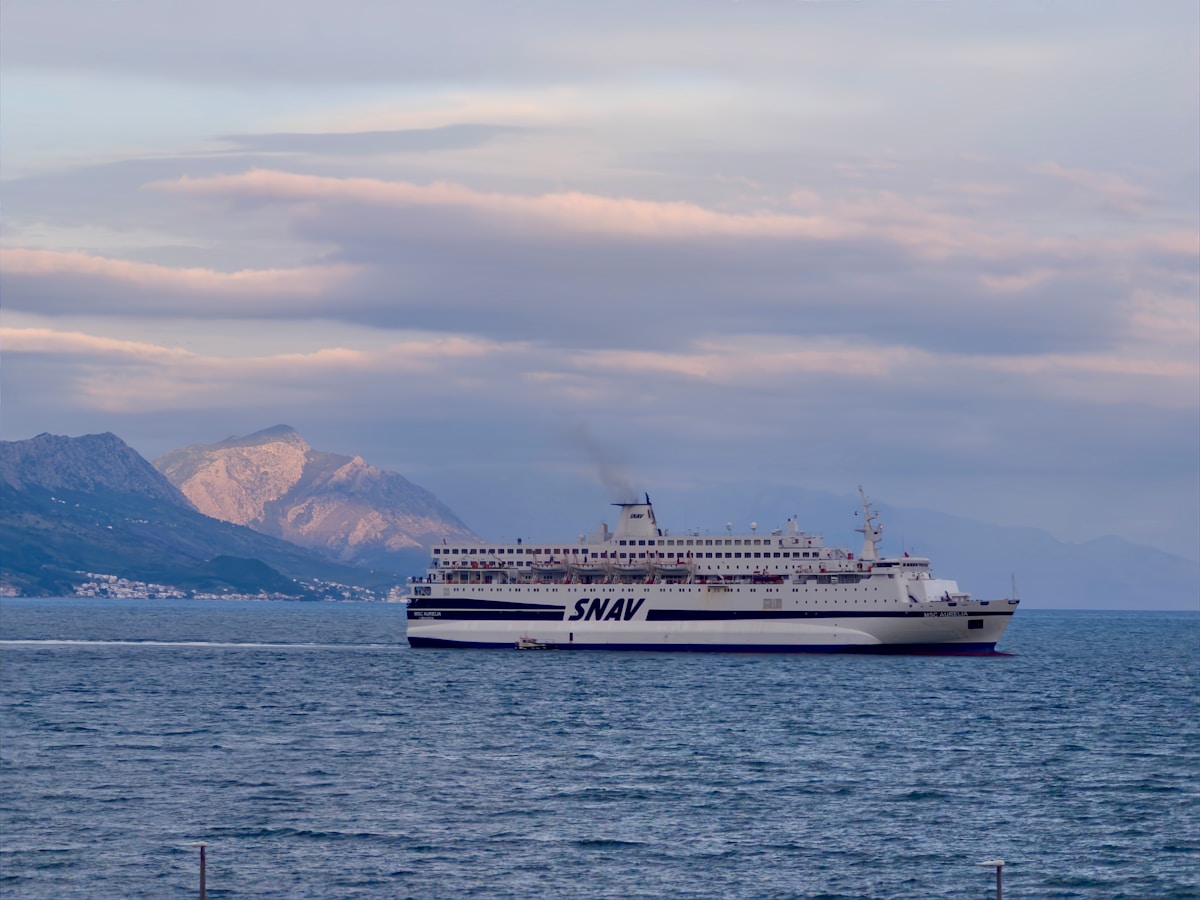
Croatia has more than a thousand islands along the Adriatic coast and two quite different ways to reach them: the public ferry network run by Jadrolinija and its catamaran competitors, or the organised boat tour industry that departs from harbour towns each morning from May to October. Understanding when each option makes sense saves money, time, and frustration.
How the Public Ferry Network Works
Croatia’s ferry system is anchored by Jadrolinija, the state-run operator that runs both car ferries and passenger-only catamarans. Two private operators, Krilo and TP Line, compete on the most popular Dalmatian routes.
Jadrolinija Car Ferries
These are large roll-on roll-off ferries that carry vehicles and foot passengers on scheduled routes. Journey times are longer than catamarans because the ferries are heavier and stop at ports that allow vehicles to drive on and off. The Split to Stari Grad (Hvar) car ferry takes 2 hours; the Dubrovnik to Sobra (Mljet) ferry takes 1.5 hours.
Fares are cheap by European ferry standards. A foot passenger on the Split-Hvar route pays approximately €6 one way in 2026. A car plus driver is approximately €45-55 on the same route. Year-round service makes these ferries reliable for travel outside the tourist season.
Where Jadrolinija car ferries work well: Overnight trips where you want flexibility to stay multiple nights on an island. Road trips where you need to bring a vehicle. Off-season travel when boat tour operators have stopped running.
Where they struggle: Moving between islands quickly. Car spaces sell out in July and August, and vehicle queues can mean waiting hours for the next available sailing on popular routes.
Catamarans: Krilo and TP Line
High-speed foot-passenger catamarans cover the most popular tourist routes significantly faster than the car ferry. Krilo runs Split to Hvar Town in 55 minutes; TP Line runs the full Dubrovnik-Korcula-Hvar-Split corridor in around 4.5 hours.
Prices are slightly higher than the Jadrolinija car ferry but still reasonable. Split to Hvar Town by catamaran runs approximately €13-17 one way. Dubrovnik to Korcula with TP Line costs approximately €20-30.
Where catamarans work well: Point-to-point island hopping without a car. Multi-day independent coastal routes from Split to Dubrovnik (or the reverse). Connecting to islands that are too far for a day trip by car ferry.
Where they struggle: Weather. Fast catamarans are more affected by rough seas than car ferries. Services can be cancelled or delayed in bad weather, particularly early and late in the season.
How Guided Boat Tours Work
Organised boat tours depart from the tourist harbours in Split, Dubrovnik, Zadar, and other coastal towns. They run on a fixed itinerary with a guide and driver, visiting multiple stops in a single day. Most operate from May to October.
Types of Boat Tour
Group speedboat tours: Small groups (typically 8-12 people) on high-speed speedboats or RIBs. Fast, loud, and able to reach sea caves and shallow coves that large ferries cannot access. These are the main format for Blue Cave tours and 5-island day trips from Split.
Catamaran group tours: Larger groups on private catamarans with sundecks and a catered bar. More comfortable for a full day, with shade and space to move around. These suit the Hvar and Brac day-trip format where you want to relax on deck between stops.
Sailing trips: Half-day or full-day sailing trips from Hvar, Split, or Dubrovnik on traditional wooden boats. A slower pace than speedboats; more focused on the sailing experience itself. Sunset sailing trips fall in this category.
Private charters: A skipper and boat hired for a day, with a custom itinerary. Expensive (typically €400-800 per day for the boat), but suitable for groups that want flexibility.
Cost Comparison: Ferry vs Boat Tour
| Option | Cost per person | Journey flexibility | Islands per day |
|---|---|---|---|
| Jadrolinija car ferry (foot) | €6-12 one way | High | 1 (point to point) |
| Krilo/TP Line catamaran | €13-30 one way | High | 1-2 per day |
| Group speedboat tour | €60-120 | None | 3-6 |
| Group catamaran day trip | €50-100 | None | 2-3 |
| Sunset sailing trip | €25-50 | None | Local cruise only |
Public ferries are always cheaper for a single crossing. Boat tours cost more but include swimming stops, a guide, and in many cases food and drinks. The comparison flips in favour of tours when you want to visit multiple islands in a day - taking Jadrolinija between three islands in a day is logistically complicated and time-consuming in a way that a group boat tour handles automatically.
When to Choose the Public Ferry
You have time to stay overnight on islands. Public ferries make most sense when you are island hopping slowly, staying two or three nights on each island before moving on. This is the most relaxed and cheapest way to see the Dalmatian islands. The Split to Hvar ferry takes 55 minutes by catamaran and puts you on Hvar for as long as you want.
You are travelling outside peak season. Boat tour operators reduce schedules or stop entirely from October to April. Jadrolinija runs year-round with reduced frequency. If you are visiting the islands in May, September, or October, the public ferry is often your only option.
You are on a tight budget. A week of island hopping using public ferries costs a fraction of what the equivalent number of guided boat tours would cost. If budget is the priority, the ferry network handles independent travel well.
You have a car. Only Jadrolinija car ferries can transport your vehicle. If you need the car on the islands, there is no boat tour alternative.
When to Choose a Guided Boat Tour
You only have one day and want to see multiple islands. A group boat tour from Split that covers Hvar, the Pakleni Islands, and Brac in a single day is much more efficient than trying to coordinate three separate ferry legs independently. The Hvar, Pakleni and Brac all-inclusive tour covers more ground in one day than most independent travellers manage in three days of public ferry connections.
You want to visit the Blue Cave. Biševo island’s Blue Cave requires a licensed small-boat transfer from the main boat. This is only accessible as part of an organised trip. The Blue Cave and 5-Islands speedboat tour from Split is the standard way to reach it.
You want swimming stops at specific coves. Guided boat tours go to Pakleni Islands, the Blue Lagoon, and sea caves that have no public ferry connection. If those specific spots are on your list, a boat tour is the only option short of chartering your own boat.
You are based in Dubrovnik and want the Elaphiti Islands without the logistics of Gruz port. Tours depart from the Old Town Harbour and cover Kolocep, Lopud, and Sipan in a day. The full-day Elaphiti Islands boat tour handles all transport from near the Old Town. Compare that with the public Jadrolinija ferry, which requires a bus to Gruz port first.
Regional Breakdown
From Split
Split is the main ferry hub for Dalmatia. You can reach Hvar, Brac, Vis, and Solta by public Jadrolinija services. Boat tours from Split harbour extend to include the Pakleni Islands (no public ferry), the Blue Cave on Biševo (no public ferry), and 5-island combinations that would take multiple days by public transport.
From Dubrovnik
Dubrovnik’s public ferry services connect to the Elaphiti Islands, Mljet, and Korcula from Gruz port. Boat tours depart from the Old Town area and cover the Elaphiti Islands and sunset cruises around the walls. For longer trips to Korcula or Mljet, the public catamaran is often more practical than a guided tour.
From Zadar
Zadar is the gateway to the northern Dalmatian islands: Dugi Otok, Ugljan, and the Kornati archipelago. The Kornati Islands are accessible only by organised boat tour (or private charter); there is no public ferry service to the park itself. If the Kornati Islands are on your list, a guided tour from Zadar or Šibenik is the only realistic option.
Practical Planning Tips
Mix and match: Most Croatia itineraries benefit from a combination of both options. Use the public catamaran to island hop between overnight stops, and book one or two guided day trips for specific experiences (Blue Cave, Pakleni swimming, Kornati) that are not accessible by public ferry.
Book boat tours early in summer. Top-rated tours from Split and Dubrovnik sell out 3-7 days ahead in July and August. Check availability when you arrive and book immediately if you see the dates you need.
Last-minute availability is possible. Tour operators sometimes have cancellations. Check last-minute availability from Split if you are flexible on timing. Off-season (May, September) tours often have availability on the day.
Check what is included. Some boat tours include lunch, drinks, and all entry fees; others include none of these. Read what each tour covers before comparing prices. An all-inclusive tour at €90 per person may cost less in practice than a cheaper tour that requires you to pay separately for snorkelling gear, Blue Cave entry, and lunch.
Croatia’s island network is one of the most developed in the Mediterranean. Whether you travel by public ferry at €6 a leg or book guided boat tours that pack in five stops before dinner, the Adriatic is easy to navigate once you understand which tool fits which purpose.
Browse Croatia island tours: Tours and boat trips across Croatia cover everything from Blue Cave speedboat tours to multi-day sailing trips. Organise travel insurance and a Balkans eSIM before you leave.