Brač Island Travel Guide: Zlatni Rat, Bol & Supetar
Brač island guide: Zlatni Rat beach, Bol, Supetar, Vidova Gora and Škrip, with Split ferry times, costs, best season and where to base yourself.
Guides for Brač: Zlatni Rat, Bol & Supetar
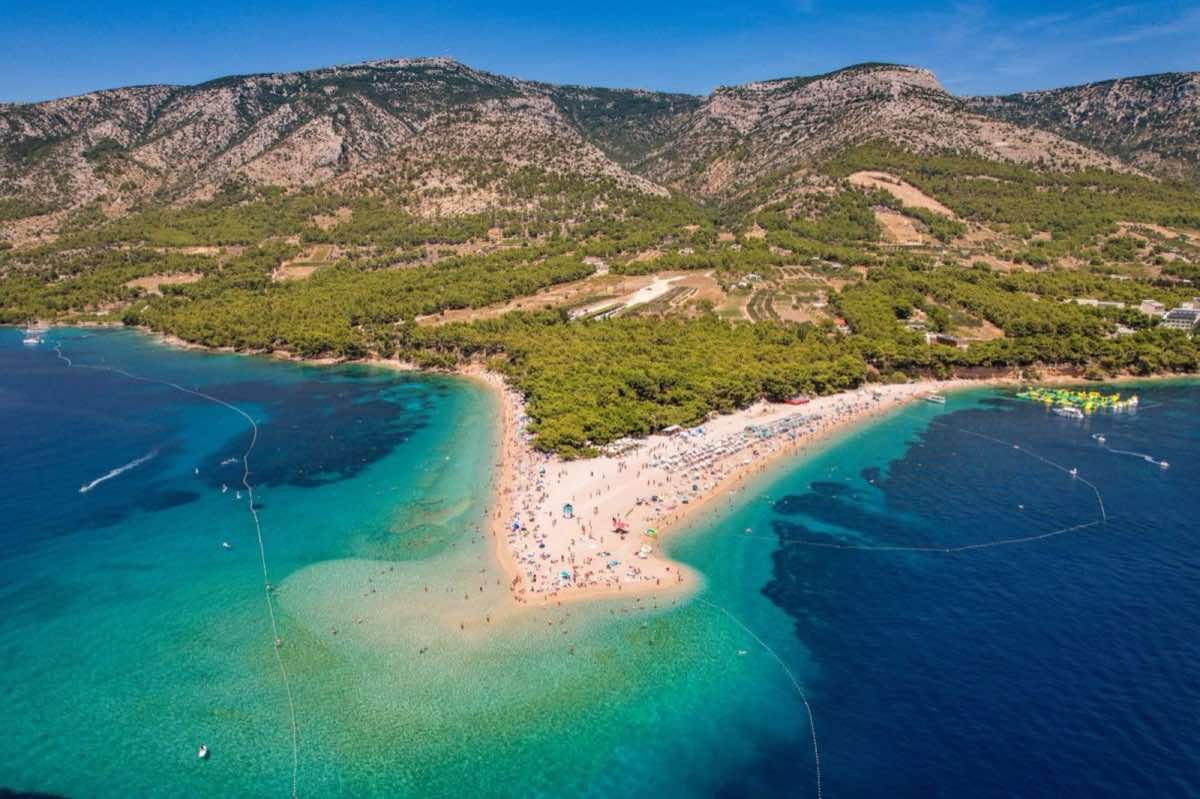
Brač is the largest island in central Dalmatia, a 50-minute ferry from Split. It is best known for Zlatni Rat, the pebble cape at Bol that changes shape with the wind and currents, but the island is bigger than its postcard. There is pine-shaded coast, stone villages, the highest peak on any Adriatic island, olive groves and a long tradition of stone quarrying. It is cheaper than Hvar, easier to reach and more family-friendly. All prices in euros (EUR), approximate as of 2026.
Why go to Brač
The main draw is the beach. Zlatni Rat is Croatia’s most photographed shoreline, and the Bol coast also has strong winds for windsurfing and kitesurfing. Beyond that, Brač gives you a full island: Vidova Gora (778 m) for panoramic views over Hvar and the open sea, quiet harbour villages such as Milna and Pucisca, and a table of local lamb, cheese and olive oil. Compared with Hvar, prices are lower and the evenings calmer.
Bol and Zlatni Rat
Bol, on the south coast, is the island’s resort town: a compact harbour, a palm-and-pine promenade, a handful of konobas and the starting point for the walk to Zlatni Rat. The 20-minute shoreline walk to the cape is flat and shaded in parts. The beach is pebble, with shallow water, and the afternoon maestral wind makes it popular with windsurfers. Arrive before 10am in July and August to beat the day-trip boats. Entry to the beach is free; loungers and umbrellas cost extra.
Bol also has a Dominican monastery with a small museum, a short walk from the centre, and the Dragon’s Cave (Zmajeva spilja) near Murvica, a hermit’s cave with carved reliefs reached on a walk from Bol.
Supetar
Supetar, on the north coast, is the ferry port and largest town. It has supermarkets, a market, a long pine-shaded pebble beach west of the centre and the Petrinovic family mausoleum on the headland. It feels more like an everyday Croatian town than Bol and is the best base for exploring by car. From Supetar the road runs to Skrip, Postira and Pucisca.
Vidova Gora and the interior
Vidova Gora (778 m) is the highest point on the Croatian islands, with views over Zlatni Rat, Hvar and, on clear days, Italy. You can drive nearly to the top or walk from Bol in about two to three hours uphill. Start early and carry water. The interior also has dry-stone walls, olive groves and, near Murvica, the Blaca hermitage, a cliff-side monastery complex reached on a hike of roughly an hour or more; check conditions and opening times locally before you go.
Villages worth a stop
- Skrip: the oldest settlement on the island, with an Illyrian and Roman history and a small museum. About 15 minutes by road from Supetar.
- Pucisca: a harbour at the head of a long inlet, known for the stonemasons’ school and for the quarries that supplied Diocletian’s Palace in Split.
- Milna: a sheltered bay on the west coast, popular with sailors.
- Postira: a quiet beach village on the north coast with a long coastal path.
Food and drink
Brač is known for lamb, which is often roasted on a spit, for local cheeses, for olive oil and for the hrapocusa, a traditional pastry. Seafood konobas line the Bol harbour. Reserve dinner tables in Bol in July and August. As a rough guide, expect EUR 12 to 25 for a konoba main course in season.
Getting there and around
Ferry from Split. The Split to Supetar crossing takes around 50 minutes. Foot passengers pay roughly EUR 5; a small car with driver costs about EUR 30 to 40 in peak season, and spaces sell out on summer weekends. Current schedules and prices are on the Jadrolinija website. A summer catamaran runs from Split to Bol in about an hour. A smaller ferry links Makarska with Sumartin on the east tip; see our Makarska guide. Our Croatia ferry guide covers booking tips in more detail.
Around the island. Buses link Supetar and Bol on a limited schedule. A rental car, scooter or bicycle gives much more freedom. The mountain road to Vidova Gora is steep; cyclists should be fit.
When to go
June and September are best: warm water, open beach services and fewer crowds. July and August are hot and busy, with car-ferry queues. May and October are mild but some businesses close. Winter is quiet.
Where to stay
Choose Bol for Zlatni Rat and windsurfing, Supetar for ferry convenience, and Milna or Postira for quiet. Our full where to stay on Brač guide compares the areas, and you can search Brač hotels on Booking.com for current rates. Book July and August stays early.
Plan your trip
- Tours: a day trip from Split to Hvar and Brač including Zlatni Rat works if you are short of time, and Split tours lists more options.
- Official information: the island tourist boards at Bol and Brač list events and services.
- Related guides: the Dalmatian Islands overview compares Brač with Hvar, Korčula and Vis, and our things to do on Brač page lists sights with costs.
- Insurance and data: get travel insurance before you travel and pick up a Balkans eSIM for roaming-free data.
Book an experience
Top experiences in Brač: Zlatni Rat, Bol & Supetar
Explore the best tours and activities in Brač: Zlatni Rat, Bol & Supetar - instant confirmation, free cancellation on most bookings.