Sofia is one of the most affordable and underrated capitals in Europe, with a layered history stretching from Roman Serdica through Ottoman occupation to communist-era monumentalism. The city rewards walkers - most central attractions are reachable on foot or by metro, and the backdrop of Vitosha Mountain rising at the city’s southern edge is visible from almost every major boulevard. The city centre around Vitosha Boulevard is the best area to stay in Sofia - walkable to the cathedral, the metro, and the main museums. All prices below are approximate and given in Bulgarian lev (BGN) with euro equivalents; 1 EUR ≈ 1.96 BGN.
Alexander Nevsky Cathedral
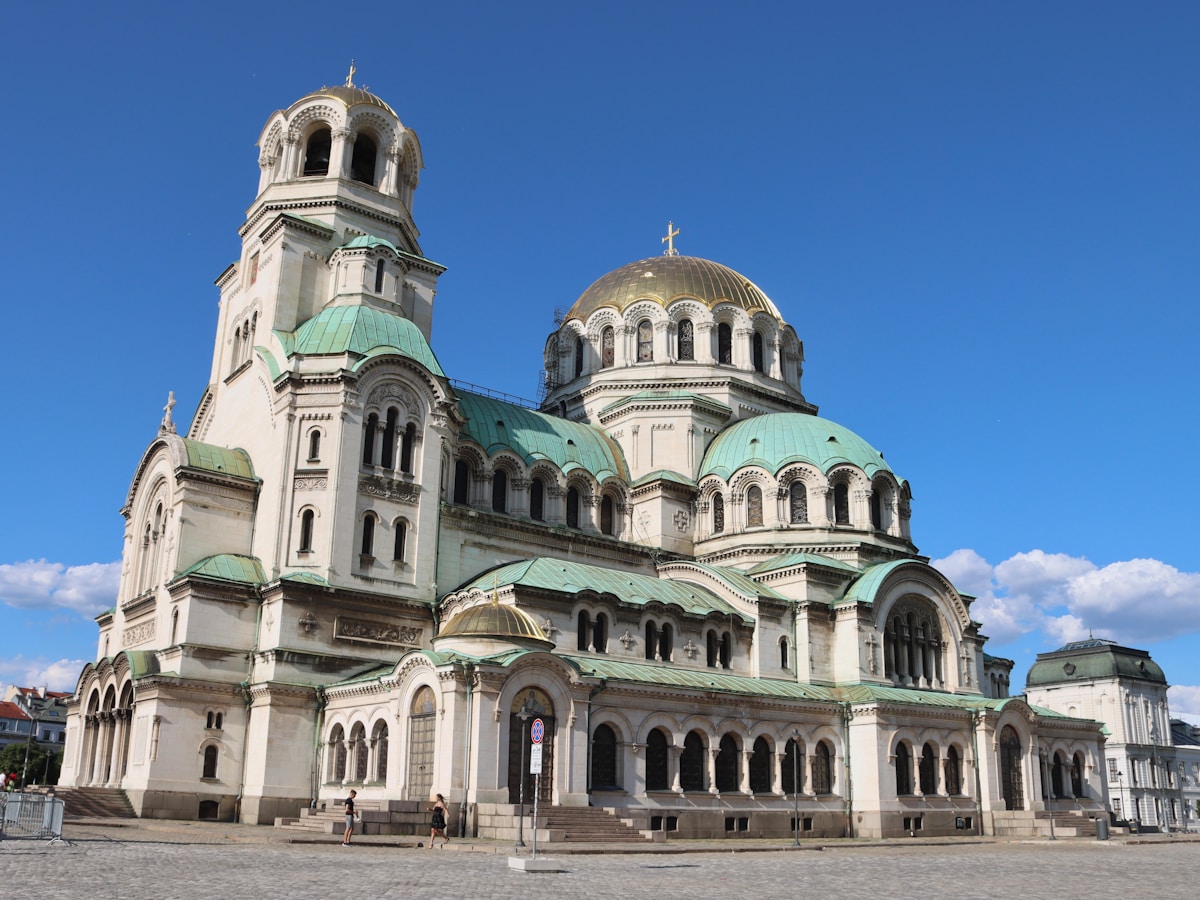
The Alexander Nevsky Cathedral is the defining image of Sofia - one of the largest Eastern Orthodox cathedrals in the Balkans, with a capacity of around 5,000 and gilded copper domes that change colour through the day. Built between 1882 and 1912 to honour the Russian soldiers who died in the Russo-Turkish War of Liberation, it is a functioning church and a major pilgrimage site.
Entry to the main nave is free. The crypt museum below houses the largest collection of medieval icons and religious art in Bulgaria - entry costs approximately BGN 8–12 (€4–6). Allow 45–60 minutes for both.
On Sunday mornings the square in front of the cathedral hosts an informal antiques and icon market - Soviet-era medals, Orthodox icons, vintage cameras, and coins spread across folding tables. Worth walking through even if you don’t plan to buy.
Boyana Church (UNESCO World Heritage Site)
The Boyana Church sits in the Boyana district at the foot of Vitosha Mountain, about 8 km south of central Sofia. It is one of the most significant medieval monuments in Bulgaria - a small 10th-century church expanded in the 13th century with an extraordinary cycle of frescoes that are among the finest examples of medieval European painting.
Entry costs BGN 10 (approximately €5) for adults. Visitor numbers are strictly controlled to protect the humidity-sensitive murals - a maximum of eight people are allowed inside at a time, for a maximum of ten minutes per group. Booking in advance is essential; same-day entry is rarely available in summer. Book via the National History Museum website.
Getting there: bus or taxi from central Sofia (around BGN 10–12 by taxi). Combined tickets with the National History Museum are available and reduce the total entry cost.
National History Museum
Bulgaria’s largest museum occupies a former communist-era government villa in the Boyana district, close to Boyana Church. The permanent collection spans prehistoric Thracian culture through the Bulgarian medieval empires to independence from Ottoman rule - the highlights are the Thracian gold treasures, particularly items from the Panagyurishte Treasure: extraordinary 4th-century BC golden rhytons (drinking vessels in the shape of animal heads) that are among the finest objects from the ancient Thracian world.
Entry: approximately BGN 10 (€5) for adults. Allow at least 2.5–3 hours.
Vitosha Mountain
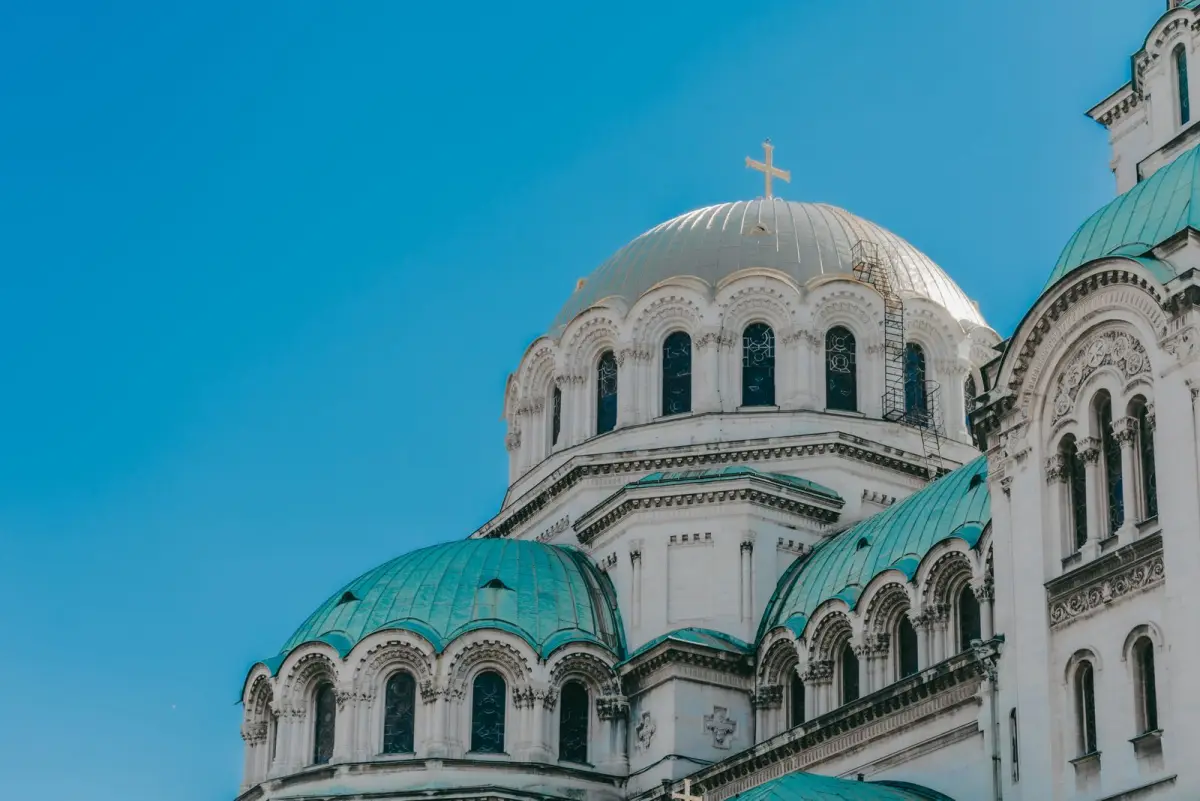 Alexander Nevsky Cathedral is Sofia’s most recognisable landmark.
One of Sofia’s most distinctive features is that a 2,290-metre mountain begins at the city boundary. Vitosha National Park is accessible by public bus (routes 93 and 98 from central Sofia, around 30–40 minutes) and offers options from easy forest walks to a full-day summit ascent of Cherni Vrah (Black Peak, 2,290 m).
The Simeonovo–Aleko gondola runs in summer and winter, carrying visitors up to the Aleko hut (1,800 m) - tickets cost approximately BGN 15 (€7.50) return. From Aleko, the summit of Cherni Vrah is a 3–4 hour round-trip hike on marked trails. The lower slopes around Zlatni Mostove (Golden Bridges) offer easy walking through large stone river formations without significant elevation gain.
Park entry is free.
Nevski Crypt and Icon Collection
If you visit Alexander Nevsky Cathedral, the crypt museum is a separate, underground experience accessible from an external entrance on the south side of the building. It houses over 300 medieval icons from across Bulgaria, including pieces from the 10th through 19th centuries, as well as liturgical objects and carved wooden altarpieces.
Entry: approximately BGN 8–12 (€4–6). It is quieter and less visited than the main cathedral, and for anyone interested in Bulgarian Orthodox art it is the stronger of the two experiences.
Sophia (Sveta Sofia) Church and the NCE
The small 6th-century Sveta Sofia Basilica (from which the city takes its name) stands adjacent to the Alexander Nevsky Cathedral. One of the oldest churches in Sofia, it has a simpler interior than Nevsky but more historical significance - the building served as an Ottoman mosque for several centuries before being returned to Orthodox use. Entry is free; visiting both in one walk takes around 90 minutes total.
The adjacent Unknown Soldier Memorial and the eternal flame are also worth a moment.
National Palace of Culture (NDK) Plaza
The National Palace of Culture (NDK - Национален дворец на културата) is the largest multifunctional events complex in the Balkans, a brutalist landmark from 1981 on the southern end of Vitosha Boulevard. The plaza in front is a large public space used for markets, concerts, and open-air events throughout the year. It is not an attraction you visit inside (unless there is a specific event) but the scale is striking and the surrounding fountain area is a pleasant place to sit.
Sophia Archaeological Museum
Housed in a former Ottoman mosque (the former Büyük Cami, dating from the late 15th century), the Sophia National Archaeological Museum is the oldest museum in Bulgaria. Its collection spans Thracian, Greek, Roman, and medieval Bulgarian artefacts - highlights include the Valchitran Treasure (Bronze Age gold vessels) and various Thracian helmets, votive figures, and medieval jewellery.
Entry: approximately BGN 10 (€5). The building itself - a domed mosque adapted as a museum - is worth seeing for the architecture alone. Located in the city centre, a 5-minute walk from Serdika metro station.
Zhenski Pazar (Women’s Market)
The Zhenski Pazar is Sofia’s main street market, running along Pirotska Street in the city centre. Fresh produce, spices, herbs, dried fruit, nuts, Bulgarian white cheese (sirene), yogurt, and dairy fill the stalls from early morning through mid-afternoon. It is functional rather than touristy - locals actually shop here.
The surrounding streets have some of the cheapest traditional cafés and snack spots in the city. A banitsa (cheese or spinach pastry) from a market vendor costs BGN 1.50–2.50.
Banya Bashi Mosque and Mineral Baths
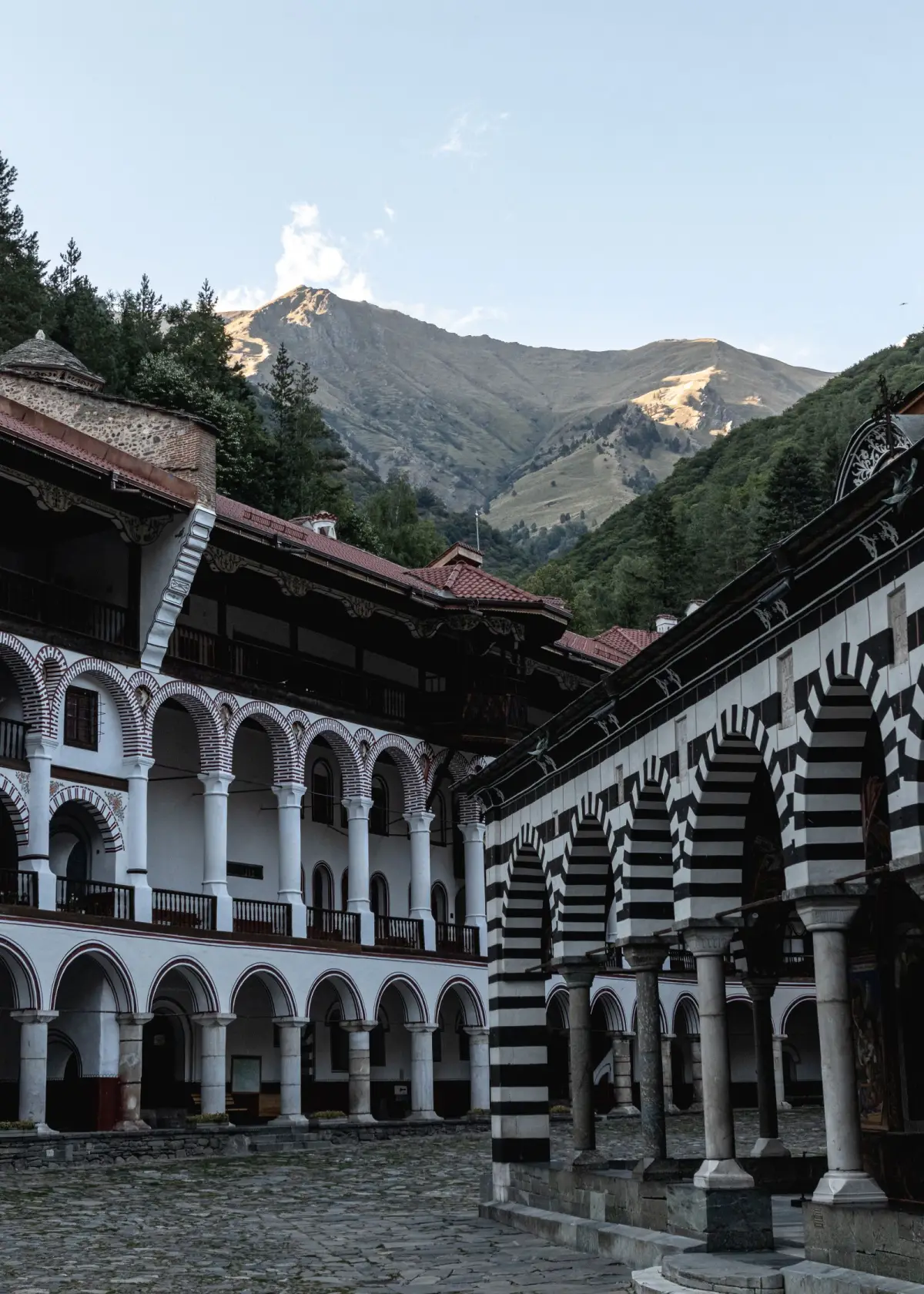 Rila Monastery sits in a forested valley below the Rila peaks.
Adjacent to Zhenski Pazar, the Banya Bashi Mosque (1576) is the only functioning mosque in central Sofia, built above natural hot springs - the name translates roughly as “bath mosque.” The mineral spring below the mosque feeds the public mineral bath district nearby, where locals fill bottles from free public taps. Entry to the mosque is free for respectful visitors outside prayer times.
Free Walking Tour
Sofia’s tip-based free walking tours are one of the best introductions to the city. Tours depart daily from the National Theatre or Palace of Justice area and run approximately 2–2.5 hours, covering Roman Serdica, the main religious buildings, communist-era history, and the changes since 1989. The standard of guiding is consistently high.
Multiple operators run these - searching “Sofia free walking tour” will show current departure times. A tip of BGN 10–15 (€5–8) per person is reasonable if you found it useful. For specific guided options: the Sofia City Monuments Walking Tour with Audio Guide is good for a solo orientation walk; the Guided City Walking Tour suits those who prefer a live guide. For day trips, the Rila Monastery & Plovdiv Full-Day Trip covers both headline destinations in one day. All available on GetYourGuide - browse all Sofia tours for the full range.
Getting Between Sights
Most central Sofia attractions - Alexander Nevsky, the Archaeological Museum, Sveta Sofia Church, the mosque, the central market - are within a 15–20 minute walk of each other. The metro (BGN 1.60/€0.80 per ride) connects Serdika station (central, for Roman ruins and the old city core) to Vitosha station (for the boulevard) and to Sofia Airport. For Boyana Church and the National History Museum, take bus or taxi.
See the Sofia travel guide for transport, budget, and day trip details. For eating out in Sofia, see our Sofia restaurants guide.
See also
- Bulgaria travel guide
- 7-day Bulgaria itinerary
- Hiking in the Balkans
- National parks in the Balkans
- Sofia vs Belgrade
- Balkans city breaks
Plan your trip: Browse tours and activities in Sofia - guided options cover everything from history walks to day trips. Pick up a Balkans eSIM for data on arrival, and protect your trip with travel insurance.