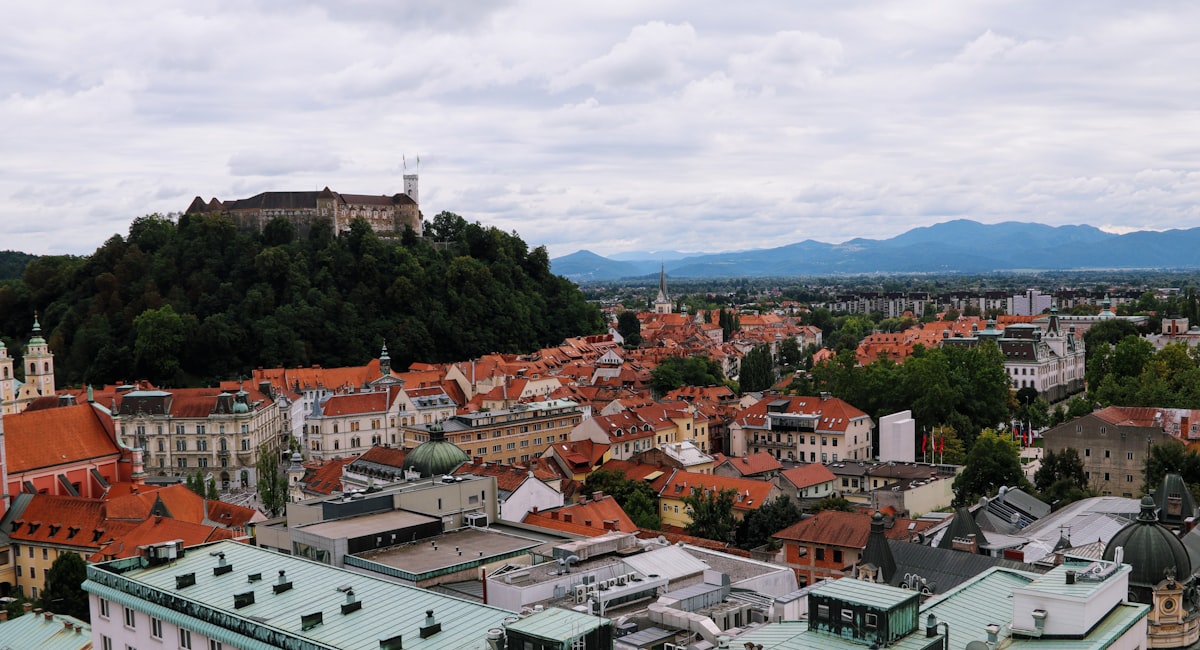
Ljubljana is the most convenient base in Slovenia - positioned near the centre of a small country where no destination is more than 2 hours away by road. Lake Bled is an hour northwest; Postojna Cave is 45 minutes southwest; the Soča Valley and its extraordinary river are 90 minutes west. You can do a serious day trip from Ljubljana in almost any direction and return for dinner.
Below are five day trips worth making in 2026, with honest transport options and advice on what to prioritise.
Top Organised Day Trips from Ljubljana
| Tour | Duration | From (approx) | Best For |
|---|---|---|---|
| From Ljubljana: Lake Bled Day Tour | Full day | €85 | Alpine scenery, castle + island church |
| Ljubljana: Postojna Cave & Predjama Castle Tour | Full day | €75 | Cave explorers, clifftop castle |
| Ljubljana: Soča Valley & Triglav National Park | Full day | €80 | Nature lovers, emerald river scenery |
Browse all Ljubljana tours on GetYourGuide
Lake Bled (1 hour each way)
The image on every Slovenia brochure: a glacier-carved lake with a small island church at its centre, a medieval castle on a cliff above the south shore, and the Julian Alps as the backdrop. The photographs are accurate; the experience depends heavily on when you arrive. Early morning (before 8am) is dramatically different from mid-morning - the tour buses arrive from 9am onwards, and by 10am the lakeside path is crowded.
The island church (Assumption of Mary) is reached by traditional rowing boats called pletnas, which depart from the main pier (approximately €15–18 roundtrip). The bell-ringing tradition - pulling the church bell rope is said to grant a wish - is a tourist ceremony that dates to the 20th century, but the church interior (17th century) is genuinely atmospheric.
Bled Castle sits 130 metres above the lake on a sheer cliff. Entry approximately €15, including access to a small museum and the castle restaurant terrace. The view from the castle ramparts in morning light is the best single viewpoint in the Lake Bled area.
Kremšnita - the custard cream cake that Bled claims as its own invention - is sold at essentially every café in town and at the Sava Hotel & Spa’s café, where it supposedly originated. Price approximately €3–5 per slice; the quality difference between venues is minimal.
Organised tour: The most popular day-trip format from Ljubljana. Tours typically run approximately €35–55 per person, departing 8:00–9:00am, and include a guide for the castle and context on the lake geology. Several operators add the Vintgar Gorge (4km walking trail with rapids and waterfalls, entry approximately €10) to the itinerary as a 90-minute extension. Worth including if time allows.
Bus: Arriva Slovenia buses from Ljubljana bus station to Bled, approximately 1 hour 15 minutes, fare around €6–8 each way. Services run every hour or two through the day.
Self-drive: 55 minutes via the E61 highway. Parking at the main Bled lakeside is limited and expensive in summer (approximately €3/hour); arrive before 8am or use the lakeside walking path from the eastern car parks.
Best season: May–June and September–October for manageable crowds and good weather. July–August is extremely busy. Winter (December–February) has its own appeal - the lake sometimes freezes and the castle grounds are quieter.
Postojna Cave (45 minutes each way)
Europe’s most-visited show cave, with 24km of passages, stalactites, and stalagmites developed over 5 million years. The standard tour (1.5 hours, approximately €30–38 per adult) begins with a miniature electric train that takes you 2km into the cave before you continue on foot through the concert hall cavern (capacity 10,000, used for actual concerts) and past the iconic 5-metre stalactite formations. The cave maintains a constant 8–10°C - bring a layer regardless of outside temperature.
The adjacent Predjama Castle (entry approximately €15–18, or combined ticket approximately €40–45) is 9km from Postojna and deserves the detour. A Renaissance castle built into a cave mouth in a 123-metre cliff face - one of the strangest architectural situations in Europe. The interior tours are good; the exterior from the valley floor is the more powerful experience.
Organised tour: The standard Ljubljana day trip. Tours combine Postojna and Predjama in one day, price approximately €45–65 per person, departing 9:00am. Several GetYourGuide listings cover this route.
Bus: Direct buses from Ljubljana bus station to Postojna approximately every 2 hours, fare around €6–9 each way, journey 1 hour. Predjama Castle is 9km further and not well-served by public transport - taxi from Postojna approximately €8–10 one way.
Self-drive: Via the A1 motorway, 45 minutes. Parking at both Postojna and Predjama is free.
Best season: Year-round. Postojna Cave has a constant temperature and is one of the better wet-day options in Slovenia. Summer queues at the cave can be significant - book tickets online in advance for a specific entry time.
Soča Valley (1 hour 30 minutes each way)
The Soča river runs emerald-green through a limestone gorge in the Julian Alps - the colour is caused by mineral suspension from glacial sources and is unlike anything else in the region. The valley road (H1) from Tolmin to Bovec passes through some of the most dramatic alpine scenery in Slovenia, with pull-offs above the narrowest gorge sections (Soteska Soče, approximately €3 entry for the viewing platforms).
Bovec, the main activity centre, sits at the upper end of the valley. White-water rafting on the Soča runs from April through October - companies including Soča Rafting, Aktivni Planet, and Top Rafting offer 2–3 hour sections for approximately €40–60 per person. Kayaking and canyoning on the river’s tributary streams are available from the same operators.
The valley also contains extensive WWI history - the Soča/Isonzo front saw 11 battles between 1915 and 1917, and the Walk of Peace (Pot Miru) long-distance trail passes through the valley connecting memorial sites, ossuary chapels, and fortification remains.
Organised tour: A day tour covering the Soča Valley typically runs approximately €55–80 per person from Ljubljana, including transport and usually one activity booking. Private car with guide from approximately €120–150 for the day.
Self-drive: Via the Vršič mountain pass (H8) in summer - the most scenic route, with 50 hairpin bends above the treeline, open June through October. Via Tolmin year-round is the lower valley route.
Best season: May–September. The rafting season is April–October; the Vršič pass opens in June. The valley can be cold and wet in spring; summer is the most reliable weather window.
Škocjan Caves (1 hour 15 minutes each way)
Often overlooked in favour of Postojna but arguably more spectacular. Škocjan is a UNESCO World Heritage Site consisting of a collapsed karst canyon with the Reka river running through a 2km underground gorge, passing through caverns 100+ metres high. The bridge crossing 45 metres above the river inside the cave is the most dramatic single moment in any Slovenian cave tour.
Entry approximately €20–28 per adult; tours depart at set times and cannot be booked for specific slots in advance - arrive before your preferred slot and join the queue. Duration approximately 1.5 hours on foot.
The surface trail above the collapsed valley (the Skocjan Trail) adds 2–3 hours and is free - it crosses the natural bridges above the gorge and gives views into the open-air karst depression that the cave system eventually opens into.
Getting there: Closest to Divača on the A1 motorway. Self-drive recommended - 70 minutes from Ljubljana. Limited bus connection from Divača train station (reachable from Ljubljana in about 1 hour by train, fare approximately €6–8).
Best season: Year-round, though the trail above the gorge is best in dry weather. The cave tours run even in heavy rain.
Piran (1 hour 30 minutes each way)
Slovenia’s most architecturally rewarding coastal town - a Venetian-era peninsula with an intact medieval walled town, a central square (Tartinijev trg) that claims direct comparison with Venice’s Piazza San Marco, and a seafront that retains a working fishing-town character despite significant tourism.
The walk up to the town walls gives views across the Adriatic toward Croatia and Italy (on a clear day, Trieste is visible). The Cathedral of St. George above the town and the Maritime Museum are the main interior sights; entry approximately €3–5 each.
Piran is best as a late morning arrival and afternoon departure - the light on the Venetian facades is best from the west in afternoon.
Organised tour: Ljubljana day tours covering Piran run approximately €35–55 per person; sometimes combined with a stop at the Sečovlje salt pans (a nature reserve with operational salt production, approximately 5km from Piran).
Bus: Direct buses from Ljubljana bus station, approximately 2 hours, fare around €8–11 each way. Self-drive via the A1/E61 motorway takes 1 hour 30–40 minutes.
Best season: May–October. Piran’s narrow streets funnel heat in July–August - early morning or evening is more pleasant than midday.
Browse guided day trips from Ljubljana - Bled, Postojna, Soča activities, and private tours - on GetYourGuide.
For planning your base in the city, the Ljubljana city guide covers where to stay, how to use the bicycle network, and the restaurant scene along the Ljubljanica river.