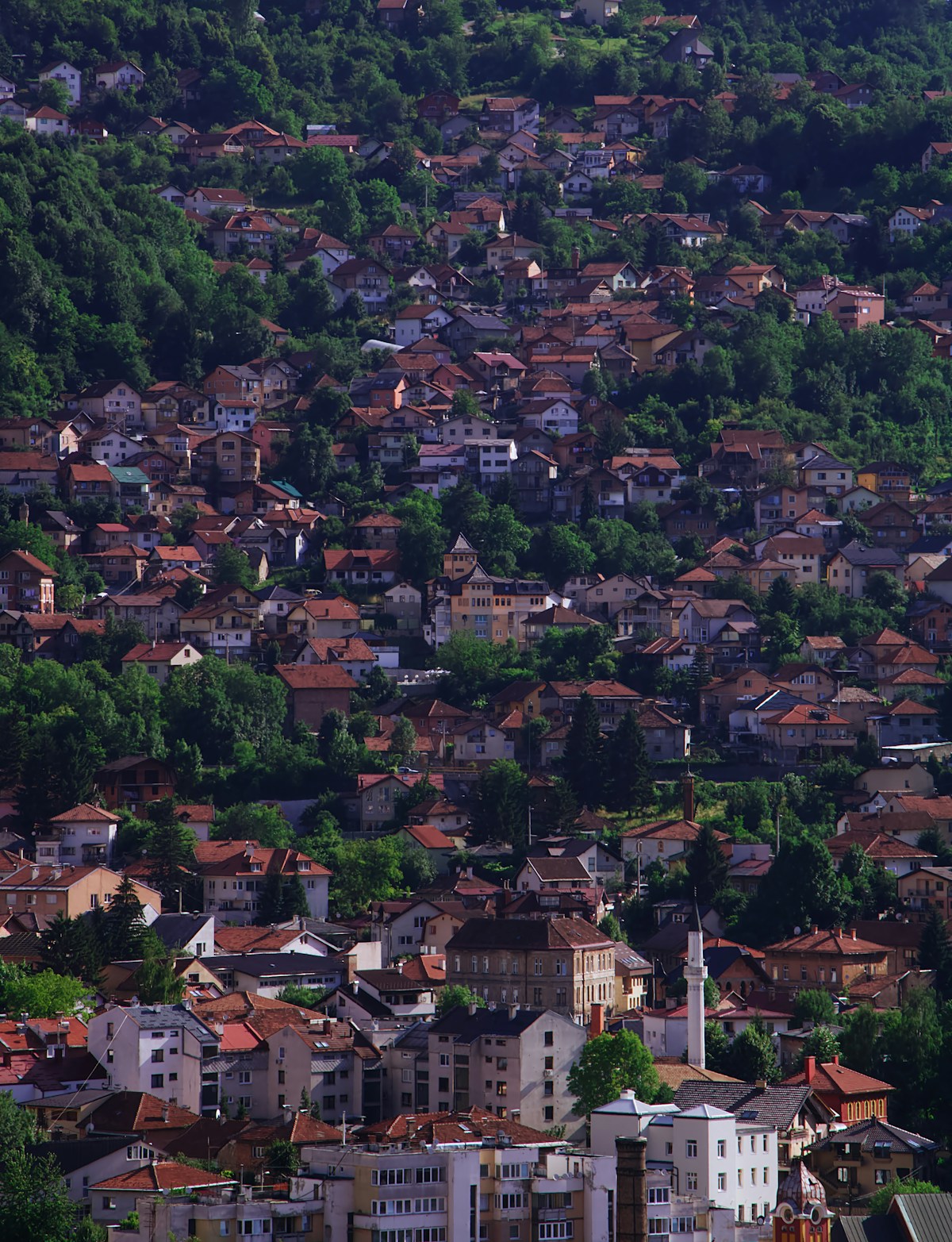
Sarajevo contains more recent history per square kilometre than almost any other city in Europe. The assassination that triggered the First World War happened on the Latin Bridge in 1914. The city survived the longest siege of a capital city in the 20th century — 1,425 days from 1992 to 1995. The Baščaršija quarter, built by Ottoman governor Gazi Husrev-Beg in the 16th century, functions today as both a living market and one of the best-preserved Ottoman commercial districts outside of Turkey. And Austro-Hungarian architecture covers the banks of the Miljacka River as a reminder that Sarajevo was, for 40 years, an outpost of the Habsburg Empire.
A guided tour in Sarajevo does more than point out landmarks — it provides the sequence and the stakes that make the city make sense.
Top Sarajevo Tours at a Glance
| Tour | Duration | From (approx) | Best For |
|---|---|---|---|
| Old Town Walking Tour with Local Guide | 2.5 hrs | €20 | First-timers, Ottoman history |
| Grand Walking Tour Through Time and Cultures | 2.5 hrs | €20 | Multi-era history, broader scope |
| Trebević Mountain Summit Hiking Tour | Half day | €28 | Active travellers, 1984 Olympics history |
| City Market & Old Town Food Tasting | 3 hrs | €35 | Food lovers, Bosnian coffee rituals |
| Neretva River Rafting from Sarajevo | Full day | €45 | Active travellers, river canyon scenery |
Browse all Sarajevo tours on GetYourGuide
For First-Time Visitors: Baščaršija and the Latin Bridge
The standard starting point for any Sarajevo visit is Baščaršija — the Ottoman market quarter built in 1462, reorganised by Gazi Husrev-Beg in 1530, and still functioning today as a commercial district of coppersmiths, jewellers, and food vendors. The Sebilj fountain at the centre of the square is the city’s most photographed landmark and the standard meeting point for walking tours.
A guided Old Town walk (from approximately €20 per person) covers Baščaršija in approximately 2.5 hours, moving from the Sebilj fountain through the coppersmiths’ street (Kazandžiluk), the Gazi Husrev-Beg Mosque (the largest historical mosque in Bosnia, completed in 1531, still in active use — entry with appropriate dress), the covered čaršija market, and the Vijećnica — the Austro-Hungarian City Hall built in 1894 and destroyed in the 1992 shelling, now restored as a public building. The walk ends at the Latin Bridge, where the 28 June 1914 assassination of Franz Ferdinand took place.
Book directly: Sarajevo Old Town Walking Tour — approximately €20 per person as of 2026, covers Baščaršija, the Gazi Husrev-Beg Mosque, Vijećnica, and Latin Bridge.
The Austrian Quarter: east of the Latin Bridge, the Miljacka riverbank is lined with Austro-Hungarian buildings — the Academy of Fine Arts, the National Museum, and the operatic Vijećnica. The Grand Walking Tour through Time and Cultures (from approximately €20) covers both the Ottoman and Habsburg layers in a single route, giving a clearer sense of how dramatically different the city’s two dominant historical periods are in architecture and urban logic.
Book directly: Grand Walking Tour Through Time and Cultures — approximately €20 per person as of 2026, combines Ottoman Baščaršija, the Austrian Quarter, and the siege context.
For History Lovers: Siege Tours and the Tunnel of Hope
The 1992–1995 Siege of Sarajevo lasted 1,425 days — longer than the Siege of Leningrad — and killed approximately 13,000 people in the city, including 5,434 civilians. The physical traces of the siege are still visible: mortar-shell impact points in the pavement (filled with red resin, called “Sarajevo roses”), bullet marks on building facades, the Sniper Alley corridor along the Bulvar Meše Selimovića where snipers on the hillsides targeted civilians, and the Tunnel of Hope beneath the airport.
The Tunnel of Hope Museum (Tunelski Muzej, approximately €5–7 entry as of 2026) is an 8-kilometre drive from the city centre in the Dobrinja neighbourhood. The original tunnel entrance at the Kolar family home is preserved; a section of the original tunnel is still accessible. Transport from the city centre to the museum is available with any organised tour, or by taxi (approximately €10–12 one way as of 2026).
For Active Travellers: Trebević Mountain Hike
Trebević (1,629 metres) rises directly above Sarajevo to the south — a 10-minute cable car ride from the old town to a mountain that hosted Olympic events in 1984 and held front-line positions during the siege. The 1984 bobsled and luge track remains on the mountain’s northern slope, now consumed by forest and decorated with street art from artists across the Balkans. Walking the track takes approximately 45 minutes and is one of the most atmospheric and unusual walks in the former Yugoslavia.
A guided hiking tour (from approximately €28 per person) covers the summit ridge, the bobsled track, and the panorama over the city and the surrounding mountains. The cable car runs approximately €5 return as of 2026; the hiking tour typically includes the cable car in the price and adds guide commentary on the Olympic history, the mountain’s wartime role, and the current reforestation.
Book directly: Trebević Mountain Summit Hiking Tour — approximately €28 per person as of 2026, includes guide, cable car, bobsled track walk, and summit views.
For Food Lovers: Baščaršija Food Tours
Sarajevo’s food culture is built around ćevapi (grilled minced meat in flatbread), burek (filo pastry with meat or cheese), and the Bosnian coffee ceremony — a slow-pour ritual with an unfiltered džezva, a cube of sugar, and a glass of water that is explicitly designed to slow you down. A guided food tour of the market and Old Town (from approximately €35 per person) covers these three things and several more in a single 3-hour morning outing.
For a full breakdown of operators, stops, and what to order: see our food tours in Sarajevo guide.
Practical Tips for Booking Sarajevo Tours
- Book 48 hours ahead in April–June and September–October — Sarajevo’s busiest tourism months. Summer (July–August) is warm and busy; winter tours are available but city walking conditions are cold and some mountain options close.
- Language: English-language tours are the standard offering on GetYourGuide; guides who are Sarajevo-born and lived through the siege offer distinctly different accounts than visiting tour operators who run the same format across multiple Balkan cities. Check guide profiles before booking.
- Combination days: a morning walking tour of Baščaršija + afternoon Trebević cable car and bobsled track is the most efficient single-day itinerary in Sarajevo.
- Getting to the Tunnel of Hope independently: take bus route 32 from the main bus station toward Dobrinja, or taxi for approximately €10–12. The Kolar Museum sign is visible from the street.
Browse all Sarajevo tours and activities
For a full planning picture, our Sarajevo city guide covers neighbourhoods, accommodation, and the café culture along the Miljacka. For day trips, see our day trips from Sarajevo guide.