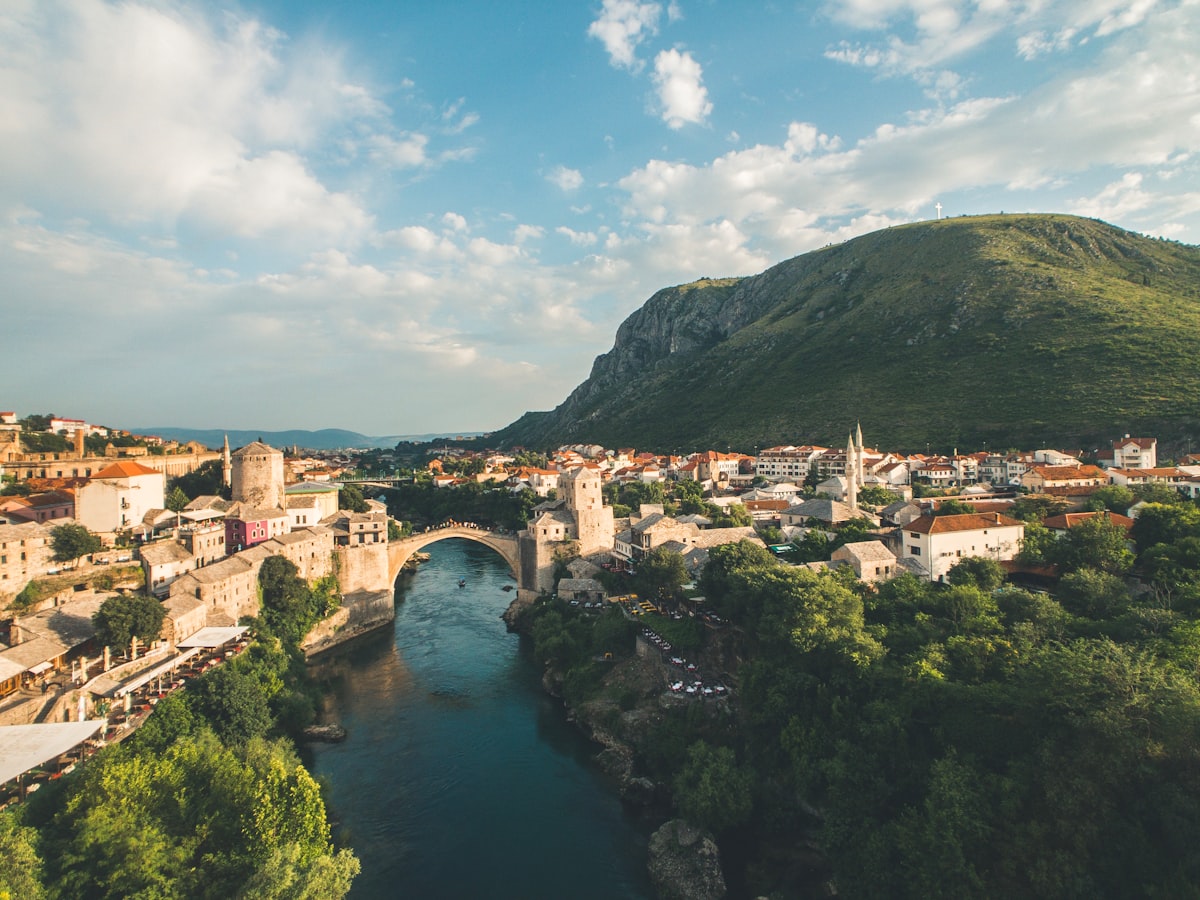
Mostar is Bosnia and Herzegovina’s most visited city for good reason. The 16th-century Stari Most (Old Bridge) — destroyed by Croatian forces in 1993 and rebuilt in 2004 using the same limestone quarried in the same hills — is one of the most architecturally striking and historically resonant structures in the Balkans. The Ottoman old town around it, the Kujundžiluk bazaar running east to the bridge, and the Neretva River cutting through the city all reward time invested in understanding them. Organised tours give that context efficiently.
Here is a breakdown of the best tours in 2026 for each type of visitor.
Top Mostar Tours at a Glance
| Tour | Duration | From (approx) | Best For |
|---|---|---|---|
| Old Town Walking Tour | 2 hrs | €18 | First-timers, history lovers |
| Mostar City and Museum Tour | 2 hrs | €20 | Siege history, cultural depth |
| Neretva River Rafting from Mostar | Full day | €45 | Active travellers, outdoor seekers |
Browse all Mostar tours on GetYourGuide
For First-Time Visitors: Stari Most and the Ottoman Old Town
Mostar’s Old Town occupies the east bank of the Neretva — a roughly rectangular area of Ottoman-era stone buildings, craft workshops, and mosques bounded by the river to the west and the hills to the east. The centrepiece is Stari Most, a single-arch limestone bridge spanning 21 metres over the Neretva at a height of 20 metres above the water. The bridge was built in 1566 by the Ottoman architect Mimar Hayruddin and destroyed in 1993; the reconstruction was completed in 2004 using the same Tenelija limestone from the Muselimova Stijene quarry and the same traditional masonry techniques.
A guided walking tour (from approximately €18 per person) covers the bridge’s original construction and the mechanics of its destruction and rebuilding, the Kujundžiluk bazaar (the coppersmithing quarter, still functioning), the Koski Mehmed Pasha Mosque and its minaret (climb for the best view over the bridge, approximately €3 entry as of 2026), and the surviving Ottoman residential architecture in the Muslibegović House neighbourhood. Duration approximately 2 hours.
Book directly: Mostar Old Town Walking Tour — approximately €18 per person as of 2026, covers Stari Most, the bazaar, the mosque, and the Ottoman residential quarter.
For History and Culture: The War and Reconstruction
The 1992–1995 Bosnian War damaged or destroyed large parts of Mostar on both banks of the Neretva. The destruction was not random — the east bank (primarily Bosniak) and the west bank (primarily Croat) reflect a city that was physically divided along ethnic lines, with the front line running roughly along the Boulevard — a scar still readable in the cityscape today. The Stari Most destruction in 1993 was a deliberate act of cultural destruction, not military necessity.
A city and museum tour (from approximately €20) covers this history in the context of the reconciliation narrative — the rebuilt bridge as a symbol of recovery — and visits the War Photo Museum, which holds documentation of both the Siege of Sarajevo and the specific destruction of Mostar’s bridges and minarets. The Partisan Memorial Cemetery (designed by Bogdan Bogdanović in 1965) on the city’s eastern edge is one of the most significant pieces of socialist-era memorial architecture in the former Yugoslavia and is worth including.
Book directly: Mostar City and Museum Tour — approximately €20 per person as of 2026, includes war history, reconstruction narrative, and museum visit.
For Active Travellers: Neretva River Rafting
The Neretva River runs northwest from its source in the Zelengora mountains through the Konjic Canyon before descending toward Mostar and emptying into the Adriatic at Ploče. The canyon section between Konjic and Jablanica is one of the most dramatic stretches of white-water rafting in the Balkans — Class III–IV rapids through a limestone gorge with clear turquoise water. A full-day rafting excursion from Mostar (approximately €45 per person) includes transport to Konjic, a guided 18km raft along the canyon, and a riverside meal at the end. The experience is suitable for beginners in calm summer conditions; higher water in spring makes it more challenging.
Book directly: Neretva River Rafting from Mostar — approximately €45 per person as of 2026, full day including transport, guide, and riverside meal.
Kravice Waterfalls: 40 minutes by car from Mostar, the Trebižat River’s 25-metre travertine cascade into an emerald pool is one of Bosnia’s most visited natural sights. Most tours from Mostar combine Kravice with a stop at Blagaj — a village at the source of the Buna River where a 16th-century Dervish tekke (monastery) is built into the cliff face directly above the spring. The spring pumps 43 cubic metres of water per second from the limestone karst; the sound and scale of it is one of the most impressive natural features in Herzegovina.
Practical Tips for Booking Mostar Tours
- Time of day: Stari Most and the Kujundžiluk bazaar are most crowded between 10am and 4pm, when day-trip coaches from Split, Dubrovnik, and Sarajevo arrive. Early morning (before 9am) or evening (after 6pm) gives you the bridge largely to yourself.
- Book walking tours 24–48 hours ahead in peak season — private and small-group options can fill quickly in July and August.
- Currency: Bosnia uses the Konvertibilna Marka (BAM), pegged to the euro at 1.955 BAM = €1. Most restaurants and shops in the tourist area accept euros, but you’ll get change in BAM.
- West bank vs. east bank: the tourist infrastructure concentrates on the east bank. The west bank along the Boulevard is quieter and less photographed — a 30-minute walk through it gives a more honest picture of the city’s current state.
- Bridge jumpers: the Mostari divers perform jumps throughout the day in summer (typically after collecting enough paying watchers). The jump is free to watch; participation requires the club’s training session.
Browse all Mostar tours and activities
For full planning, our Mostar city guide covers where to stay, where to eat beyond the tourist strip, and how to organise the day between the east and west banks.