Tirana has changed faster than almost any other capital in the Balkans. The city that emerged blinking from forty years of Communist isolation in 1991 has become an energetic, chaotic, genuinely interesting food destination. The eating culture mixes traditional Albanian mountain cooking — lamb, yogurt, peppers, beans, and generous hospitality — with a surprisingly polished Italian food scene, strong coffee culture, and a newer wave of contemporary Albanian restaurants interested in reinterpreting local ingredients. Prices are very low by European standards. All prices are approximate as of 2026; Albania uses the Albanian lek (ALL), with 1 EUR approximately 100 ALL.
What to Eat in Tirana
Tavë Kosi
Albania’s unofficial national dish and the thing most first-time visitors to a traditional Albanian restaurant should order. Lamb (or sometimes chicken) baked slowly in a clay pot with a sauce of yogurt, eggs, and rice until everything melts into a single, custardy, savoury whole. The yogurt cuts through the richness of the lamb. Approximately EUR 6-9 for a generous portion. Found at every traditional Albanian restaurant in the city.
Byrek
Flaky filo pastry baked in large round trays and sold by the slice. The most common filling in Tirana is spinach and feta-style cheese (byrek me spinaq); also common: meat (byrek me mish), plain cheese (byrek me gjizë), and onion (byrek me qepë). A slice from a bakery or bufe costs approximately EUR 0.50-1.50. Eaten for breakfast and as a mid-morning snack throughout the city. Best eaten fresh from the oven.
Fërgese Tiranase
A specifically Tirana dish — a clay pot casserole of roasted peppers, tomatoes, and trahana (dried fermented wheat), thickened with cottage cheese or gjizë and baked until slightly scorched at the edges. The city version (as opposed to the coastal version, which adds offal) is vegetarian and intensely savoury. Found at traditional Albanian restaurants. Approximately EUR 4-7 as a starter or light main.
Sufllaqe
The Albanian version of a kebab wrap: meat (typically chicken or beef) from a vertical rotisserie, wrapped in a thin flatbread with chips, salad, and various sauces. Ubiquitous on Tirana street corners and far better than most European versions of the same concept. A sufllaqe costs approximately EUR 2-3. Available from late morning until past midnight at many spots around the Blloku area.
Petulla
Fried dough, leavened with yeast, puffy and golden. Served with gjizë (Albanian cottage cheese) and honey for breakfast at traditional bufe and bakeries, or with ajvar and sour cream as a savoury option. Approximately EUR 1-2 for a plate. The Albanian equivalent of a quick breakfast pastry.
Italian Food
Tirana has an exceptional number of good Italian restaurants. After Albania opened its borders in 1991, hundreds of thousands of Albanians emigrated to Italy. Many learned to cook Italian food professionally, and when they returned, they opened restaurants. The city’s Italian food scene is substantially better than you would find in many actual Italian cities: fresh pasta, properly made pizza, and risotto that reflect real technique rather than tourist formula.
Where to Eat — Blloku
Mullixhiu (Blv. Gjergj Fishta, near Blloku) — The most ambitious traditional Albanian restaurant in Tirana, run by chef Bledar Kola, who spent time training abroad before returning to rethink Albanian cuisine with better technique and sourcing. The menu takes local ingredients — wild herbs, mountain cheeses, river fish, seasonal vegetables — and applies contemporary cooking. This is not peasant food dressed up; it is a genuine effort to build Albanian fine dining. Approximately EUR 20-35 per person. Book ahead.
Era Restaurant (Ismail Qemali 9, Blloku) — One of the most consistently recommended traditional Albanian restaurants in the city. Long menu of Albanian standards: tavë kosi, fergese, grilled meats, stuffed peppers, and good local wine. Comfortable, reliable, popular with both locals and visitors. Approximately EUR 10-16 per person. Open for lunch and dinner.
Juvenilja (Rruga Sami Frashëri, Blloku) — A Tirana institution, particularly at lunch, when the restaurant fills with city workers. Solid Albanian and Balkan cooking: grilled meat, seasonal vegetables, tavë kosi, and large portions. Very good value. Approximately EUR 6-10 per person for a full lunch.
Osteria Sole e Luna (Rruga Ibrahim Rugova, Blloku) — One of Blloku’s better Italian restaurants, run with care and with notably good fresh pasta. The cacio e pepe and various pasta dishes with Albanian cheese and seasonal truffles are worth ordering. Approximately EUR 12-18 per person.
Where to Eat — Old Town and Pazari i Ri
Oda (Rruga Luigi Gurakuqi, near Pazari i Ri) — A traditional Albanian restaurant in a two-storey wooden building furnished with copper pots, kilims, and traditional Albanian domestic objects. The food is traditional: byrek, tavë kosi, grilled lamb chops, and seasonal stews. One of the more atmospheric options in the city for experiencing older Albanian domestic culture. Approximately EUR 8-14 per person.
Pazari i Ri (New Bazaar) — The recently renovated covered bazaar area near the Old Town is the best place in Tirana for fresh produce, local cheeses, pickles, olives, and traditional Albanian pantry staples. Inside the bazaar, a number of small restaurants and bars serve simple food throughout the day: burek, byrek, grilled meats, and coffee. Prices inside are low — EUR 3-7 for a snack or light meal. Good for a cheap lunch combined with browsing the market stalls.
Restorant Piazza (Sheshi Avni Rustemi) — A large, reliable restaurant near the Old Bazaar area with an outdoor terrace and a long menu covering Albanian, Balkan, and Italian dishes. Consistent quality, good for groups, and one of the better options near the National History Museum. Approximately EUR 9-15 per person.
Coffee Culture
Albanian coffee culture is strong and the espresso is excellent throughout Tirana. Albania has a long history of coffee drinking — cafes were social institutions under Communism in a way restaurants were not — and the Italian influence on coffee preparation has been thorough. A macchiato or espresso costs approximately EUR 0.80-1.50 at most cafes. Coffee in Tirana is drunk standing at the bar or sitting at a small table for an extended period; it is a social institution, not a to-go drink.
Drinking with Food
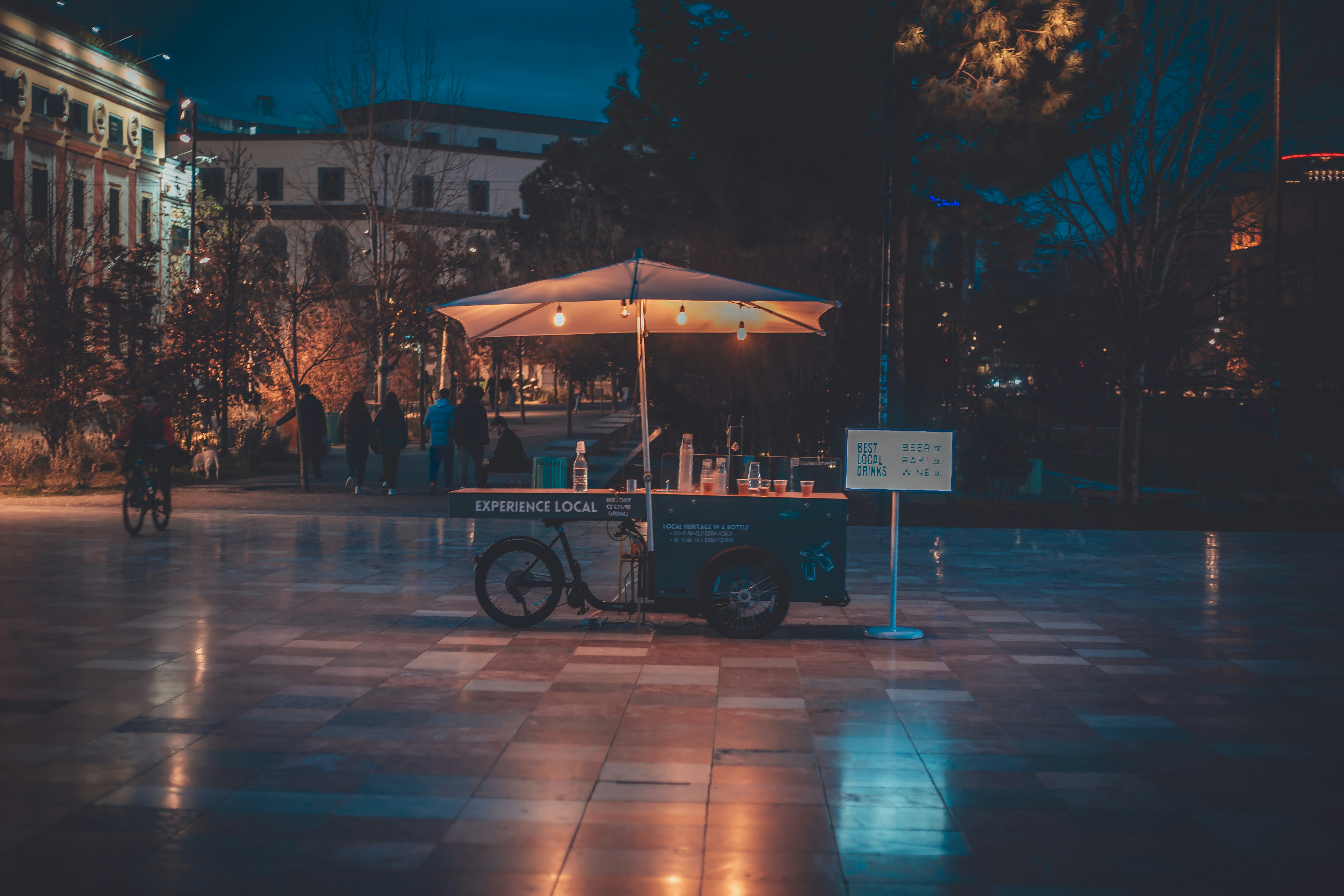
Raki (Albanian rakia — a fruit brandy typically made from grapes) is the national spirit and appears before meals and after them. Good raki costs approximately EUR 1.50-3 for a small glass at a restaurant. Albanian wine is less internationally known than Croatian or Serbian wine but improving, particularly from the Korçë and Shkodër regions. A glass of local wine costs approximately EUR 2-4 at mid-range restaurants. Birra Tirana and Birra Korça are the main local beers; a bottle costs approximately EUR 1-2 at a restaurant.
Practical Notes
Restaurants in Blloku typically open from noon to midnight, later on weekends. Most traditional restaurants are open seven days a week. Cash is widely preferred, though Blloku and city-centre restaurants increasingly accept cards. English is spoken at almost every restaurant in the tourist areas; menus in English are standard in Blloku. Tipping is not deeply entrenched in Albanian culture but is appreciated at 10% for good service.