Piran, Slovenia: Old Town, Sea Walls and Salt Pans
Piran travel guide: Tartini Square, St George's bell tower, the town walls, Sečovlje salt pans, swimming, food and how to get there from Ljubljana.
Guides for Piran, Slovenia Travel Guide
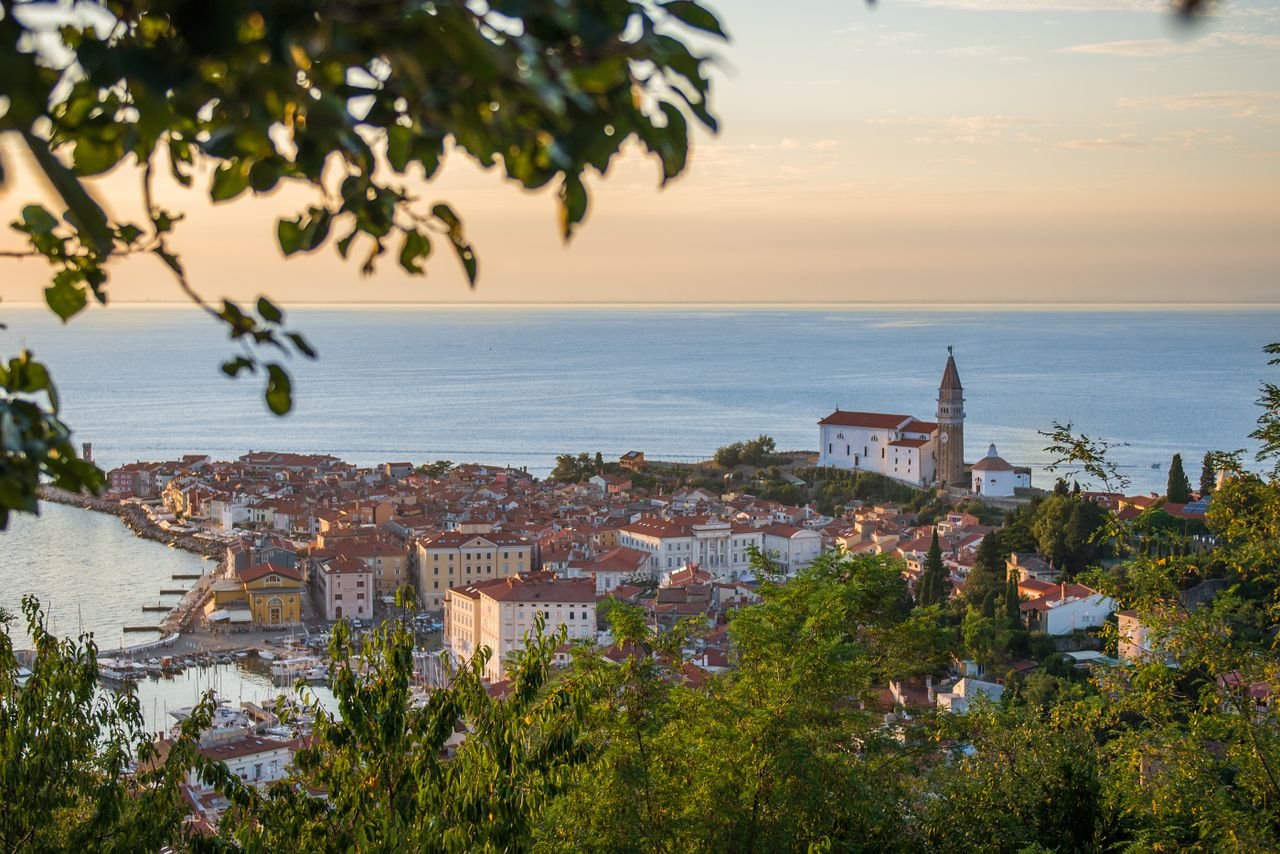
Piran sits on the tip of a small peninsula on Slovenia’s 47 km of Adriatic coast, and it looks more like a miniature Venice than anything inland Slovenia has to offer. Narrow stone lanes drop to a harbour, pastel facades crowd Tartini Square, and the bell tower of St George’s looks down over terracotta roofs and open sea. The town was under Venetian rule for around five centuries, which explains the architecture, the Italian bilingual street signs and the seafood-heavy kitchen.
We rate it as the strongest coastal stop in Slovenia and an easy add-on to any Ljubljana and Lake Bled itinerary. For official visitor information, see the Portorož and Piran tourist board and Slovenia’s national tourism site.
Getting to Piran
From Ljubljana: about 120 km by motorway and takes 1 hour 15 minutes to 1.5 hours. Buses run from Ljubljana bus station, taking roughly 2 to 2.5 hours, with fares of approximately €10-15 as of 2026. If you land at Ljubljana airport, our airport transfer guide covers options for onward travel.
From Trieste (Italy): about 45 minutes by car, and a sensible entry point if you fly into Trieste. From Croatian Istria: Piran is roughly 1 hour from Umag and a little over an hour from Rovinj by road, with a border crossing between Croatia and Slovenia that is normally quick.
Parking: the old town is largely car-free. Use the Fornače garage at the edge of town and walk in. Fees are charged per hour and rise in summer, so check current rates on the municipal website.
The old town and its main sights
Tartini Square is the heart of Piran, an oval piazza that was once a harbour basin before it was filled in during the 19th century. The bronze statue honours Giuseppe Tartini, the Baroque violinist and composer born in Piran in 1692. The Venetian House on the corner, with its Gothic windows, is the most photographed building.
St George’s Parish Church stands on the hill above the town. Its freestanding bell tower is modelled on the campanile of St Mark’s in Venice, and the terrace in front gives the best view across the rooftops to the sea and, on clear days, the Italian coast. Climbing the tower costs a few euros as of 2026, and the steps are narrow.
The town walls run along the hillside above the old centre. Parts of the 15th-century fortifications can be climbed for a small fee, with views over both Piran bay and the coast toward Croatia.
Punta and the lighthouse. Walk to the tip of the peninsula, where the small church of St Clement and the red lighthouse mark the end of the promenade. It is the classic spot for sunset.
For a full list with costs and timing, see our guide to things to do in Piran.
Sečovlje Salt Pans
About 7 km southeast of Piran, the Sečovlje Salina Nature Park is still a working salt-making landscape, where salt has been harvested by hand for centuries using methods that Piran’s salt-makers refined over the medieval period. A visit takes 2 to 3 hours with a stop at the museum and the small shop selling fleur de sel. Entry is charged per person, and summer opening hours run later than in winter, so confirm on the park website before you go. Birdlife is rich, particularly in spring and autumn migration.
Swimming and the coast
Piran does not have sandy beaches. Locals swim from concrete platforms along the Fiesa and Punta promenades, and in summer these fill up quickly. For wider beaches and a more resort feel, nearby Portorož is about 3 km away by bus or a pleasant promenade walk. Water is swimmable roughly June to September, peaking in August.
What to eat and drink
The kitchen is Adriatic: grilled sea bass and sea bream, calamari, mussels from the bay and fish risotto, alongside Italian-influenced pasta. Istrian olive oil, Malvazija white wine and the dark Refošk red are the regional staples. Expect main courses at harbourside restaurants to run approximately €15-30 as of 2026, with a cover charge sometimes added. Better value comes from a few streets back from the waterfront.
Where to stay
Rooms in the old town are limited and book out early in summer. The better-reviewed options sit near Tartini Square and the seafront; larger hotels cluster along the Fiesa side and the Portorož road. Our where to stay in Piran page compares areas and names verified hotels. You can also browse all Piran hotels.
Best time to visit
July and August are busiest and hottest, with the highest prices. June and September give warm water, easier parking and lower rates. October to March is quiet, many seasonal venues close and the sea is too cold for swimming, but the old town is at its calmest.
Plan the trip
Combine Piran with the cave town of Postojna and the capital on the same loop; see the Postojna Cave day trip section of our Ljubljana guide. Browse Piran tours and boat trips, check Slovenia travel costs, and sort travel insurance and a Balkans eSIM before you fly. For inland Slovenia, continue to Lake Bohinj, and see the Slovenia country guide.
Book an experience
Top experiences in Piran, Slovenia Travel Guide
Explore the best tours and activities in Piran, Slovenia Travel Guide - instant confirmation, free cancellation on most bookings.