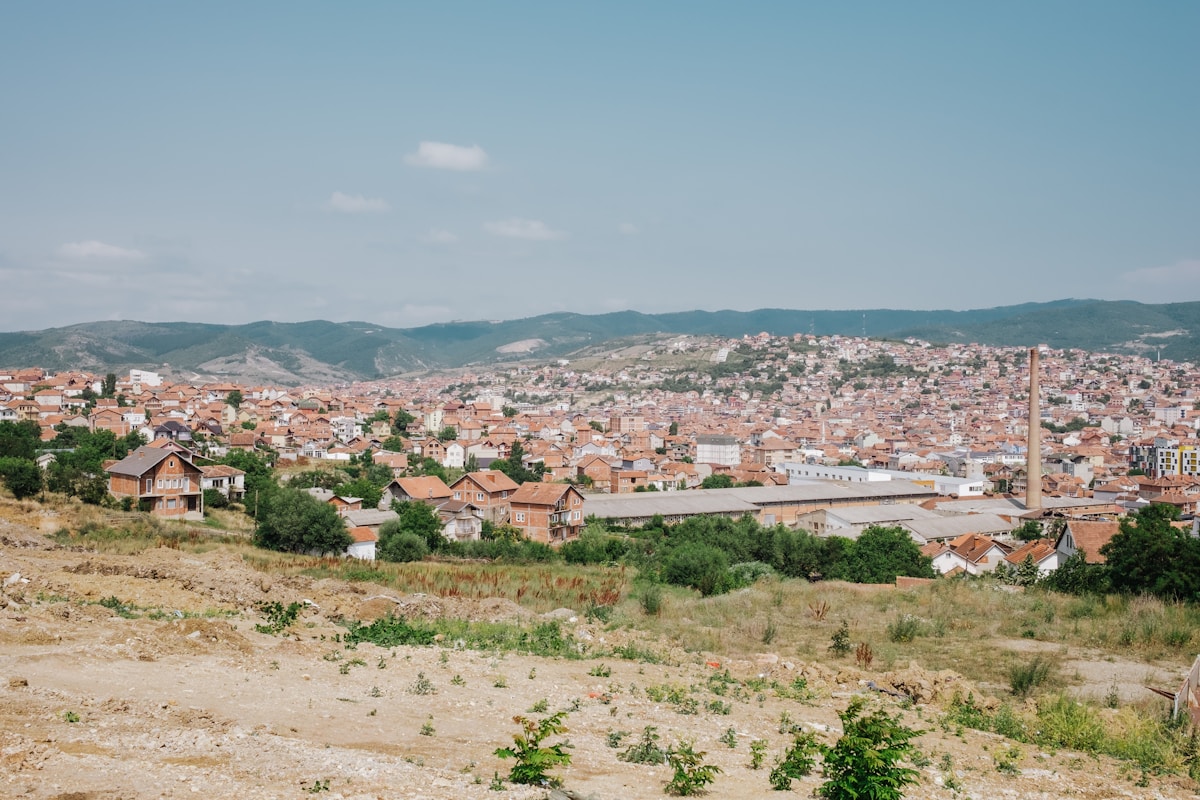
Pristina is not a city that sells itself on looks. The capital of Kosovo is a place of post-war reconstruction, Soviet-era apartment blocks, Ottoman mosques, and a defiant energy that comes through in its street art, packed cafes, and a population with a median age of around 29. What it lacks in conventional beauty it compensates for with character - a walkable centre, very low prices, and a café culture that would put many Western European capitals to shame. Mother Teresa Boulevard and the area around it are the most convenient places to stay in Pristina - central for all the main sights and the best café strip. All prices below are approximate; Kosovo uses the euro.
Newborn Monument
The Newborn Monument on Bill Clinton Boulevard is Pristina’s most recognised landmark - a set of large steel letters spelling “NEWBORN” that was unveiled on 17 February 2008, the day Kosovo declared independence. Each year on the anniversary, the monument is repainted with a new design chosen to reflect a current theme - past versions have featured flags, fingerprints, and the faces of missing persons.
The monument is free to visit at any time and sits in the open near the Palace of Youth and Sports. It is a 5-minute walk from the city centre. Allow 10–15 minutes for photos and to read the information panels.
National Library of Kosovo
The National Library of Kosovo (Biblioteka Kombëtare e Kosovës) is one of the most architecturally divisive buildings in the Balkans. Completed in 1982 by Croatian architect Andrija Mutnjaković, the building is covered in a lattice of 99 metal domes and glass cubes. Opinions range from brutalist masterpiece to eyesore, but it is undeniably unique - no other library in Europe looks like it.
Entry is free. The interior is calmer than the exterior suggests: reading rooms with natural light filtering through the dome structures, rotating exhibitions on Kosovo’s history and culture, and a peaceful atmosphere. Open Monday to Friday, typically 08:00–20:00 and Saturday 08:00–14:00. Allow 30–45 minutes.
Ethnographic Museum (Emin Gjiku Complex)
The Ethnographic Museum is housed in two restored 18th-century Ottoman houses - the Emin Gjiku complex - in the old part of the city. The collection covers traditional Kosovo Albanian life: costumes, tools, household items, weaving looms, and reconstructed room interiors showing how families lived in the region’s stone tower houses (kulla).
Entry costs approximately €1–2. Open Tuesday to Saturday, typically 10:00–17:00. The courtyard between the two buildings is pleasant in warm weather. Allow 45 minutes to an hour.
Imperial Mosque (Grand Mosque of Pristina)
The Imperial Mosque (Xhamia e Madhe / Çarshi Mosque) dates from the 15th century and is the largest mosque in Pristina. Built during the reign of Sultan Mehmed II after the Ottoman conquest, it has been restored several times - most recently after the 1999 conflict. The mosque sits at the edge of the old bazaar area and is a functioning place of worship.
Entry is free outside prayer times. Dress modestly and remove shoes. The interior features a painted wooden ceiling and a simple, well-proportioned prayer hall. Allow 15–20 minutes.
Mother Teresa Square and Boulevard
Mother Teresa Boulevard (Bulevardi Nënë Tereza) is Pristina’s main pedestrian street, running from the Grand Hotel through to the university campus. It is named after Mother Teresa, who was of Albanian descent (born Anjezë Gonxhe Bojaxhiu in Skopje). The boulevard is lined with cafes, clothing shops, and mobile phone stores - the main artery of daily life in the city centre.
At the southern end, Mother Teresa Square has a small statue of the saint. The boulevard is at its busiest in the early evening, when the entire city seems to be out walking, drinking macchiatos, and socialising. No entry fee - this is a public street.
Kosovo Museum
The Kosovo Museum occupies a former Austro-Hungarian building near the Grand Hotel. Collections cover archaeology, ethnography, and natural history, with artefacts from the Neolithic Vinča culture and the Roman period. The museum has had a complicated history - much of the collection was removed to Serbia during the 1990s and has not been fully returned.
Entry is approximately €1–2. Open Tuesday to Saturday, typically 10:00–17:00. The building itself is worth seeing from outside even if the museum is closed. Allow 30–45 minutes.
Cathedral of Saint Mother Teresa
The Cathedral of Saint Mother Teresa is a large Roman Catholic cathedral completed in 2017, built to serve Kosovo’s Catholic minority (approximately 3–5% of the population, mainly in western Kosovo). The modern design features a 65-metre bell tower and a large cross visible from much of the city centre. Regardless of faith, the building is architecturally striking and one of the newest major religious buildings in the Balkans.
Entry is free. Open daily during daylight hours. Allow 15–20 minutes.
Bill Clinton Boulevard and Statue
Bill Clinton Boulevard is named after the US president who authorised the 1999 NATO intervention in Kosovo. A three-metre bronze statue of Clinton stands on the boulevard, unveiled in 2009. The street is also home to the Hillary clothing boutique - named, yes, after Hillary Clinton. The boulevard runs through a commercial district and is more notable as a cultural artefact than as a conventional tourist attraction.
Free to walk at any time. The statue is near the Newborn Monument.
Bear Sanctuary Pristina
The Bear Sanctuary Pristina (Mbrojtja e Arinjve), run by the animal welfare organisation Four Paws, is located approximately 15 km south of the city centre. It houses brown bears rescued from captivity - many were formerly kept in small cages as restaurant attractions, a practice now banned in Kosovo.
Entry is approximately €3–5 (donations welcome). Open daily April to October, typically 10:00–18:00; reduced hours in winter. Reach it by taxi (approximately €8–10 each way from the centre, 20 minutes). Allow 1–2 hours. This is one of the most worthwhile excursions near Pristina, particularly for families.
Gracanica Monastery (Day Trip)
Gracanica Monastery is a 14th-century Serbian Orthodox monastery and UNESCO World Heritage Site, located about 10 km southeast of Pristina centre. Built by King Stefan Milutin in 1321, it is considered one of the finest examples of medieval Serbian architecture, with well-preserved Byzantine frescoes inside. The monastery is a functioning religious community and an important pilgrimage site.
Entry is free. Modest dress required (long sleeves, covered knees). Photography of frescoes may be restricted. Reach it by taxi (approximately €5–8 from Pristina, 15–20 minutes) or by local bus from the main station. Allow 1–1.5 hours including travel. Book a day tour from Pristina that combines Gracanica with the Bear Sanctuary for an efficient full-day excursion.
Germia Park
Germia Park is a large forested recreational area on the eastern edge of Pristina - approximately 10 km from the centre. It is popular with joggers, families, and anyone wanting to escape the concrete of the city for a few hours. The park has walking trails, an outdoor swimming pool (open in summer, approximately €2–3 entry), and several cafe-restaurants.
Entry to the park is free. The pool has a small entry fee. Reach it by taxi (approximately €4–6) or city bus. Allow 2–3 hours for a relaxed visit.
Practical Tips
Getting around: Central Pristina is compact and walkable - most attractions are within 20 minutes on foot. Taxis are cheap (approximately €2–4 for trips within the centre). Agree on the fare before setting off or use a metered taxi.
Safety: Pristina is generally safe for visitors. Petty crime is low. The main annoyance is uneven pavements and occasional traffic chaos.
Best time to visit: April to June and September to October offer the most comfortable temperatures. July and August can be hot (35°C+). Winter is cold but quiet.
Currency: Kosovo uses the euro, despite not being an EU member. ATMs are widely available. Cards are accepted at most hotels and larger restaurants but carry cash for smaller cafes and the old bazaar area.
See also
- Kosovo travel guide
- Where to stay in Pristina
- Prizren travel guide
- 5-day Kosovo itinerary
- Hiking in the Balkans
- Balkans travel costs
Book accommodation in Pristina near the Newborn Monument or Rexhep Mala for walking access to the National Library, the Bear Sanctuary bus connections, and the best café strip.
Plan your trip: Book guided tours of Pristina - guided options cover everything from history walks to day trips. Pick up a Balkans eSIM for data on arrival, and protect your trip with travel insurance.