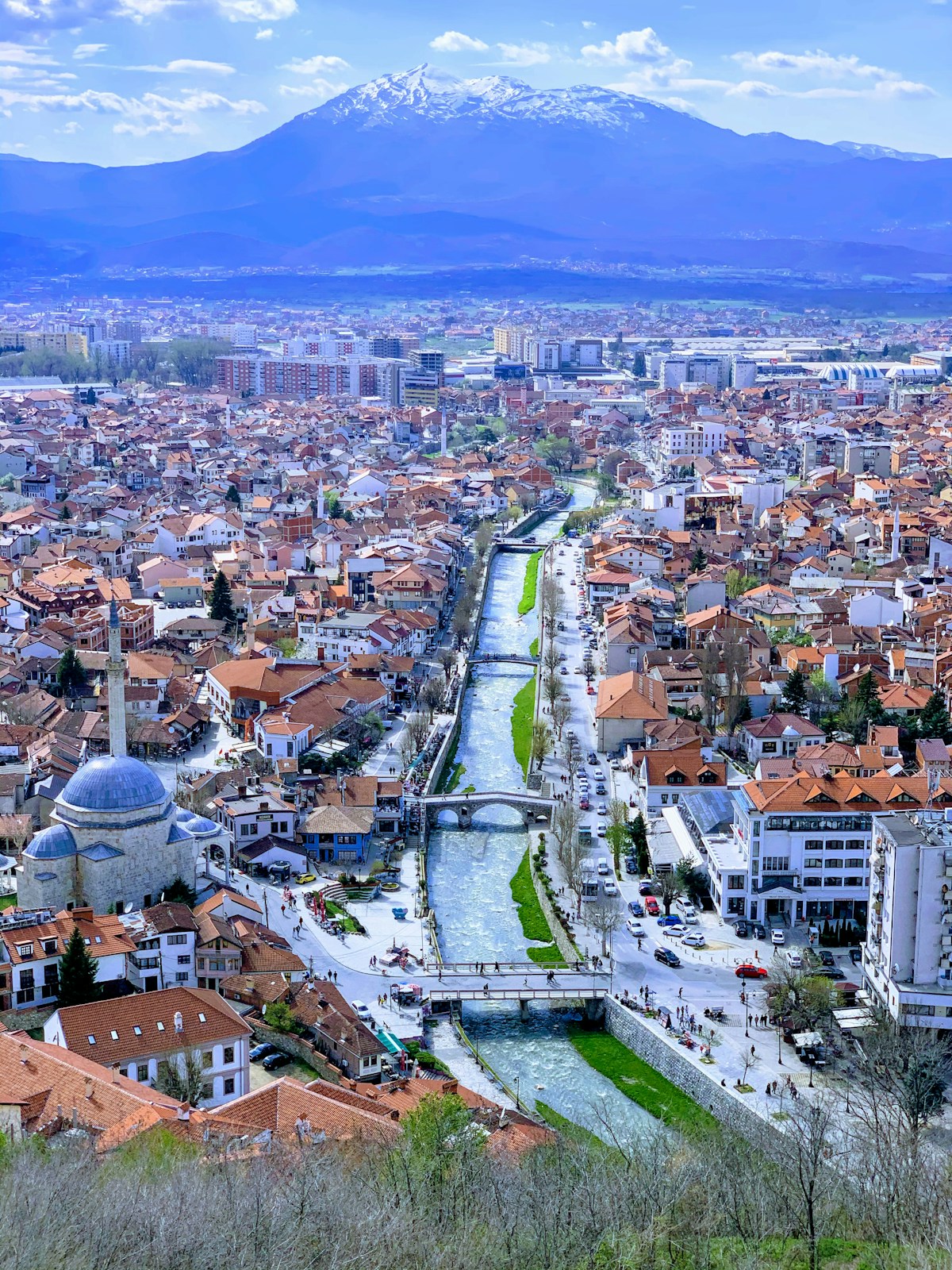
Aerial view of Prizren with the Sinan Pasha Mosque and the Bistrica River

Kosovo Travel Guide: What to Know Before You Visit

Kosovo travel guide: Pristina, Prizren, the Accursed Mountains, border and passport tips, visas, currency, and what to expect as a first-time visitor.

Cities & regions

Kosovo declared independence from Serbia on 17 February 2008, making it one of the youngest countries in the world. Around 100 UN member states recognise it; Serbia, Russia, China, and several others do not. This unresolved status defines much of the practical reality of visiting Kosovo — from the passport stamp question to how locals respond to questions about the country’s future — and it is worth understanding before you arrive.

For travellers, Kosovo is an underrated stop on a Balkans circuit. It is very affordable, genuinely welcoming to Western visitors, and home to two very different but compelling urban experiences: the buzzy, still-evolving capital Pristina, and the beautifully preserved Ottoman market town of Prizren, 80 km to the south.

Practical information

Currency: Kosovo uses the euro, despite not being an EU member — a practical arrangement that started during the UN administration after 1999 and has remained in place since.

Language: Albanian is the primary language. Serbian is official in Serb-majority areas. English is widely spoken in Pristina among younger people, less so in rural areas.

Visa situation: Most Western passport holders can enter Kosovo without a visa for up to 90 days. Always verify current requirements for your specific passport before travel, as this changes.

Entry and the passport stamp issue: Kosovo stamps passports on entry and exit. Serbia does not recognise Kosovo as an independent state and may refuse entry, or create difficulties at border crossings, if your passport shows a Kosovo entry stamp. If your itinerary includes both Kosovo and Serbia, research this carefully before you go — some travellers ask border officials not to stamp the passport (with mixed results), while others enter Kosovo from Albania or North Macedonia to keep Serbian routes open.

Getting There

By air: Pristina International Airport Adem Jashari (PRN) handles direct flights from London, Vienna, Zurich, Frankfurt, Istanbul, and several other European cities. It is a small airport and straightforward to navigate.

By bus from Skopje: The most common overland connection. Regular buses connect Pristina and Skopje (North Macedonia) in about 1.5–2 hours, costing around €10–15. Skopje is a major regional hub with good air connections.

By bus from Tirana: Buses run between Tirana and Pristina, journey time approximately 3.5–4 hours. This is a natural connection if you are travelling through Albania.

From Belgrade: Buses do run between Belgrade and Pristina, but check current border crossing conditions and be aware of the passport stamp situation described above.

The Political Context

Kosovo’s declaration of independence came after years of conflict following the dissolution of Yugoslavia in the 1990s, a period that included the 1998–99 Kosovo War in which NATO intervention halted Serbian military operations. The country has been building state institutions since then with significant international support, but the political relationship with Serbia remains unresolved.

For ordinary travellers, this rarely intrudes directly on the experience. Pristina is lively and outward-looking; Prizren is peaceful and touristic. The main practical consideration is the Serbian border and passport stamp issue. In northern Kosovo, particularly in Mitrovica, there is a visible ethnic and political divide: the city is split by a river, with Albanians to the south and an ethnic Serbian enclave to the north. Visiting Mitrovica is possible but requires awareness of local dynamics.

Pristina

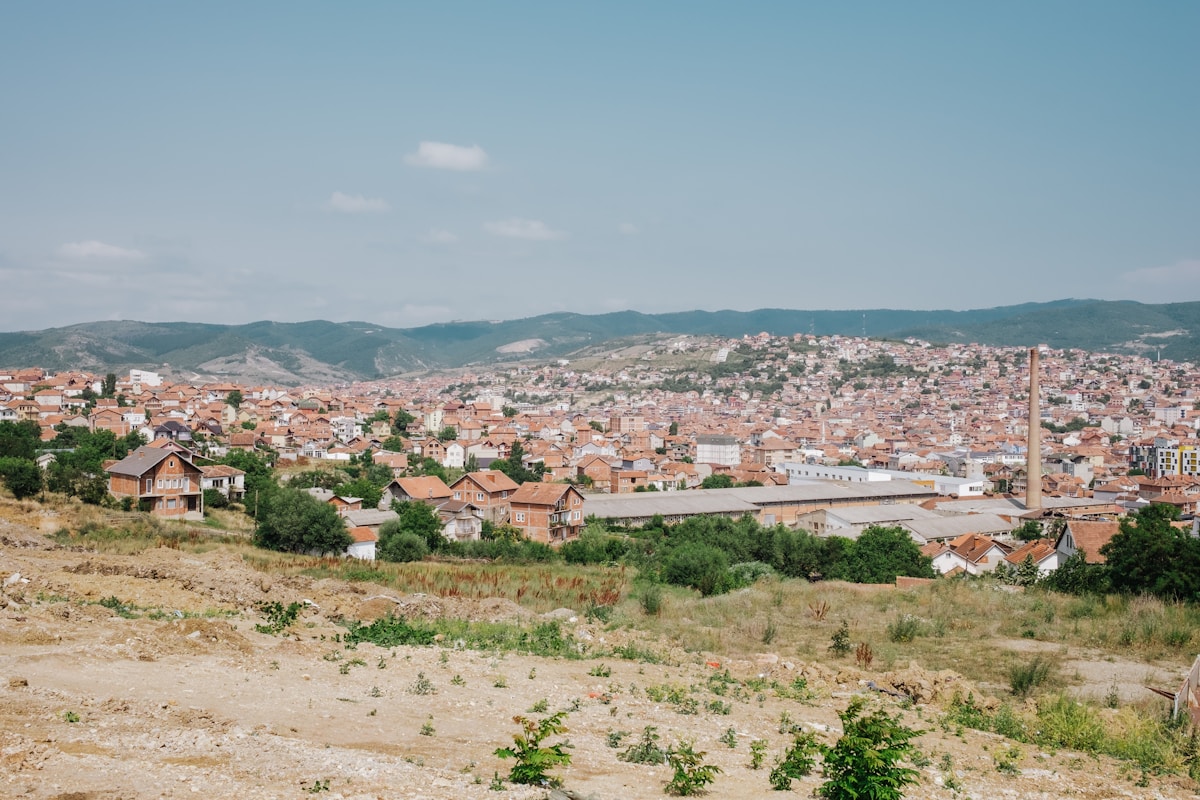
Kosovo’s capital is a young, kinetic city that wears its recent history openly. The Newborn monument in the city centre has been repainted every year since 2008 in a different design to mark independence day. The Bill Clinton statue and the Hillary Clinton boutique on Bill Clinton Boulevard are genuinely striking — both testify to Kosovo’s warmth toward the US and NATO for their role in the 1999 war. The Mother Teresa Square at the centre of the pedestrianised zone is named for the Albanian Catholic nun born in Skopje, who is claimed as an ethnic Albanian figure across the region.

The city has developed a strong café culture and nightlife scene, with coffee shops and bars concentrated in the main pedestrian areas and in the Pejton and Arbëria neighbourhoods. The Grand Mosque of Pristina (built in the 15th century during Ottoman rule) and the National Museum of Kosovo are worth visiting for context.

Pristina is notably affordable: coffee costs around €1, a full meal €5–8, and a night in a budget hotel €25–40.

See our full Pristina travel guide for a detailed itinerary.

Prizren

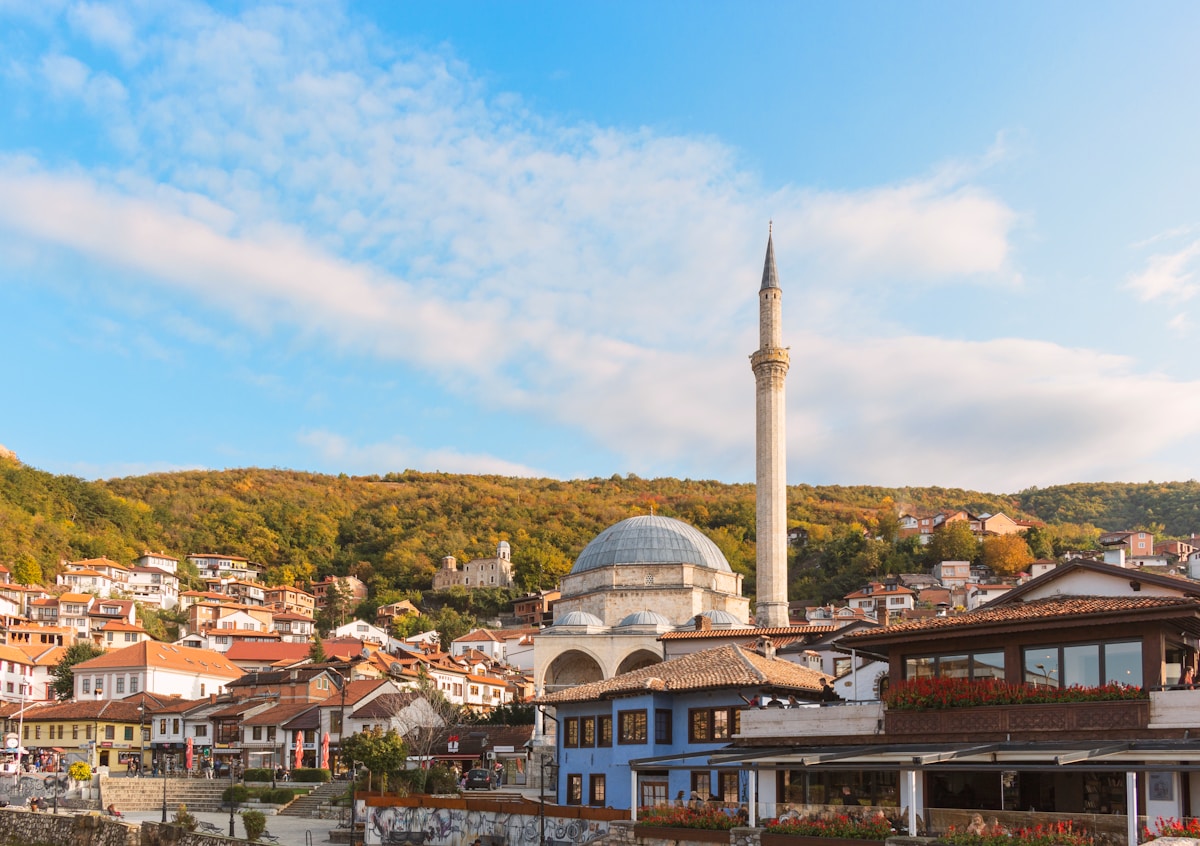
Prizren is Kosovo’s most visually striking city and was for centuries the cultural and administrative centre of the region. Its Ottoman old town — bazaar streets, stone bridges, mosque minarets, a hammam, and the ruins of a medieval fortress — is unusually well preserved and feels genuinely historic rather than reconstructed.

The city sits at the foot of hills in southwestern Kosovo and makes for an easy day trip from Pristina (about 1.5 hours by bus, around €3). Most visitors who come for a day wish they had stayed overnight.

See our full Prizren travel guide.

The Accursed Mountains (Bjeshkët e Namuna)

The mountain range known in Albanian as Bjeshkët e Namuna — the Accursed Mountains — extends across the border area between Kosovo, Albania, and Montenegro. They are among the most dramatic alpine landscapes in the western Balkans, with sheer limestone peaks, glacial lakes, and traditional highland villages.

Access from Kosovo is primarily via the Rugova Valley near Peja (Peć), about 90 km west of Pristina. The town of Peja is the main base, and hiking routes into the mountains are increasingly well-marked. Multi-day routes connect to the Peaks of the Balkans trail network, which links Kosovo, Albania, and Montenegro in a 192 km circuit. You do not need special equipment for the main valley trails; the high-ridge routes require proper hiking experience.

Food

Kosovo’s food draws from Ottoman, Balkan, and Albanian traditions:

  • Burek: flaky pastry filled with meat, cheese, or spinach — the universal Balkan snack and breakfast
  • Fli: layered pancake dish particular to Albanian cuisine, cooked slowly over embers and typically served with honey or sour cream; a real local specialty
  • Tavë kosi: baked lamb or mutton with rice and yogurt in an egg-thickened sauce, shared across Albanian-speaking cultures
  • Qebapa/ćevapi: grilled minced meat sausages, universal in the post-Yugoslav world
  • Pite: filled pastry pies, similar to burek but distinct preparations

Prizren has more traditional restaurants than Pristina. In Pristina, the restaurant scene skews more toward cafés and modern bistros alongside traditional places.

Safety and Cultural Notes

Kosovo is generally safe for tourists. Petty crime exists in Pristina as in any city, but violent crime against tourists is rare.

Cultural notes: Kosovo is a majority-Muslim country (though Albanian Muslims tend toward secular practice), and dress should be modest if visiting mosques. In some rural areas and in Serb enclaves, be aware that attitudes toward Kosovo’s independence vary enormously — political conversation is best approached carefully. In Pristina and Prizren, attitudes toward Western visitors are warmly positive.

Budget Guide

Kosovo is among the cheapest destinations in the Balkans. Rough benchmarks:

  • Coffee: ~€1
  • Café meal: €5–8
  • Mid-range restaurant dinner: €10–15
  • Budget guesthouse: €20–35 per night
  • Mid-range hotel: €50–80 per night