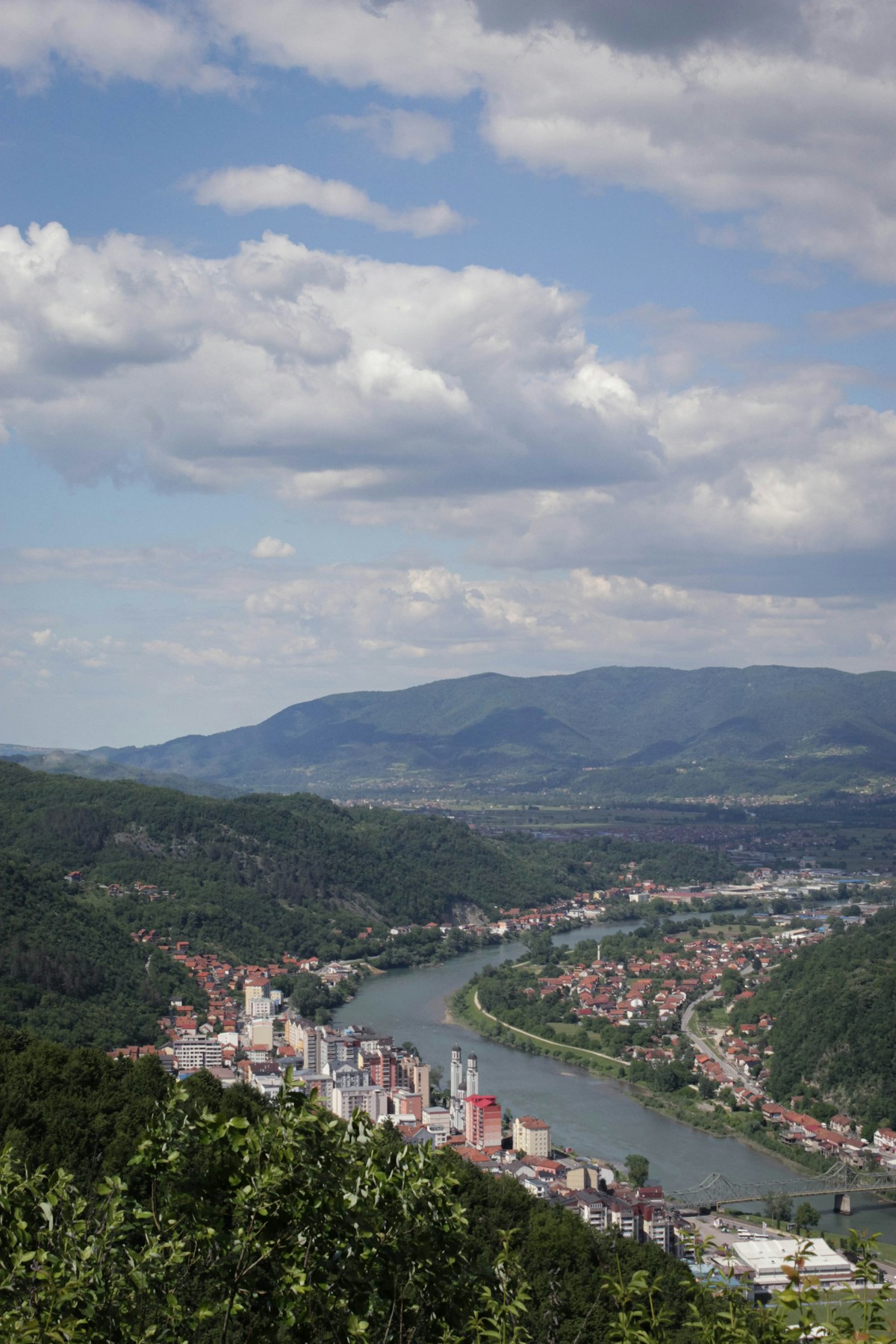
The Serbia–Bosnia border is well-travelled and straightforward for most nationalities, but the crossing you choose makes a real difference to your onward journey. The two main corridors are the Uvac / Mali Zvornik–Zvornik crossing (best for Sarajevo and central Bosnia) and the Bajina Bašta–Skelani crossing (best for Višegrad and the Drina canyon route). Both are fully functional and staffed around the clock, though neither sees the volume of the Croatian coast crossings, so waits are modest outside the busiest summer weekends.
Which Documents Do You Need?
EU / EEA citizens: A valid national ID card is sufficient. A passport is not required. Bosnia is not in the EU or Schengen, so your ID card is checked on both the Serbian and Bosnian sides.
UK, US, Canadian, Australian nationals: A valid passport is required. Citizens of all four countries receive a free, visa-free stay of up to 90 days in Bosnia within any 180-day period, and Serbia grants the same. No visa is needed in advance.
Other nationalities: Check whether your passport country has a visa-free agreement with Bosnia. The Bosnia Ministry of Foreign Affairs publishes a current list. If you need a visa, apply well in advance - there is no visa-on-arrival facility at land crossings.
Note for Kosovo visitors: If your passport contains a Kosovo entry or exit stamp, Serbian border officers may ask questions or, in rare cases, refuse entry to Serbia. This is more relevant on the return journey from Bosnia into Serbia. See our Kosovo–North Macedonia border guide for the full Kosovo stamp issue explanation.
The Main Crossing Points
Bajina Bašta – Skelani
This crossing sits on the Drina River at the edge of Tara National Park, roughly 90 km southwest of Užice. It is the scenic choice: the road through the Drina gorge is spectacular, and Višegrad with its famous bridge is only 30 km into Bosnia on the other side. The crossing itself is a single-lane bridge over the river. Traffic moves quickly outside peak times, and the border officers on both sides are used to through-traffic heading to Sarajevo or Mostar via the RS (Republika Srpska) road network.
Best for: Drivers heading to Višegrad, Foča, or taking the scenic Drina route south to Sarajevo.
Caution: The approach road from Bajina Bašta is narrow and winding. If towing a caravan, use Zvornik instead.
Mali Zvornik – Zvornik
This is the main crossing for central Serbia traffic coming from Belgrade via the E763 motorway south to Šabac and then west. The town of Zvornik sits right on the Drina; the Serbian side is Mali Zvornik (Mala Zvornik). This is a larger, multi-lane post and handles commercial traffic as well as private vehicles.
Best for: Belgrade to Sarajevo route; bus travellers (see below); those arriving from northern Serbia.
Typical wait: 10–20 minutes outside summer; up to 60 minutes on busy July–August weekends.
Uvac – Uvac
A smaller crossing south of Mali Zvornik, connecting the Zlatibor plateau area with eastern Bosnia. Rarely congested. Good if you’re coming from Zlatibor or Nova Varoš and heading toward Han Pijesak or Vlasenica.
Wait Times by Season
| Season | Bajina Bašta | Zvornik |
|---|---|---|
| Jan–Mar | 5–10 min | 10–15 min |
| Apr–Jun | 10–15 min | 15–25 min |
| Jul–Aug | 20–40 min | 30–60 min |
| Sep–Oct | 10–20 min | 15–30 min |
| Nov–Dec | 5–10 min | 10–15 min |
Summer Saturday afternoons are the worst window - the period from roughly 14:00 to 19:00 on Saturdays in July and August regularly sees the longest queues, as Diaspora travellers from Germany, Austria, and Switzerland head into Bosnia. Crossing before noon or after 20:00 cuts wait times significantly.
Bus Options
Several daily coaches run from Belgrade to Sarajevo via Zvornik. The journey takes approximately 5–6 hours. Well-established operators include Lasta, Centrotrans, and FlixBus (seasonal). Buses stop at the border while officers board and check passports - passengers do not need to leave the bus in most cases.
From Užice, regional buses connect to Srebrenica and Zvornik, but there is no regular coach service over the Bajina Bašta crossing into Bosnia. If you are without a car and heading to Višegrad, the best approach is to take a bus or train from Belgrade to Sarajevo and then backtrack to Višegrad by local bus - it is counterintuitive but faster than cobbling together connections via Bajina Bašta.
Rental Car Rules
Many Serbian and Bosnian car hire companies allow cross-border travel between the two countries, but you must confirm this explicitly when booking - compare car hire options across the Balkans to find operators that cover both Serbia and Bosnia. Obtain a Green Card (international insurance certificate) endorsed for Bosnia. Not all budget operators include Bosnia in their standard coverage, and presenting an invalid Green Card at the border means the officers will turn you back.
Practical checklist:
- Ask the rental company specifically: “Is Bosnia (BA) covered in the Green Card?”
- Check the Green Card document itself - the country code list on the reverse side must include BA
- Carry the original rental agreement (not a photo on your phone - some border guards request the physical paper)
- Note that crossing from Bosnia to Serbia with a Bosnian-plated rental car requires the same Green Card verification; rental companies based in Sarajevo routinely cover this route
If you are driving your own vehicle, your standard European Green Card covers Bosnia in almost all cases, but verify with your insurer before departure.
Duty-Free Allowances
Bosnia and Serbia are not part of the EU customs union. When entering Bosnia from Serbia, the standard Bosnian personal allowance per adult is approximately:
- 200 cigarettes (or 250g of tobacco)
- 1 litre of spirits over 22% ABV, or 2 litres of wine/beer
- Gifts and personal goods up to BAM 200 (approximately €100) in declared value
Undeclared cash above €10,000 (or equivalent) must be declared. Officers at both Bajina Bašta and Zvornik do conduct occasional spot checks of vehicles heading into Bosnia, particularly those with large quantities of packaged goods.
Practical Tips
Fuel: Fill up on the Serbian side if possible - Serbian fuel prices are generally lower than Bosnian. There is a petrol station in Bajina Bašta town, and several in Mali Zvornik.
Currency: Serbian dinar (RSD) is not accepted in Bosnia. Bosnia uses the Bosnian mark (BAM), pegged to the euro at BAM 1.96. Bring euros as a backup - many businesses in the RS (Republika Srpska) border area accept euros informally, though change will be given in BAM.
Road quality: The R-5 road from Bajina Bašta through to Višegrad via Skelani is scenic but slow - two lanes, winding, and limited overtaking opportunities. Allow at least 90 minutes for the 55 km stretch to Višegrad. The road from Zvornik toward Sarajevo is better surfaced and partly dual-carriageway.
Opening hours: Both crossings are open 24 hours. There is no specific rush to cross during daylight.
Phone coverage: Serbian SIM cards (Telekom Srbija, A1, Yettel) will roam in Bosnia at standard EU-treaty roaming rates for EU-contract holders, but check your plan. Bosnian operators (m:tel, BH Telecom, HT Eronet) offer their own local SIM cards; a prepaid SIM from m:tel is available in Zvornik town if needed. For organised tours and activities in Bosnia once you’ve crossed, browse tours in Sarajevo and Bosnia.
Plan Your Trip
- Flights - Find the best fares to the Balkans
- Travel Insurance - Get covered before you go
- eSIM - Stay connected from landing
- Car Rental - Compare prices across providers