The drive from Split to Mostar is one of the most popular overland routes in the Balkans - a 2.5-hour corridor that takes you from the Dalmatian coast into the Herzegovinian karst, past the dramatic Neretva canyon, and into Mostar’s old town. The route involves two border crossings if you take the coastal road through Neum, or one crossing if you go inland. Understanding which route you are on, and what each crossing involves, saves time and confusion.
The Two Route Options
Route 1: A1 motorway inland via Kamensko (recommended)
From Split, take the A1 motorway south toward Ploče, then the D8 coastal road or continue on the A1 to the Kamensko border crossing into Bosnia. From Kamensko, you follow the road through Čapljina and up the Neretva valley to Mostar. Total distance is approximately 155 km; driving time 2.5 to 3 hours.
This route involves one border crossing and is the more straightforward option. It is the standard route for travellers in rental cars.
Route 2: Coastal D8 through Neum (scenic but slower)
From Split, head south along the Dalmatian coast on the D8 (Jadranska Magistrala) through Makarska, Ploče, and then into Neum - which requires crossing into Bosnia, driving approximately 9 km through Neum, and crossing back into Croatia before eventually crossing into Bosnia again at Klek or continuing south.
The Neum corridor quirk: Neum is a small Bosnian coastal strip that divides Croatian territory. If you drive the D8 coast road, you will encounter two border crossings simply to stay on the coast road. The alternative since 2022 is the Pelješac Bridge (Mostarski most) - a 2.4 km bridge that connects the two Croatian sections and bypasses Neum entirely. Using the Pelješac Bridge means you stay in Croatia/EU the entire time, paying no toll, until you reach the Klek crossing point into Bosnia.
Most travellers heading to Mostar should take the inland A1 route via Kamensko rather than the coastal road. It is faster, less confusing, and avoids the Neum multi-crossing situation.
The Kamensko Crossing
Kamensko is located on the D8/M6 road approximately 70 km north of Mostar, near Čapljina. It is a main border post with multiple lanes, open 24 hours, and routinely handling both private vehicles and coaches.
Typical wait: 10–20 minutes most of the year; 30–60 minutes on July–August Saturdays.
The crossing sits in a wide valley and feels distinctly less dramatic than some of the mountain crossings elsewhere in the Balkans. Officers on both sides are accustomed to tourist traffic from Split and Dubrovnik; the process is routine.
Which Documents Do You Need?
EU / EEA citizens: Croatia is in both the EU and Schengen. Bosnia is neither. When crossing from Croatia into Bosnia, you are exiting Schengen. EU / EEA citizens need their national ID card - a passport is not required. Officers will check your card on the Croatian exit booth and on the Bosnian entry booth.
UK citizens: A valid passport is required. UK nationals can enter Bosnia visa-free for up to 90 days within 180 days. Since Croatia is Schengen, your Schengen 90/180 clock is running while you are in Croatia - crossing into Bosnia pauses the Schengen count but does not reset it. Time in Bosnia does not count toward your Schengen 90 days.
US, Canadian, Australian nationals: A valid passport. Bosnia grants 90-day visa-free access. Same note on Schengen counting as for UK nationals above.
Other nationalities: Check both Croatia and Bosnia’s visa requirement lists. Your transit through Schengen (Croatia) requires either Schengen visa-free access or a valid Schengen visa; entering Bosnia separately requires either a Bosnia-specific visa-free agreement or a Bosnia visa.
Wait Times by Season
| Season | Kamensko | Neum (if using coastal route) |
|---|---|---|
| Jan–Mar | 5–10 min | 5–10 min each crossing |
| Apr–Jun | 10–20 min | 15–25 min each crossing |
| Jul–Aug | 30–60 min | 30–60 min each crossing |
| Sep–Oct | 15–25 min | 20–30 min each crossing |
| Nov–Dec | 5–10 min | 5–10 min each crossing |
In peak summer, the Neum crossings are often worse than Kamensko, with tour coaches and coastal traffic all stopping at two separate points. This is another reason the inland route via Kamensko is preferred.
Bus Options
Multiple daily coaches run from Split to Mostar. Journey time is 2.5 to 3.5 hours depending on the crossing wait. Operators include Autoprevoz, Globtour, and FlixBus (seasonal). Buses depart from Split’s main bus terminal (Autobusni Kolodvor) on Domovinskog rata, adjacent to the ferry port.
Most buses take the Kamensko crossing. On the bus, officers board and check passports - passengers remain seated. Keep your passport accessible (not in overhead luggage) for the entire journey.
Tip: The 07:00–09:00 Split departures are the best choice in summer. They arrive in Mostar before the midday heat and before the peak border queue period. Afternoon departures (14:00–17:00) on Saturdays often face the heaviest waits.
Onward connections: From Mostar, regular buses continue to Sarajevo (2.5 hours), Dubrovnik (3 hours via Neum), and Medjugorje (30 minutes). Day-trip coaches from Split to Mostar often include Medjugorje and Kravice Waterfalls in the same itinerary. You can also compare and book Mostar day trips from Split on GetYourGuide.
Rental Car Rules
This is the most important section for anyone renting a car for the Split to Mostar route.
Croatian-plated rental cars: Croatia is an EU / Schengen member. Crossing into Bosnia with a Croatian rental requires a Green Card explicitly listing BA (Bosnia-Herzegovina). Most major rental companies operating out of Split (Hertz, Avis, Europcar, Sixt, Budget) include Bosnia in their standard coverage for this reason - it is an extremely common customer request. However, local/budget Croatian operators sometimes exclude it.
Non-EU rental cars (e.g., renting from a company based outside the EU): The same Green Card requirement applies. If your rental originated in the UK or US (picking up at Split Airport), ensure the company’s Green Card covers BA.
What to carry at the border:
- Green Card (physical copy, not phone screenshot)
- Original rental agreement
- Your driving licence (an international driving permit is not required from EU, UK, US, Australian licence holders, but carry it if you have one)
Bosnia-plated rentals into Croatia: Rentals originating in Sarajevo or Mostar heading into Croatia require confirmation that Croatia (HR) is on the Green Card. Croatia’s EU membership means Bosnian insurance policies must specifically cover EU territory.
Duty-Free Allowances
When entering Bosnia from Croatia (EU), the Bosnian customs personal allowance per adult is:
- 200 cigarettes (or 250g tobacco)
- 1 litre spirits over 22% ABV, or 2 litres wine/beer
- Goods purchased in Croatia: up to BAM 200 (approximately €100) in declared value - the non-EU land-border threshold
Officers at Kamensko conduct random vehicle checks. The main trigger for inspection is large quantities of packaged consumer goods, alcohol, or cigarettes that clearly exceed personal use.
When returning to Croatia (EU) from Bosnia, the EU personal allowance applies for non-EU goods: up to €300 in goods purchased outside the EU (land border threshold).
Practical Tips
Stari Most day trip warning: If you are doing Mostar as a day trip from Split, be aware that returning on the same afternoon - particularly on summer Saturdays - means crossing Kamensko at peak queue time. Leave Mostar no later than 15:00 if you want to avoid a 45-minute wait in summer.
Kravice Waterfalls detour: The Kravice Waterfalls (Kravica) are 40 km from Mostar, just off the road from Kamensko heading north. It is a natural stop and adds only a small detour to the route. Entrance fee is approximately BAM 10 (€5).
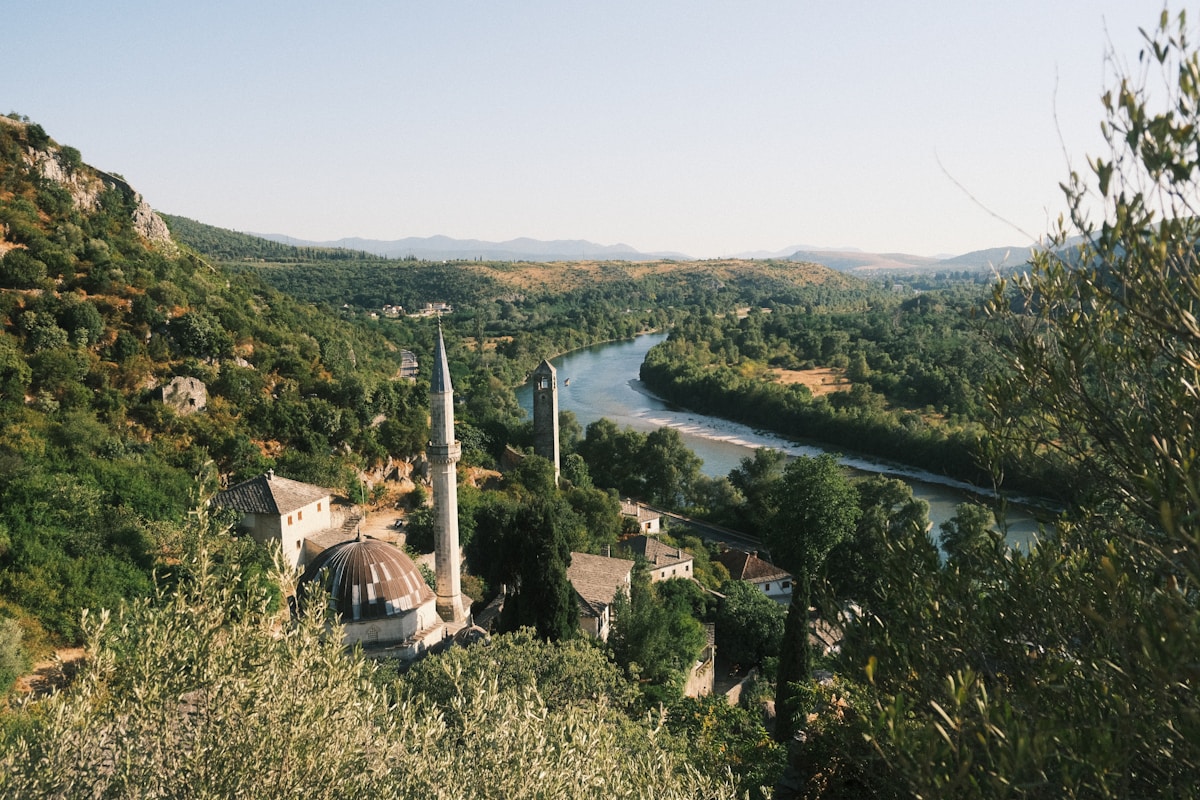
Počitelj: The medieval fortified village of Počitelj is 22 km south of Mostar on the Neretva, right on the main road from Kamensko. Worth a 45-minute stop. Free to enter the village; the fortress ramparts are a short steep climb with views across the Neretva valley.
Currency: Bosnia uses the Bosnian mark (BAM). Croatia uses the euro (€). Informal euro acceptance exists in some Mostar tourist businesses, but change is given in BAM. An ATM in Čapljina (just north of Kamensko) is the easiest first stop.
Road signage: Once in Bosnia, road signs switch from the Croatian/Latin script to a mix of Latin and Cyrillic. Major destinations (Mostar, Sarajevo) are signed in both scripts. A GPS or offline map helps if you are unfamiliar with Cyrillic.
Plan Your Trip
- Flights - Find the best fares to the Balkans
- Travel Insurance - Get covered before you go
- eSIM - Stay connected from landing
- Car Rental - Compare prices across providers