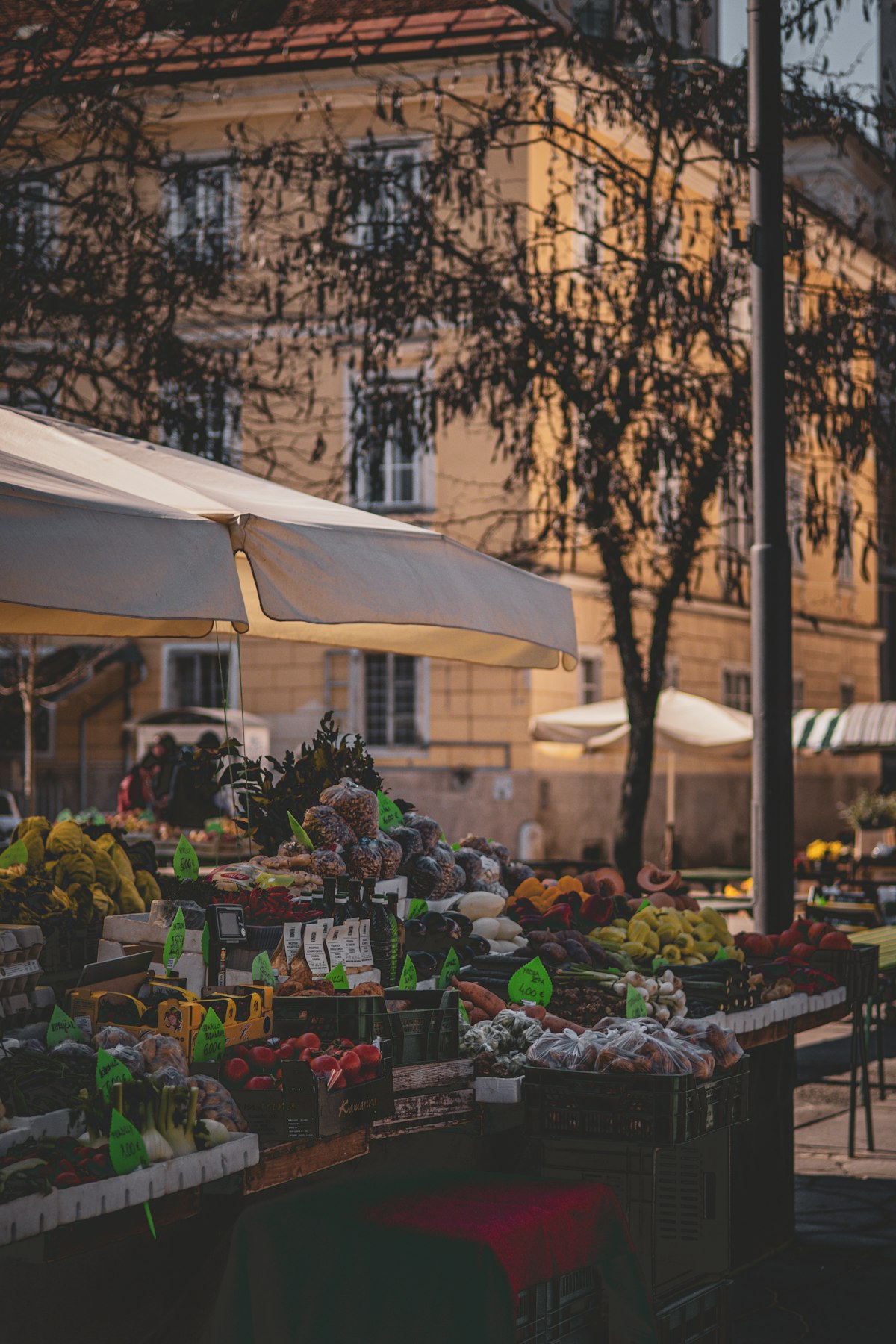
Ljubljana is a city where the food is better than the reputation. Slovenia sits at a crossroads of Alpine, Pannonian, Mediterranean, and Central European culinary traditions, and its capital draws from all four - the result is a food culture with more range than most visitors expect. The Central Market, designed by Jože Plečnik and operating since 1942, is one of the finest everyday food markets in Central Europe and the best single starting point for understanding what Slovenian cooking is built from.
A food tour here tends to surprise people. Slovenia’s geographic compactness means that ingredients from the mountains, the coast, and the interior plains all arrive in Ljubljana’s market within a few hours. You can taste honey from bees kept above 1,000 metres, truffles from Istria, wine from the Karst, and smoked meats from the Karničar valley - all in a single morning.
Ljubljana Food Tours at a Glance
| Tour | Duration | From (approx) | Best For |
|---|---|---|---|
| Slovenian Cuisine Walking Tour with Tastings | 3 hrs | €55 | First-timers, market-to-wine tastings |
| Ljubljana’s Traditional Flavors: A 3-Hour Food Journey | 3 hrs | €60 | Slovenian specialties, old town stops |
| Traditional Slovenian Štrukelj Cooking Class | 3 hrs | €70 | Hands-on cooks, traditional desserts |
Browse all Ljubljana tours on GetYourGuide
What Slovenian Food Culture Is Built On
Slovenia’s food identity is Alpine at its core - smoked meats, dairy, buckwheat, and the fermented turnip (repa) that appears as a side dish in the same way sauerkraut does in Austria. The coastal influence from the Piran and Izola region adds olive oil, seafood, and the Venetian cooking traditions that shaped the entire upper Adriatic. The Karst plateau between Ljubljana and the coast produces its own distinct ingredient - Karst lamb (kraški jagnjetina), which grazes on limestone pastures and herb-rich vegetation, and Teran wine (a sharp, iron-rich red from Refošk grapes grown in red Karst soil).
The dish that functions as Slovenia’s national reference is potica - a rolled sweet bread with walnut filling (the most common version), though the filling varies by region: poppy seed, tarragon, hazelnut, and even savoury cheese versions exist. It appears at every significant occasion and is the thing Slovenian emigrants most commonly cite as the taste of home. Bakeries throughout Ljubljana sell it daily; the best versions are made with yeast-leavened dough rather than shortcrust.
Slovenian wine is the least-known part of the food story and one of the most rewarding. Three major wine regions: Podravje (north, includes Jeruzalem Ormož producing the country’s best whites), Posavje (southeast, lighter reds), and Primorska (southwest, includes the Karst, Vipava Valley, and Goriška Brda - the last producing Rebula and Merlot-based reds that stand comparison with northern Italian examples). A food tour that includes a Slovenian wine tasting is doing important work - most people leave without knowing Slovenia produces serious wine.
Ljubljana Food Tour Operators
Ljubljana Food Tour (ljubljanafoodtour.com, check current availability) runs the most comprehensive food tour in the city. Their flagship tour begins at the Central Market (7:30am, before crowds), moves through several food stops in the old town, and ends with a Slovenian wine tasting at a wine bar in the city centre. Price approximately €55–75 per person as of 2026; duration 3.5–4 hours. Private tours available from approximately €150 for two people.
Their morning market tour runs separately at approximately €40–55 per person, concentrating on the Plečnik market architecture, the vendors, and a guided produce tasting that covers honey, cheese, and cured meats without the restaurant stops. The better option if you’re primarily interested in ingredients and shopping.
GetYourGuide food tour listings in Ljubljana include: a wine-and-cheese tasting focused on Slovenian producers (approximately €40–60 per person, 2 hours, typically held at a wine bar in the old town), a market-and-cooking tour where you shop at the Central Market and prepare a simple Slovenian meal (approximately €65–85 per person, 4 hours), and a street food tour of the Metelkova area (approximately €30–45 per person, 2.5 hours). The cooking tour is worth the premium if you’re interested in technique rather than just tasting.
Taste Ljubljana, a smaller local operator, runs private food and wine tours customised by interest - truffle hunting in autumn (September–November, combined with the Istrian border region), wine road tours to the Vipava Valley (2 hours southwest), and market tours for specific seasonal produce. Price from approximately €80–120 per person for private options. Best for visitors who want something more specific than a standard group tour.
The Dishes and Ingredients Worth Knowing
Kranjska klobasa: The Carniolan sausage - a coarsely ground pork sausage with 10–12% fat, smoked over beech and oak, and sold in linked pairs. Protected designation of origin since 2015; the specification requires the meat to come from pigs raised in Slovenia. Eaten boiled (never fried) with mustard and horseradish. The best version in Ljubljana is served at the market’s deli stalls and at Odprta Kuhna, the Friday evening outdoor food market on Pogačarjev trg. Price approximately €3–6 per portion as of 2026.
Prekmurska gibanica: A layered pastry from the Prekmurje region in northeast Slovenia - alternating layers of poppy seeds, walnuts, cottage cheese, and apple, all in a pastry casing, baked until dense and slightly sticky. It’s the most complex of Slovenian pastries and appears in Ljubljana bakeries year-round. At its best at Slaščičarna Zvezda on Congress Square (established 1823, still operating).
Jota: A thick stew of beans, sauerkraut (or fermented turnip), and smoked pork, originating in the Karst and Istria. The version you’ll find in Ljubljana restaurants is usually made with beans and repa (fermented turnip) rather than sauerkraut - the flavour is sharper and more mineral. A winter dish, found on traditional restaurant menus from October through March.
Idrijski žlikrofi: Small meat-filled dumplings from the Idrija region (mercury mining town west of Ljubljana) - the filling is potato, lard, smoked pork, and onion, enclosed in a crimped pastry case. The specific crimping technique is part of the protected recipe. Served with lamb and cream sauce in restaurants, or as a snack with melted butter. Entry approximately €8–12 for a main course as of 2026.
Štruklji: The Slovenian answer to štrukli - rolled dumplings made from stretched dough (similar technique), filled with cottage cheese or walnut, and either boiled or baked. The Slovenian version typically uses cottage cheese (skuta) rather than the Croatian fresh cheese, giving a slightly drier and more neutral filling. A standard item on traditional restaurant menus; worth trying alongside the Croatian version if you’re moving between the two countries.
Teran wine: The Karst’s most specific product - a red wine from Refošk grapes grown in the iron-rich terra rossa soil of the limestone plateau. Deep ruby colour, high acidity, low tannin, with a characteristic iron-mineral edge that polarises opinion. The wine has a documented history in this region since Roman times. Worth tasting with the local Karst cheese (kraški sir) and prosciutto (kraška pršut), which are designed to accompany it. GetYourGuide wine tastings in Ljubljana typically include at least one Teran.
Ljubljana honey: Slovenia has the highest density of beehives per capita in Europe, and the Carniolan honey bee (Apis mellifera carnica) is the country’s most protected agricultural species. Ljubljana’s Central Market carries honey from multiple altitudes and plant sources - acacia (lightest), lime blossom (floral, mid-weight), forest honey (dark, strongly flavoured), and buckwheat (the most intense, almost molasses-like). A 250g jar from a market producer costs approximately €4–8 as of 2026; take home rather than buy at the airport.
Central Market: How It’s Organised
The Plečnik market runs along the Ljubljanica riverbank in two sections: the covered colonnade (designed 1940–44) for fish, dairy, meat, and deli goods; and the open market above on Vodnikov trg for seasonal produce. A third section near the Cathedral handles flowers.
Operating hours: Monday–Friday approximately 6am–4pm, Saturday 6am–3pm, Sunday mostly flower sellers only.
The fish section in the colonnade is particularly good - freshwater fish (pike, carp, trout) from Slovenian rivers alongside Adriatic fish delivered daily. The dairy section carries a range of regional cheeses: Tolminc (semi-hard mountain cheese from the Soča Valley), Nanos (sheep’s milk), and various fresh and aged forms of kraški sir from the Karst.
The Friday evening Odprta Kuhna (Open Kitchen) outdoor market on the adjacent square runs April through October and concentrates Slovenian restaurant pop-ups, street food, and artisan producers into one of Ljubljana’s most enjoyable food events. Free entry; arrive by 6pm for the best selection.
Eating Independently
Restavracija AS (Čopova ulica) is Ljubljana’s most acclaimed traditional restaurant - Slovenian game, mushrooms, truffle dishes in season, and one of the most comprehensive Slovenian wine lists in the city. Main courses approximately €18–28 as of 2026. Book ahead for dinner.
Gostilna na Gradu (Ljubljana Castle) serves contemporary Slovenian cuisine using ingredients sourced from small producers, with a good-value two-course lunch. Main courses approximately €14–22.
Kavarna Zvezda (Congress Square) handles the classic Viennese-influenced café culture - kremšnita, prekmurska gibanica, and coffee in a period interior. Pastries approximately €3–5.
Browse food tours, Slovenian wine tastings, and market walks in Ljubljana on GetYourGuide.
For planning your time in the city, the Ljubljana city guide covers accommodation options, how to use the old town as a base, and the café-bar scene along the Ljubljanica that runs well into the evening.