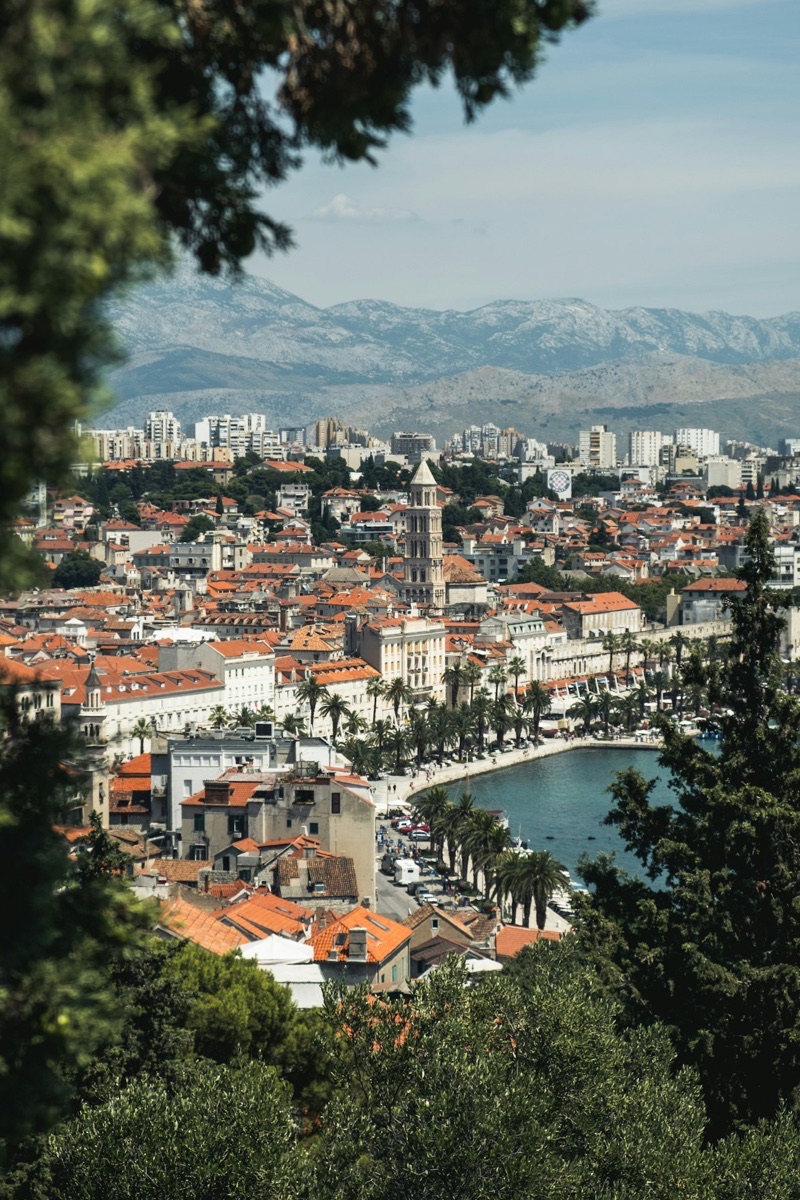
September rivals May as the best month to visit the Balkans. The sea is at its warmest (warmer than June), summer crowds thin out rapidly after the first week, and prices on the Croatian coast drop 30–40% from August peaks. Inland temperatures ease to comfortable sightseeing levels. We recommend September to anyone who wants coast and culture without the peak-season penalty.
Weather by Region
Croatian coast (Dubrovnik, Split, Hvar): 24–29°C. The sea peaks at 23–25°C - warmer than June. Sunshine remains reliable through mid-September, with occasional showers increasing toward month’s end. Cruise ship visits decrease, and Dubrovnik’s old town becomes walkable again.
Montenegro coast (Kotor, Budva, Ulcinj): 23–28°C. The Bay of Kotor is warm and less humid than August. Budva’s beaches thin out after 10 September. Ulcinj’s Long Beach has warm water and space. This is the best month for the Montenegrin coast.
Bosnia (Sarajevo, Mostar): 16–26°C. Both cities are at their most pleasant. Mostar drops below 30°C for the first time since June, making the old town comfortable for daytime exploration. Sarajevo’s hills begin showing the first hints of autumn colour by late September.
Serbia (Belgrade, Novi Sad): 20–28°C. Belgrade in September is excellent - warm evenings on the Sava waterfront, outdoor dining across Dorćol, and a full cultural calendar as the city’s theatre and concert season opens. Novi Sad returns to its relaxed, local character after EXIT’s summer buzz.
Albania (Tirana, Albanian Riviera): 22–30°C. The Riviera remains fully operational through September. Sea temperatures hold at 23–24°C. Prices drop from August peaks - a seafront room in Dhermi returns to €40–60. Ksamil’s beaches are noticeably quieter.
North Macedonia (Skopje, Ohrid): 20–28°C. Ohrid is superb in September - the lake is warm (21–23°C), the Summer Festival winds down, and the town settles into a quieter rhythm. The Galicica trail between Ohrid and Prespa lakes is in peak condition.
Hiking Season Returns
September reopens the hiking window that July and August heat closed at lower altitudes. The high mountain trails remain snow-free, temperatures are ideal, and autumn light sharpens the landscapes.
Durmitor National Park (Montenegro) - Bobotov Kuk (2,523m) is accessible without snow. The Black Lake circuit is stunning in early autumn light. The Tara River canyon, the deepest in Europe, is at its most dramatic.
Prokletije / Albanian Alps - The Valbona to Theth trail is in excellent condition through mid-September. Guesthouses in Theth wind down by month’s end, so aim for the first two weeks.
Plitvice Lakes (Croatia) - September offers lower water levels than May but far fewer visitors than summer. The boardwalks and waterfalls are best experienced in the golden afternoon light. Visit midweek for the quietest conditions.
Biokovo Nature Park (Croatia) - The Skywalk glass platform above the Makarska Riviera reopens to comfortable visiting temperatures. The ridge trail offers views across to Hvar and Brač. Our Hiking in the Balkans guide covers all four areas with trail grades, duration, and access logistics.
What to Do
Multi-country road trips are at their best in September - renting a car for the classic loop Dubrovnik → Kotor → Budva → Shkodër → Tirana → Albanian Riviera → Sarandë (ferry to Corfu optional) takes 10–14 days. Border crossings are fast (15–30 minutes), roads are empty compared to August, and accommodation is available without advance booking in most places. Our Split accommodation guide covers hotels near Diocletian’s Palace and quieter options along the Marjan peninsula.
Wine harvest begins across the region. Serbia’s Fruška Gora wine region (near Novi Sad) and North Macedonia’s Tikveš wine district both harvest in September. Tastings and cellar visits are easy to arrange. Montenegro’s Crmnica wine region near Lake Skadar produces excellent Vranac reds.
City breaks combine well with coast. Spend three days in Sarajevo or Belgrade, then head to the Adriatic for the final warm-water swimming of the year. The combination works better in September than any other month because both inland and coastal conditions are comfortable.
Prices and Practical Notes
September pricing drops quickly after the first week. Croatian coast accommodation falls 30–40% from August by mid-September. Montenegro and Albania drop similarly. Flights from Western Europe remain frequent through mid-September, with some routes reducing to weekend-only by month’s end.
The swimming season runs through September without issue. Beach infrastructure (sunbeds, bars, showers) begins closing on quieter beaches after mid-September, but major resort beaches stay operational through the month.
All ferry routes in Croatia (Split to the islands) run full schedules through September. National parks remain open with full services.
Who September Suits
Almost everyone - it is one of the two best months alongside May. Ideal for couples, hikers, road trippers, and anyone wanting warm-sea swimming with lower prices and thinner crowds than July-August. Wine enthusiasts benefit from harvest season. The only reason to avoid September is if you specifically want festival season (choose July-August) or skiing (December-March).
See our Balkans transport guide for border crossings, bus routes, and getting between countries.
See also
- Best time to visit the Balkans
- Balkans in August
- Balkans in October
- Hiking in the Balkans
- Croatia travel guide
- Montenegro travel guide
- Albania travel guide
Plan Your Trip
September’s strongest route: Ohrid for 3 nights (lake swimming at 21–23°C, old town, Galicica ridge hike above the prespa lakes), then north through North Macedonia’s wine country around Tikveš before ending in Belgrade. Wine harvest runs through September in Serbia and North Macedonia — the Tikveš region produces the Balkans’ best red wines and some wineries offer tastings with advance notice. On the coast, Ksamil in Albania is noticeably quieter than August with the same turquoise water. Beach infrastructure stays open through September on major Albanian and Montenegrin beaches. Search flights to the Balkans · Travel insurance · Tours & activities in Ohrid · Balkans eSIM via Airalo