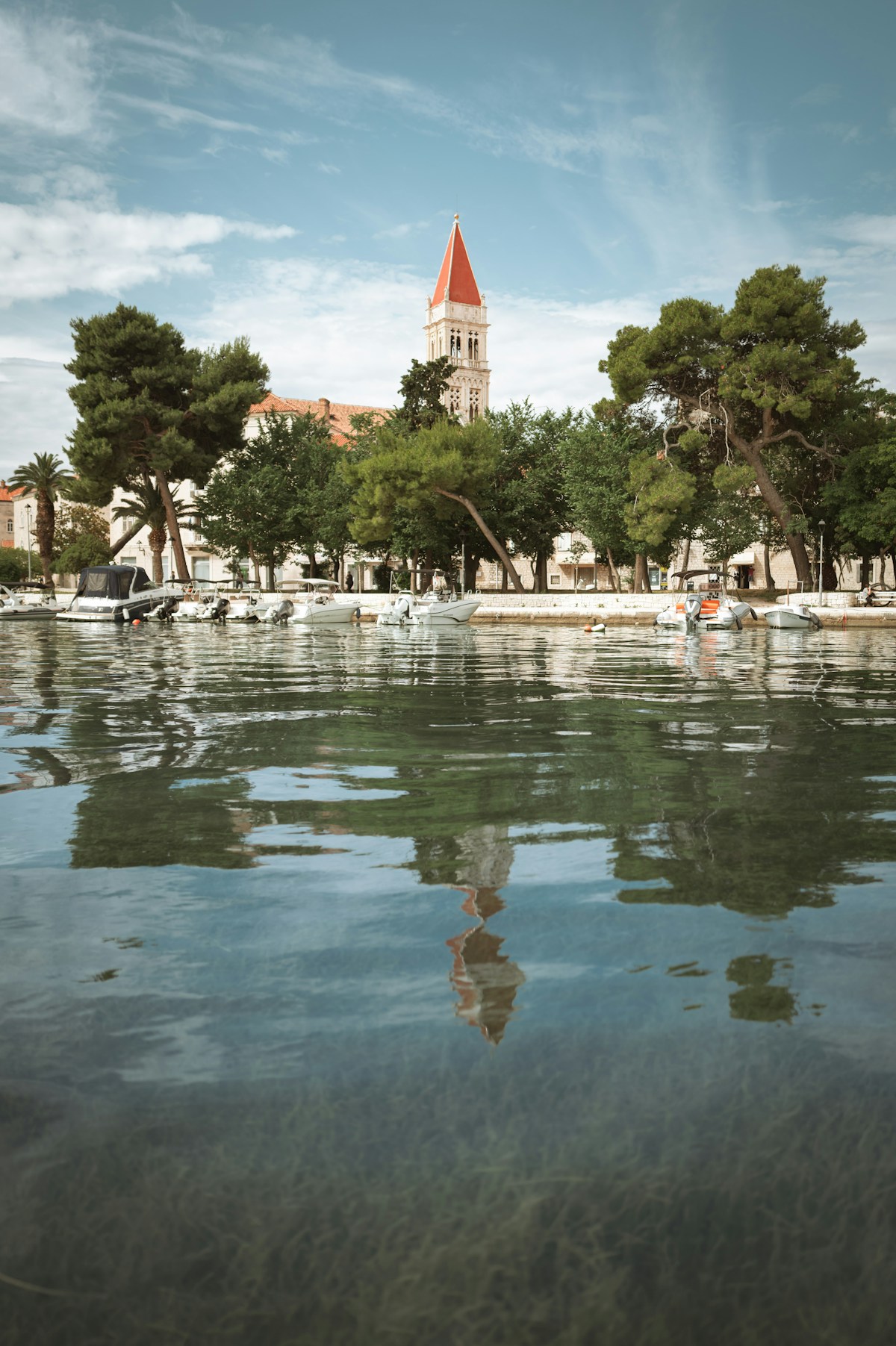
Trogir Travel Guide: UNESCO Old Town, Cathedral & Boat Trips
Trogir travel guide: UNESCO Old Town, Cathedral of St. Lawrence, boat trips to Split and Hvar. Restaurants and guesthouses inside the walls.
Guides for Trogir: Medieval UNESCO Town
Trogir is one of the best-preserved medieval towns on the Adriatic - a UNESCO World Heritage Site since 1997, built on a tiny island connected to the mainland and to the larger island of Čiovo by two bridges. Unlike Dubrovnik, Trogir is compact enough to walk end-to-end in 15 minutes, which makes everything feel immediate and human-scaled. Split is 27km east and takes 35 minutes by local bus, making Trogir easy to combine with the main city or as a standalone destination. All prices in euros (€).
Why Trogir stands out
The Old Town occupies the entirety of a small island, so the medieval layout is essentially undiluted - there was no room for modern expansion on the island itself. The Cathedral of St. Lawrence and its Portal of Radovan (1240) are the finest Romanesque stonework on the Adriatic coast. The Kamerlengo Fortress at the western tip of the island gives sweeping views over the coast and the channel to Čiovo.
Evening in Trogir after day-trip visitors leave is a particular pleasure - the cafés on the main square fill with local residents, and the quality of the light across the Old Town at dusk is genuinely exceptional.
Key sights
Cathedral of St. Lawrence (Crkva sv. Lovre) The heart of Trogir and one of the most significant medieval buildings in the region. Construction began in 1213 and continued over several centuries, producing a layered Romanesque-Gothic structure. The Portal of Radovan on the west façade - carved by master sculptor Radovan in 1240 - is carved with scenes from the life of Christ surrounded by figures in Venetian dress. The Ursini Chapel inside is a Renaissance masterpiece.
- Bell tower: €4 to climb; views over the Old Town and sea
- Treasury: €3
Kamerlengo Fortress A 15th-century Venetian fortress at the western end of the Old Town, with towers and a courtyard that hosts outdoor cinema and events in summer. The view from the ramparts covers the entire Old Town, the Čiovo bridge, and the Adriatic to the south.
- Admission: €4
- Open: Daily in season
Town Museum (Muzej Trogira) A compact museum in the Garagnin-Fanfogna Palace covering Trogir’s Roman, Venetian, and local history. The Roman inscriptions and medieval artefacts are the highlights.
- Admission: €3
Convent of St. Nicholas (Benediktinski samostan) The Benedictine convent contains the Kairos relief - a 3rd-century Roman relief of the god of opportunity, considered one of the finest ancient sculptures in Croatia.
- Admission: €2
Cathedral Square (Trg Ivana Pavla II) The central square in front of the cathedral is where the town’s rhythm is most visible - morning coffee, midday crowds, evening aperitivo. The loggia and clock tower are on the north side.
Boat trips and the islands
Trogir is a good base for exploring the islands of the Šibenik and Split archipelagos. Organised boat trips depart daily from the harbourfront.
- Šolta, Brač, and Hvar day trips: €40–70 per person, full day
- Blue Lagoon on Drvenik Mali: 30 minutes from Trogir; a popular turquoise-water stop on many boat tours (€30–50)
- Krka National Park by boat: Organised tours from Trogir, approx. €60–80 including entry
Food and drink
The Old Town has a good concentration of seafood restaurants, particularly on the harbourfront and the small streets behind the cathedral. Dalmatian staples - fresh grilled fish, black risotto, pasticada, octopus salad - are universally available.
Konoba Trs - a well-regarded konoba in the Old Town, serving traditional Dalmatian dishes. Fish and shellfish are the main draw.
- Mains: €14–24
Caffe Bar Trs - a popular café on the square, good for coffee and people-watching.
Scala di Trogir - a mid-range restaurant near the waterfront, consistently reviewed well for grilled fish and local wine selection.
- Mains: €15–28
Marta’s Heritage Restaurant - a family-run spot with a focus on local recipes and wine, popular with visitors who want something beyond the standard tourist menu.
- Mains: €14–22
Budget tip: The bakeries and small shops on the side streets sell burek and local pastries for under €3. The market near the mainland bridge has fresh produce and local cheese.
Where to stay
Getting there
From Split by bus: Bus 37 from Split bus station runs every 20–30 minutes; €2.50; 30–45 minutes. The bus stops on the mainland side of the Old Town. From Split by taxi or transfer: 20–25 minutes; €25–35. Book a Welcome Pickups transfer for a fixed price with luggage. From Split Airport: Trogir is 6km from Split Airport - closer than central Split. Bus, taxi, or transfer to Trogir is under €15.
Getting around
The Old Town is small enough to walk everywhere in 10 minutes. Čiovo island has accommodation and beaches reachable on foot over the bridge.
Practical notes
- Currency: Euro (€)
- ATMs: On the mainland near the bridge and in the Old Town
- Best months: May–June and September - warm, far fewer crowds than July–August
- July–August: Very busy midday; most day-trippers from Split and cruise ships arrive 10am–4pm; mornings and evenings are peaceful
Trogir guides
See also
Plan your trip: Browse guided tours of Trogir and the Dalmatian coast - boat trips to the Blue Lagoon are particularly popular. Pick up a Balkans eSIM for data on arrival, and protect your trip with travel insurance.
Book an experience
Top experiences in Trogir: Medieval UNESCO Town
Explore the best tours and activities in Trogir: Medieval UNESCO Town - instant confirmation, free cancellation on most bookings.