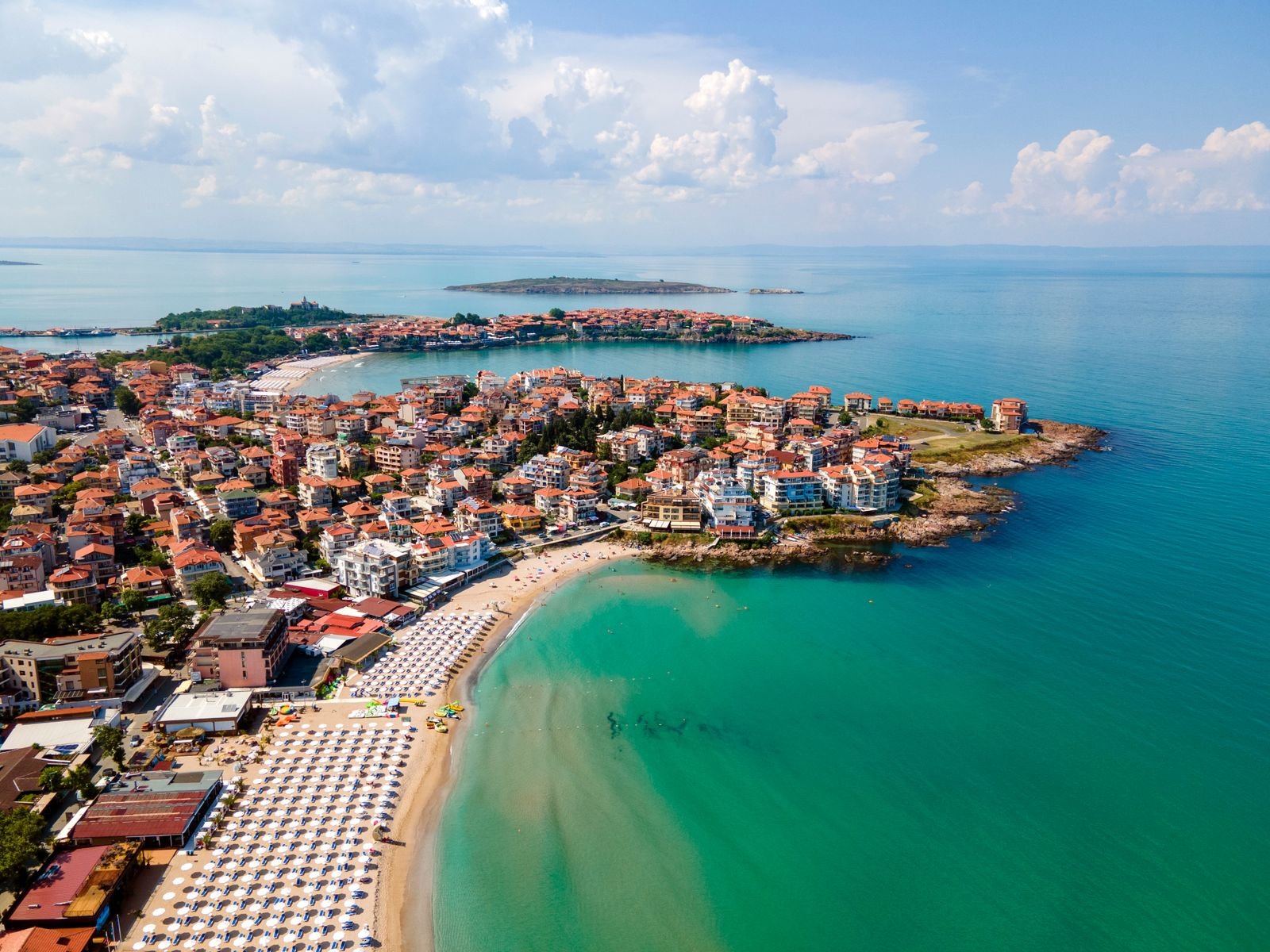
Most visitors treat Burgas as an airport, but the city holds a full day or two of easy, low-cost sightseeing: a seafront park that runs for kilometres, a Roman spa site, a wetland reserve on the edge of town and a short boat ride to an island. This guide covers what is worth your time in town, and how to fit in the coastal towns. For arrival, transport and orientation, see our Burgas city guide, and if you need a bed, our Burgas where-to-stay guide compares the areas.
Sea Garden (Morska Gradina)
The Sea Garden is the heart of Burgas and the reason locals stay put in summer. It runs along the cliff above the bay with shaded paths, flower beds, sculptures, cafes and an open-air stage, and stairs lead down to the beach. It is free and open at all times.
Walk it from the centre towards the pier in the late afternoon, when the light on the bay is best and the promenade fills with families. The Sea Casino, a landmark building at the harbour end, is a handy meeting point. Allow 1.5 to 2 hours with a coffee stop. The adjacent Aleksandrovska Street is the car-free spine of the centre and has the widest choice of restaurants and bars.
Museums and old Burgas
- Burgas Archaeological Museum: Thracian, Roman and medieval finds from the region. Entry is inexpensive, but check the current fee and opening hours on the day, as both change seasonally.
- Ethnographic and Natural History museums: Smaller collections that suit a rainy afternoon. We have not verified current opening times, so confirm locally before you walk over.
- Cathedral of Saints Cyril and Methodius: The city’s main Orthodox church in the centre. Entry is free; dress modestly.
- Aquae Calidae: The remains of a Roman and Byzantine spa settlement at the mineral springs northwest of the centre. It is a short taxi ride, and the visitor facilities are modest, so treat it as a 45-minute stop.
Birdwatching at the lakes
The wetlands around Burgas are a genuine highlight. Atanasovsko Lake, a salt lake and nature reserve on the northern edge of the city, and the nearby Vaya and Mandra lakes sit on the Via Pontica flyway, one of the main routes between Europe and Africa. Spring (March to May) and autumn (August to October) bring storks, pelicans, flamingos and waders in numbers, and sunrise is the best time to be on the shore.
The Bulgarian Society for the Protection of Birds runs conservation work in the area, and its website at bspb.org is the place to check access rules for the reserves. Public transport to the lakeshores is poor, so take a taxi or book a local guide, and agree the return pick-up before you leave.
Boat trip to St Anastasia island
Seasonal boats run from the Burgas port area to St Anastasia, a small island in Burgas Bay with a small monastery. Sailings depend on weather and season, and operators change, so ask at the harbour for the current timetable and fare. It is a good option for a calm summer morning.
Beaches
The city beach below the Sea Garden is easy and free, with paid sunbeds, but busy in July and August. For more space, try Sarafovo, near the airport, and Meden Rudnik, a resort neighbourhood to the north with long sand and several hotels. The best sand and clear water on this stretch is at Sozopol and further south, and a day trip is more satisfying than fighting for a towel space in town.
Day trips from Burgas
- Sozopol (about 35 km): A fishing town of wooden houses and stone lanes on a peninsula, with small beaches and seafood restaurants. Buses from Burgas take 35 to 45 minutes and run more often in summer.
- Nessebar (about 35 km north): The Ancient City of Nessebar is a UNESCO World Heritage Site of Byzantine churches on a narrow peninsula. See our Nessebar guide.
- Pomorie (about 20 km): A quieter town known for its salt lake, mud treatments and wine.
- Strandzha Nature Park: Bulgaria’s largest protected area, south of Burgas, with oak forest and traditional villages. A car makes this far easier. Compare car hire in the Balkans.
If you would rather not manage buses, browse guided tours in Bulgaria that combine the coast’s old towns in a single day.
Events
Early August brings Spirit of Burgas, the big beach music festival, and rooms and taxi prices rise sharply that week. Book ahead or plan around it.
Plan your visit
- Best time: June to September for swimming, spring and autumn for birds.
- Money: Bulgaria uses the euro since 1 January 2026. Prices here are approximate as of 2026.
- Official information: Bulgaria’s national tourism portal, bulgariatravel.org, lists current regional events and opening details.
- Stay connected: An eSIM for the Balkans avoids roaming charges.
Back to the Burgas city guide or the wider Bulgaria travel guide.