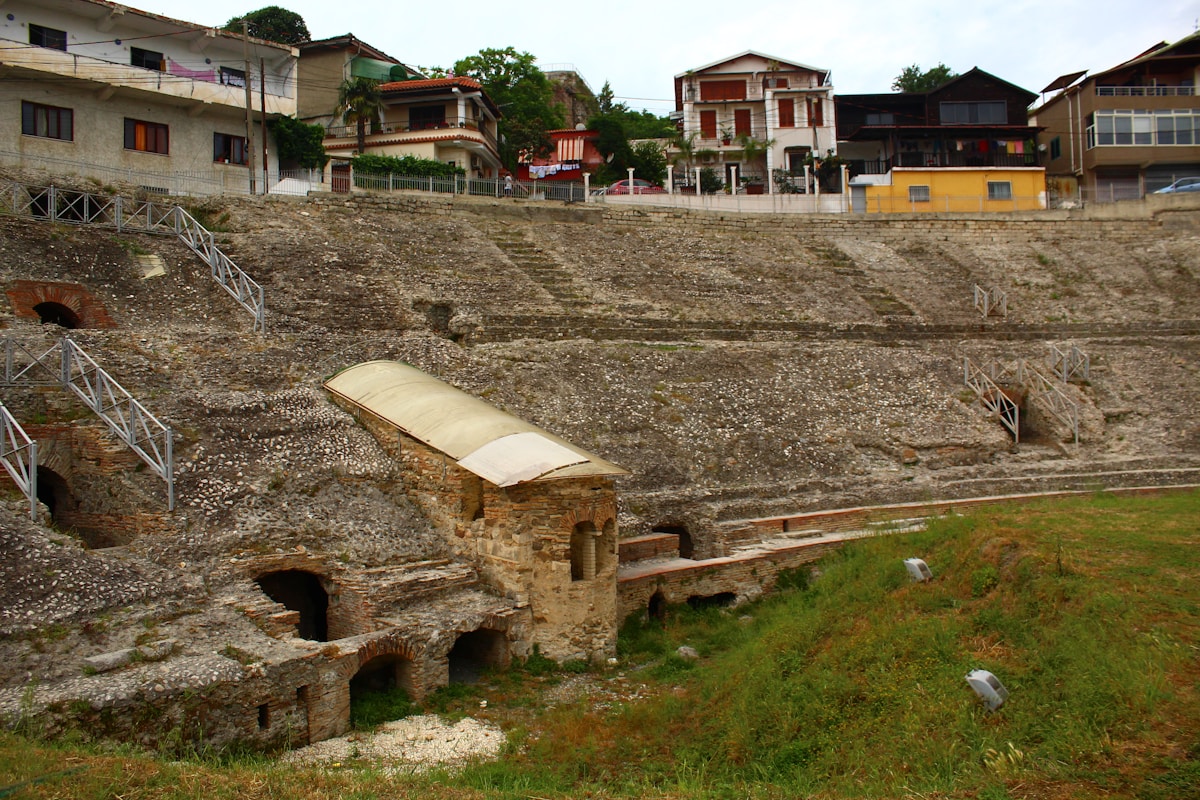
Durrës is one of the oldest cities in the Balkans and Albania’s most important Adriatic port. Founded as Epidamnos by Greek colonists in 627 BC and renamed Dyrrachium under Roman rule, it was one of the key entry points to the Roman Via Egnatia - the great highway connecting Rome to Constantinople. Layers of Greek, Roman, Byzantine, Venetian, and Ottoman history are visible in the surviving monuments scattered through the city.
This is not a polished heritage city - Durrës is a working port with a sprawling modern fabric and a beach resort strip that handles most of Albania’s summer coastal traffic. But its historical core is genuinely significant and underdeveloped in terms of visitor numbers relative to its historical weight. Here is everything you need to plan a visit. All prices approximate as of 2026.
Historical context
Epidamnos/Dyrrachium was one of the most contested cities of the ancient world - its wealth and strategic position on the Adriatic made it a target repeatedly. Julius Caesar and Pompey fought a significant engagement near the city in 48 BC; it later became a major Byzantine naval base and endured sieges by Goths, Normans, Serbs, and Venetians before falling to the Ottomans in 1501.
The Ottoman period lasted until 1912 - long enough to shape the urban fabric of the upper town. Italian colonial-era buildings from the 1930s are also visible in parts of the city centre.
The Roman Amphitheatre
The single most impressive sight in Durrës. Built in the 2nd century AD, the amphitheatre could hold 15,000–20,000 spectators and was one of the largest in the Roman Balkans. It remained in use through the 6th century, was subsequently incorporated into the Byzantine city fabric, and was not formally excavated until 1966.
The excavation revealed a remarkable survival: inside the amphitheatre’s structure, a small Byzantine chapel was built in the 5th–6th century, its walls lined with early Christian mosaics depicting figures of the period. These mosaics - unusual for their context inside a former gladiatorial arena - are visible from the viewing area.
Practical information:
- Entry approximately €3–5 (verify at the gate - pricing has varied in recent seasons)
- Open approximately 9am–5pm daily in season; shorter hours in winter
- Allow 30–60 minutes for a thorough visit
- No guided tours on-site; English-language information boards are present
- Located in the upper town, approximately 10–15 minutes on foot from the main bus station
Archaeological Museum
The Archaeological Museum of Durrës is among the strongest in Albania. The collection covers the city’s occupation from Greek through Roman and early Byzantine periods. Key exhibits include:
- Greek-era funerary objects - ceramic vessels, jewellery, and burial artefacts from the original Epidamnos settlement
- Roman-era sculpture and architectural fragments - marble portrait busts, column capitals, inscriptions
- Mosaic fragments - detailed floor mosaics from Roman-period buildings
- Illyrian artefacts - items from the pre-Greek Illyrian tribal period
- Byzantine coins and objects - from the period when Dyrrachium was a key imperial port
Practical information:
- Entry approximately €3
- Open approximately 9am–4pm; closed Mondays
- Labels in Albanian and English
- Allow 1–1.5 hours
- Located near the waterfront, within walking distance of the amphitheatre
Byzantine city walls
Sections of the Byzantine defensive walls built in the 5th–6th century AD remain standing in the upper town. The most accessible stretch is near the amphitheatre - heavy stone fortifications with semicircular towers, a visible relic of the city’s importance as a Byzantine naval base. No admission charge; walk alongside them freely.
The walls were significantly expanded by the Venetians in the 15th century - look for changes in construction style and stone quality between the Byzantine and Venetian sections.
Venetian Tower
The most visible Venetian-era survival in Durrës, a 15th-century defensive tower in the upper old town. Exterior viewing only in most seasons; the surrounding streets of the old town are worth exploring for the layered architecture - Ottoman stone houses alongside Venetian fortifications and early 20th-century Italian-colonial buildings.
Waterfront promenade
The main promenade (Rruga Tregtare) runs along the seafront and is the social hub of modern Durrës. At sunset it fills with families, couples, and cafe-goers - a very Albanian evening scene of ice cream, slow walks, and espresso. The best view of the bay is from the northern end of the promenade, looking back toward the city and the tree-covered hills behind.
Restaurants along the promenade serve fresh Adriatic seafood (grilled bream and bass approximately €10–15/person) and standard Albanian dishes. Quality is consistent rather than exceptional; the setting and evening atmosphere are the draw.
The beach
Durrës Beach is the closest sandy beach to Tirana and the most visited beach in Albania by volume. At approximately 8–10 km long, it can absorb the summer crowds, but it is not the country’s most scenic or cleanest shoreline. Sunbed hire approximately €5–10/day.
Useful for a short swim after sightseeing. Not a beach holiday destination in competition with Ksamil, Dhermi, or Himara.
Where to stay
Most visitors base themselves in Tirana and day-trip to Durrës. If staying overnight:
- Hotel Aragosta - beachfront hotel with sea views; approximately €60–90/night; good location for both beach and city
- Shkëmbi i Kavajës hotels - cluster of hotels at the scenic rocky promontory south of the city; approximately €50–80/night
- City-centre guesthouses - basic but functional; approximately €30–50/night
Getting there
- From Tirana: buses run approximately every 15–20 minutes from the New Bazaar bus terminal, journey 40–45 minutes; approximately €2–3. Last bus back to Tirana departs approximately 8–9pm - verify locally
- From Kruje: furgon approximately 35–40 minutes, approximately €2
- Within Durrës: the amphitheatre, museum, walls, and waterfront are all walkable from the bus/furgon station; allow 15 minutes on foot to the amphitheatre uphill. City taxis approximately €2–5
Day trip itinerary (8 hours from Tirana)
| Time | Activity |
|---|---|
| 9:00 | Bus from Tirana New Bazaar |
| 9:45 | Arrive Durrës, walk to amphitheatre |
| 10:00–11:00 | Roman Amphitheatre |
| 11:00–11:30 | Byzantine walls walk and Venetian Tower |
| 11:30–13:00 | Archaeological Museum |
| 13:00–14:00 | Lunch on the waterfront promenade |
| 14:00–15:30 | Beach swim |
| 15:30–16:30 | Old town and Great Mosque |
| 17:00 | Bus back to Tirana |
Budget guide
| Category | Daily cost |
|---|---|
| Entry fees (all main sights) | €8–12 |
| Lunch (waterfront restaurant) | €10–18 |
| Dinner (seafood) | €12–20 |
| Bus Tirana return | €4–6 |
| Sunbeds (optional) | €5–10 |
Plan your trip: Browse Albania tours and guided excursions including Durrës historical walking tours and Tirana–Durrës combination trips. Hire a car to extend the day to Apollonia ruins, and cover your journey with Balkans travel insurance.