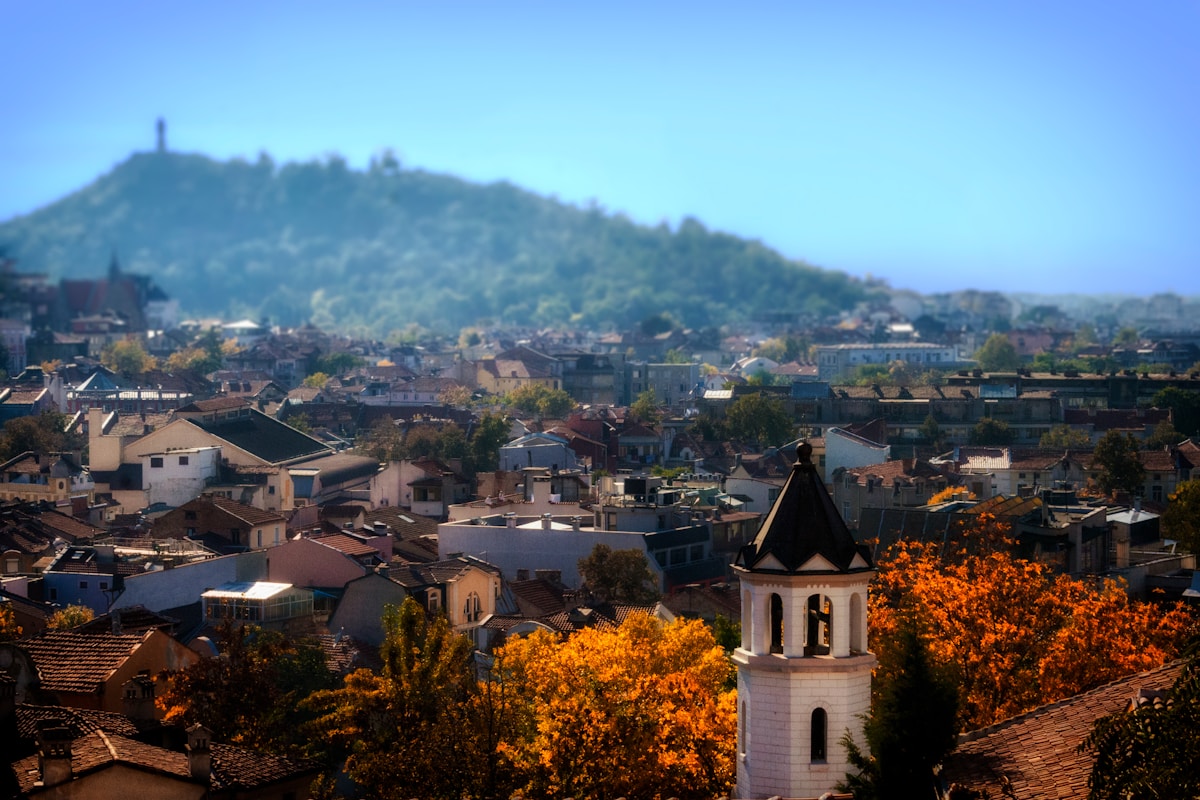
Plovdiv is one of the oldest continuously inhabited cities in Europe — the Nebet Tepe hill has evidence of settlement going back 6,000 years — and the most compelling cultural destination in Bulgaria after Sofia. The three hills (Nebet Tepe, Dzhambaz Tepe, and Taxim Tepe) of the Old Town hold 19th-century National Revival mansions, a Roman amphitheatre, Byzantine walls, and Ottoman mosques in a compact area that takes half a day to walk properly. The Kapana district below adds the contemporary layer.
Here is a breakdown of the best tours in 2026 by traveller type.
Top Plovdiv Tours at a Glance
| Tour | Duration | From (approx) | Best For |
|---|---|---|---|
| Plovdiv Old Town Walking Tour | 2–3 hrs | €12 | First-timers, history lovers |
| Old Town Food & Wine Tour | 3 hrs | €35 | Food lovers, wine enthusiasts |
| Kapana Arts District Tour | 2 hrs | €15 | Contemporary culture visitors |
| Rila Monastery Day Trip | Full day | €40 | History lovers, religious architecture |
| Rhodopes Mountains Day Trip | Full day | €35 | Hikers, village culture |
| Wine Tour to Thracian Valley | Full day | €55 | Wine lovers, vineyard visits |
| Private Plovdiv Walking Tour | 2.5 hrs | €85 | Private groups, families |
Browse all Plovdiv tours on GetYourGuide
For First-Time Visitors: The Three Hills and Roman Theatre
Plovdiv’s Old Town occupies three hills above the Maritsa River and is the largest pedestrianised historic district in Bulgaria. The entry from Dzhumaya Mosque (15th century, the largest Ottoman mosque in Bulgaria) leads up Saborna Street through the core of the National Revival quarter to the three hilltops.
The Old Town walking tour (approximately €12, 2–3 hours) covers the Roman amphitheatre (2nd century AD, still used for performances), the Dzhumaya Mosque, Sveta Bogoroditsa Church, the Hisar Kapia gate, and the hilltop views from Nebet Tepe — the highest of the three hills at 210 metres, with views over the Rhodope mountains to the south. A guide is most useful for identifying the National Revival houses and explaining the layering of Bulgarian, Ottoman, and Roman history on the same geography.
Book directly: Plovdiv Old Town Walking Tour — from approximately €12 per person as of 2026, covers the Roman theatre, National Revival mansions, and hilltop viewpoints.
Dzhumaya Mosque (free entry) and the Ancient Stadium of Philippopolis (partially visible through glass beneath the central square, free) are both accessible from Dzhumaya Square — the Roman chariot-racing stadium lies directly beneath the main pedestrian shopping street and is visible from street level.
For Food and Wine Lovers: Bulgarian Cuisine and Thracian Wine
Plovdiv’s food scene benefits from its position in the Thracian Valley — the most productive wine region in Bulgaria, producing primarily Cabernet Sauvignon, Merlot, and Syrah. The local food culture is heavier on vegetables and dairy than Sofia: lukanka (spiced cured sausage), kyufte (seasoned meat patties), tarator (cold yoghurt soup with cucumber and walnuts), and shopska salata (the Bulgarian national salad of tomato, cucumber, and white brine cheese).
The Old Town food and wine tour (approximately €35, 3 hours) covers the Kapana district for craft beer and small plates, a traditional Bulgarian restaurant in the Old Town for main dishes, and a wine bar with Thracian Valley wines. This combines the contemporary (Kapana) and traditional (Old Town) food cultures effectively.
Book directly: Plovdiv Food and Wine Tour — approximately €35 per person as of 2026, covers Kapana, traditional restaurant, and Thracian wine tasting.
Thracian Valley wine day trip (approximately €55, full day): most major wineries in the Thracian Valley are 30–60 minutes from Plovdiv by car. Guided tours (approximately €55–70) visit two family wineries with cellar tours and tasting menus, and typically include a vineyard lunch. The Bessa Valley and Castra Rubra wineries produce the region’s most awarded bottles.
For History Lovers: National Revival Houses and Byzantine Plovdiv
The Ethnographic Museum (Argir Kuyumdzhioglu House, approximately €5 as of 2026) is the best single interior in Plovdiv — an 1847 National Revival mansion with original furniture, costumes, and craft tools from the Bulgarian renaissance period. The wood-carved ceilings are exceptional.
The Regional Ethnographic Museum (Balabanov House) and the House of Hindliyan (approximately €3–4 each as of 2026) are the best alternatives for National Revival interiors. The Hindliyan House has an unusual Indian-influenced guest reception room painted with murals of European cities the merchant owner visited.
Ancient Philippopolis: Plovdiv was founded as Philippopolis by Philip II of Macedon in 341 BCE on the site of a Thracian settlement. Walking tours that cover the archaeology — the visible Roman forum fragments beneath the post-office building, the stadium, the amphitheatre — give a better spatial sense of how the ancient city was oriented relative to the medieval and modern city above.
Best Day Trips from Plovdiv
Bachkovo Monastery (30km south): founded in 1083 by a Georgian commander in Byzantine service, Bachkovo is Bulgaria’s second-largest Orthodox monastery and contains 11th-century frescoes in the ossuary chapel — among the oldest surviving fresco cycles in Bulgaria. Entry approximately €2 as of 2026; 45 minutes by bus from Plovdiv.
Rhodopes Mountains (40–90km south): the Rhodopes are a plateau of beech forest, gorges, and traditional Pomak villages (Muslim-heritage Bulgarians) extending to the Greek border. Snezhanka Peak (1,926m) has a cable car from the ski resort at Pamporovo (approximately €10 return as of 2026); the Trigrad Gorge and Devil’s Throat Cave (approximately €4 entry) are the most visited natural sites.
Rila Monastery (130km northwest): feasible as a long day from Plovdiv (2.5 hours by car or bus), though closer from Sofia. The UNESCO World Heritage monastery with its 19th-century arcaded courtyard and Ivan Rilski tower is the most important Orthodox site in Bulgaria.
Practical Tips for Booking Plovdiv Tours
- Plovdiv independently vs. guided: the Old Town is one of the most walkable historic districts in the Balkans and does not require a guide. Guidebooks and the Plovdiv tourist office (on Saborna Street) provide good free maps. A guide adds most value for the Roman history layers and the National Revival interior context.
- Kapana timing: evenings from 7pm are when the district is at its best — the street art is better lit, the bars and restaurants are full, and the atmosphere is distinctly different from the daytime tourist circuit.
- Roman Theatre summer performances: the amphitheatre hosts opera, classical music, and international acts in July and August. Tickets sell out quickly; check the Plovdiv Opera schedule.
- Photography in the Old Town: the light is best on the east-facing facades in the morning (8–10am) and the west-facing facades (including Hisar Kapia) in late afternoon. The hills can be glaring in midday summer light.
- From Sofia: trains are cheap and reliable (approximately €8, 2 hours). Last train back to Sofia leaves approximately 8:30pm — enough for a full day in Plovdiv.
Browse all Plovdiv tours and activities
For a full stay plan, our Plovdiv city guide covers the Old Town layout, accommodation, and the best months to visit. If you’re combining Plovdiv and Sofia, our day trips from Sofia guide covers the logistics.