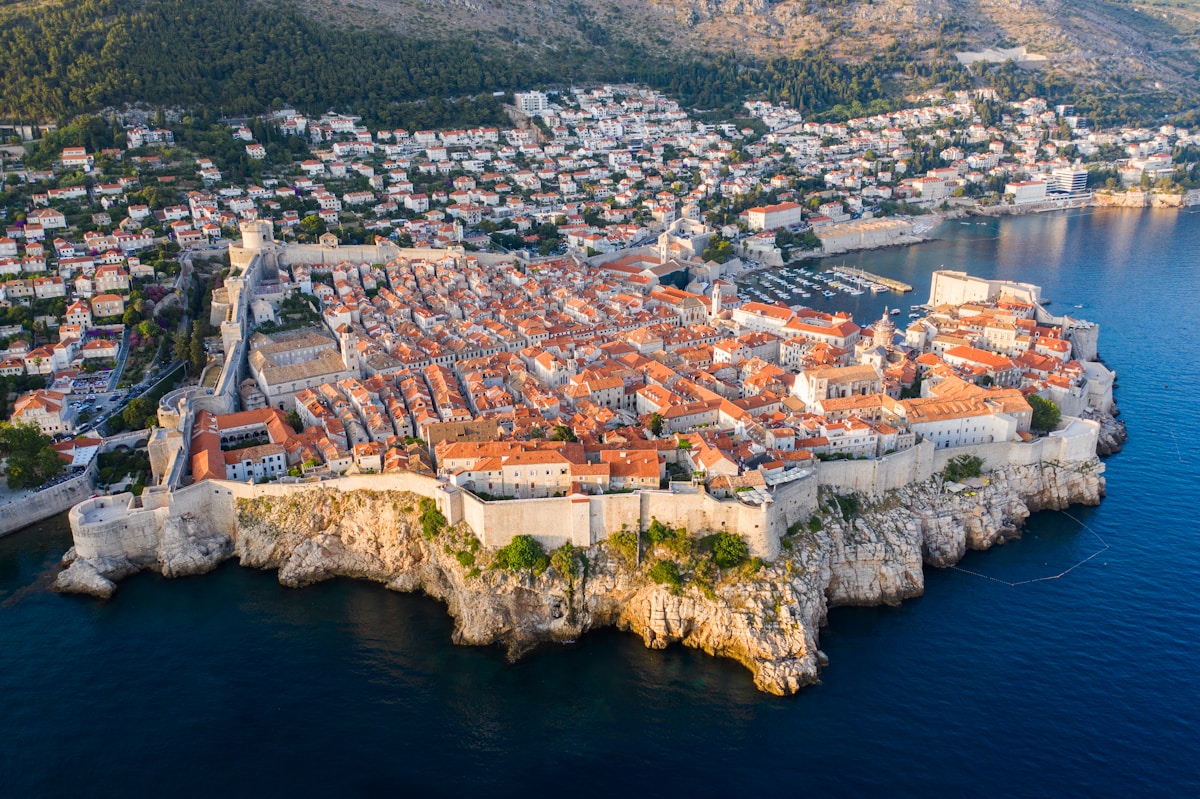
Dubrovnik is one of the most beautiful cities in the Mediterranean, and also one of the most tourist-saturated. That tension shapes the café experience here: you are drinking your espresso on the same limestone street that kings, poets, and traders walked for six centuries, and you are doing it alongside several thousand cruise ship passengers. The cafés are genuinely good — coffee culture is serious throughout Croatia — but the context requires some navigation. All prices in euros (€) and approximate.
The café culture in Dubrovnik
Dubrovnik’s café scene centres on Stradun, the 300-metre limestone main street of the Old Town, where café tables spill out under stone archways and the people-watching is extraordinary. The tradition of the korzo — an evening stroll along Stradun where locals see and be seen — means that café culture here has a distinctly social character. Morning espresso is consumed quickly at the bar; afternoons and evenings are for longer stays.
The best food at Dubrovnik cafés leans local: bagels with local smoked fish, platters of Dalmatian prosciutto and pag cheese, bruschetta with olive oil from nearby Pelješac. Café Festival serves a brunch menu that draws both residents and visitors — the menu emphasises fresh local ingredients over the tourist-facing pizza-and-burger template common elsewhere in the Old Town.
The price of coffee is higher here than anywhere else in Croatia: espresso from €1.80–4 in Old Town locations. Gruz and Lapad, the residential neighbourhoods outside the walls, bring prices back down to Dalmatian norms (€1.50–2.50) and offer a calmer working environment.
The best cafés in Dubrovnik
Café Festival — Stradun, near the Franciscan monastery
Café Festival occupies prime position on Stradun near the Franciscan monastery, one of the most photographed corners of the Old Town. The indoor space is a cozy retreat from summer heat and noise; the outdoor terrace faces the main street and delivers an uninterrupted view of Dubrovnik’s daily theatre. In the evenings, live piano — played by a regular performer named Anna — fills the space.
The menu is more substantial than most Old Town cafés: the Salad Niçoise, a platter of local meats and cheeses, and the house cheesecake called “Festival” are regulars on the menu. Coffee is traditional Croatian style rather than specialty — good, not exceptional.
- Espresso: €1.80–2.50
- Cappuccino: €2.50–3.50
- Brunch dishes: €8–14
- Pastries: €3–5
- Hours: Approximately 8am–midnight
- Neighbourhood: Old Town, Stradun
- WiFi: Approximately 15–25 Mbps
Buzz Bar — side street near Pile Gate
Buzz Bar is on a side street at Prijeko ul. 21, away from Stradun’s main flow. This location keeps it quieter than the terrace spots on the limestone strip. Regulars come for good Croatian wine, craft beer, coffee, and a soundtrack that leans toward good music rather than ambient tourist noise. Staff are unhurried about longer stays.
Coffee is sourced from local Croatian suppliers rather than specialty roasters. Prices are at the more accessible end of Old Town options. This is the spot that feels most like a neighbourhood bar that happens to be inside a UNESCO city rather than a tourist production.
- Espresso: €1.50–2
- Cappuccino: €2–2.50
- Beer: €3–5
- Hours: Approximately 9am–midnight
- Neighbourhood: Old Town, Prijeko street
- WiFi: Approximately 10–20 Mbps
Akademis Academia — away from the Stradun flow
Akademis sits slightly removed from the heaviest foot traffic, giving it a calmer atmosphere than the terrace cafés directly on Stradun. The indoor seating has enough space for comfortable laptop use and the noise stays lower through most of the day. Good for sustained 2–4 hour sessions if you are working in the Old Town and need to stay within the walls.
- Espresso: €1.20–2
- Cappuccino: €2–3
- Hours: Approximately 8am–10pm
- WiFi: Available; adequate for standard tasks
Cogito Coffee — specialty coffee in the Old Town
Cogito (connected to the Zagreb-based Cogito roastery, one of Croatia’s most respected specialty coffee operations) is the best coffee quality available inside the Old Town. Small space — approximately 10 seats — which limits extended stays during busy periods, but for a focused 1–2 hour morning session with a genuinely excellent flat white or pour-over, it is the correct choice.
- Espresso: €2–3
- Filter coffee: €3–4
- Hours: Approximately 8am–6pm
- Best for: Coffee quality; short focused morning sessions
Gruz neighbourhood — the practical choice for working
For any serious work day, leave the Old Town. The Gruz neighbourhood, centred around the main ferry terminal and port, has cafés that serve a local residential and working population. Prices are approximately half those of Stradun; the tables are less crowded; the WiFi is more reliable. A morning based in Gruz, followed by an afternoon sightseeing session in the Old Town, is the most efficient structure for a working day in Dubrovnik.
The bus from Lapad to the Old Town runs every 10–15 minutes for approximately €2 — the logistics are simple.
- Coffee in Gruz: Approximately €1.50–2.50
- Compared to Old Town: Quieter, cheaper, faster WiFi, more local
Remote work practicalities
The noise problem: Cruise ships dock in Dubrovnik from approximately 9am through the afternoon. When multiple ships arrive simultaneously (a regular occurrence in summer), Stradun fills within minutes. Working before 9am or after 5pm is markedly different in tone.
WiFi: Old Town stone walls reduce indoor WiFi signal quality. Speeds of 10–25 Mbps are typical — sufficient for document work and email, unreliable for video calls or large uploads. A Croatian SIM card (Tomato Telekom, A1 Croatia, T-Mobile) with 4G data is more dependable and costs approximately €5–15 for a week’s data.
Power outlets: Limited at most café tables. Bring a charged portable battery; wall-adjacent seats are worth arriving early for.
Cost: A day’s worth of coffees and a pastry or light lunch in the Old Town will run €14–22. Gruz brings that to €8–12. Factor both into your daily budget. Book accommodation in Dubrovnik in the Old Town for atmosphere or in Gruž for the best-value working base.
Better alternatives for extended remote work
Dubrovnik is not a digital nomad hub. For stays longer than 3–4 days where work is the priority:
| City | Why better | Daily café cost |
|---|---|---|
| Split | Specialty coffee infrastructure, cheaper, less crowded | €6–10 |
| Zadar | COIN coworking (€10–18/day), year-round local café culture | €6–12 |
| Rovinj | Dedicated coworking at €10/day, strong Istrian food scene | €8–14 |
Suggested daily structure for working from Dubrovnik
- 7:30am: Arrive at Café Festival before the cruise ships dock
- 8:00–10:30am: Main work block — quiet Old Town, good morning light
- 10:30am onward: Tourist crowds arrive; switch to hotel room or Akademis
- 1:00pm: Gruz for a cheap local lunch; or Uje-style deli food
- Afternoon: City walls walk (approximately €35 entry, allow 2 hours), Lokrum island, or a day trip to Kotor
Plan your trip: Pick up a Balkans eSIM before arrival - essential for remote work across multiple countries. Travel insurance that covers laptop and equipment is worth adding too. Browse activities in Dubrovnik for days when you’re off the laptop.