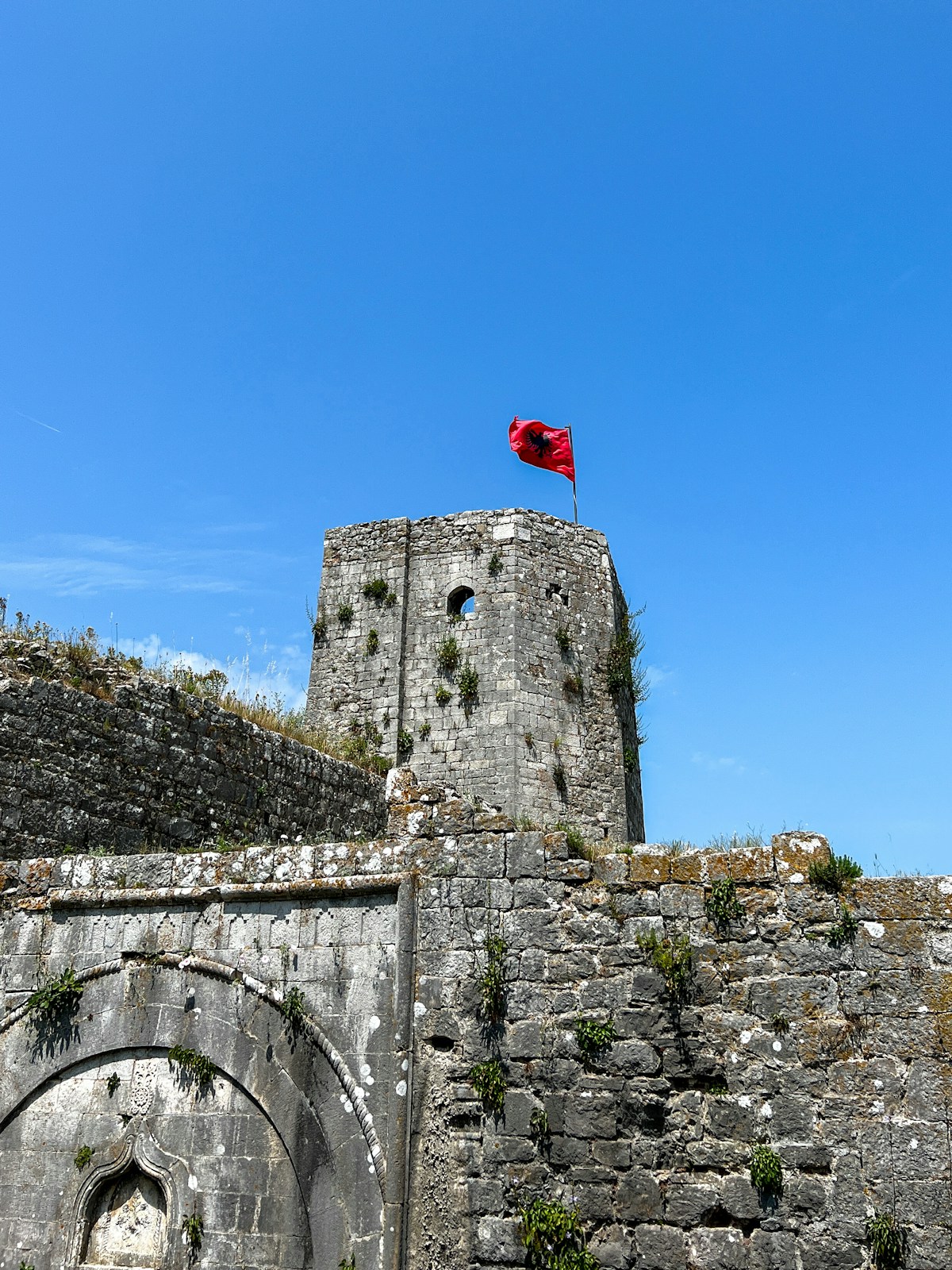
Krujë is built around two things: its castle and its bazaar. They are inseparable from each other and from the story of Albania - the castle is where the national hero made his last stand, and the bazaar below has traded continuously for centuries around that mythology. This guide covers both in depth. All prices approximate as of 2026.
The castle: history
Krujë’s hilltop has been fortified for at least 1,500 years. The earliest surviving walls date from the Byzantine period (5th–6th century AD). In the medieval period it became the seat of the Kastrioti family - the Albanian nobility from which Gjergj Kastrioti, known as Skanderbeg (a corruption of the Ottoman “Iskender Bey”), would emerge.
Skanderbeg’s story: Born around 1405, Gjergj Kastrioti was given as a political hostage to the Ottoman court as a child - standard practice for the sons of vassal princes. He converted to Islam, proved himself an exceptional military commander, and was appointed a sanjak-bey (provincial governor) under the name Skënderbeu. In November 1443, during the confusion of an Ottoman defeat at the Battle of Niş, he took his Albanian cavalry, rode back to Krujë, and declared himself Christian once more.
For the next 25 years - until his death from fever in 1468 - Skanderbeg defended Albania against repeated Ottoman campaigns, winning an estimated 25 battles against numerically superior forces. Krujë itself was besieged three times and held all three times. His eagle double-headed crest became so synonymous with Albanian resistance that it remains on the Albanian flag today. He died never having been defeated in battle; Albania fell to the Ottomans within a decade of his death.
The castle today
The castle grounds cover a significant area on the hilltop and include the museum building, the ruins of the old inner citadel, defensive towers, and open areas with views in all directions. The walls at different points represent Byzantine, medieval Albanian, and 15th-century military construction.
What to look for inside the walls:
- The main defensive tower - the oldest surviving structure within the castle complex
- The original cistern - a deep stone water storage system essential for withstanding sieges
- The ruins of the inner palace complex - partially exposed foundations
- The south-facing viewpoint terrace - the best panoramic viewpoint over the plains
The castle exterior (from the town): The most dramatic view of the castle is from below - the Albanian flag flies at the summit and the main building of the Skanderbeg Museum, with its distinctive contemporary-Albanian architecture, is visible from the road. The contrast of the modern museum design inside ancient walls is deliberate and striking.
Skanderbeg National Museum
The museum was built in 1982 during the communist period and designed by Pranvera Hoxha - a state-sponsored commission that simultaneously served both genuine national heritage goals and political purposes. Despite its origins, it is an effective and serious museum.
What to see:
Ground floor - Skanderbeg’s campaigns: A chronological account of the Ottoman invasions and Skanderbeg’s defensive campaigns from 1443 to 1468. Maps, battle plans, and documentary material covering the key engagements. The three sieges of Krujë are covered in particular detail.
Upper floor - artefacts and regalia: Armour and weapons associated with the period, including replicas of Skanderbeg’s helmet (the original is in Vienna’s Kunsthistorisches Museum) and his sword. Seals, manuscripts, and diplomatic correspondence from the European powers who funded and supported Skanderbeg’s resistance (the Pope, Venice, and Naples all sent aid at various points). The double-headed eagle crest - Skanderbeg’s personal symbol - is shown in multiple contexts.
The League of Lezhë: The 1444 gathering of Albanian noblemen that Skanderbeg organised to unite Albanian resistance is depicted in a large painted frieze. It was the closest the medieval Albanian territories ever came to political unification.
Practical:
- Entry (castle + museum combined): approximately €4–6
- Open: approximately 9am–5pm; shorter hours November–March; closed Mondays in some seasons - verify locally
- Labels: Albanian and English
- Time needed: 45–90 minutes, depending on level of interest
The Old Bazaar (Çarshia e Vjetër)
The bazaar below the castle is one of the most genuinely functioning Ottoman-era bazaars in Albania. Unlike many “restored” historic bazaars in the Balkans, Krujë’s has retained working craft workshops alongside the antique and souvenir stalls.
Physical layout: A single main cobblestone lane approximately 200 metres long, with side alleys branching off. Traditional stone and wood shopfronts with overhanging upper floors - the architectural form unchanged since the 18th century. The lane leads from the main square uphill toward the castle.
What you will find:
Antiques and collectables (the most interesting category): Coins from Ottoman, communist-era, and earlier periods; military badges and insignia from the communist Albanian army and police; old photographs; ceramics; traditional lamps and household objects; hand-painted icons (from approximately €20 to several hundred euros for older pieces). The quality and authenticity of antiques varies widely between stalls - handling items to assess quality is expected.
Embroidered textiles: Traditional Albanian embroidery (qëndisje) is the dominant craft. Tablecloths, cushion covers, wall hangings, and traditional costume elements. Prices range from approximately €8 for a small item to €40–80 for large, high-quality pieces. Machine-produced items are mixed in with handmade work - the handmade pieces have less regular stitching and typically use natural thread rather than synthetic.
Copper and brasswork: Trays, coffee sets, traditional long-handled coffee pots (çelik), candlesticks, and decorative plates. Prices from approximately €8–40. Quality varies; the heavier pieces with more detail represent better value.
Traditional Albanian daggers (jatagan/thika): Ornamental and historic blades, ranging from cheap decorative pieces (approximately €10) to genuine antiques (from approximately €50). Handle with care and check export regulations before purchasing anything described as genuinely old.
Traditional costumes: Full traditional Albanian regional dress is available from several stalls - primarily as display items or for cultural events.
Bargaining in the bazaar:
- Engage with stall holders naturally before making an offer - brief conversation is expected
- Opening offers should be approximately 60–70% of the stated price
- Expect to settle at approximately 70–80% of the original price
- Cash only at most stalls; carry Albanian lek (euros are widely accepted but at slightly worse rates)
Eating in and near the bazaar
Several small restaurants operate along and near the bazaar lane:
- Tradita Geg & Tosk - the most atmospheric option, in a traditional Albanian house on the bazaar lane; serves byrek (approximately €1.50–2), tave kosi (baked lamb with yoghurt, approximately €8–10), and grilled meats; the terrace has views toward the castle
- Homemade burek stalls - several stalls sell fresh byrek for approximately €1–2; the spinach-and-cheese version (byrek me spinaq) is the standard
- Small cafés - Albanian espresso approximately €1; Turkish coffee approximately €1.50
A full traditional lunch in the bazaar should cost approximately €10–15 per person.
Visiting logistics
Getting there: Bus from Tirana New Bazaar (approximately 1 hour, approximately €2–3); or furgon from Durrës (approximately 35 minutes, approximately €2). The bus drops at the main square in the lower town.
To the castle from the square: 30–40 minute uphill walk via a clear path through the lower town and bazaar; or taxi approximately €3–5.
Best order: Start at the castle first (do the climb in the morning while it is cooler) and work your way down through the bazaar at a more leisurely pace after the museum.
Photography: The castle terrace offers the best panoramic photos. The bazaar lane photographs best in the morning light, before the midday sun creates harsh shadows.
Plan your trip: Browse Albania tours including Krujë guided visits for day trips from Tirana with local guides. Hire a car to combine Krujë with Durrës and the coast, and protect your journey with Balkans travel insurance.