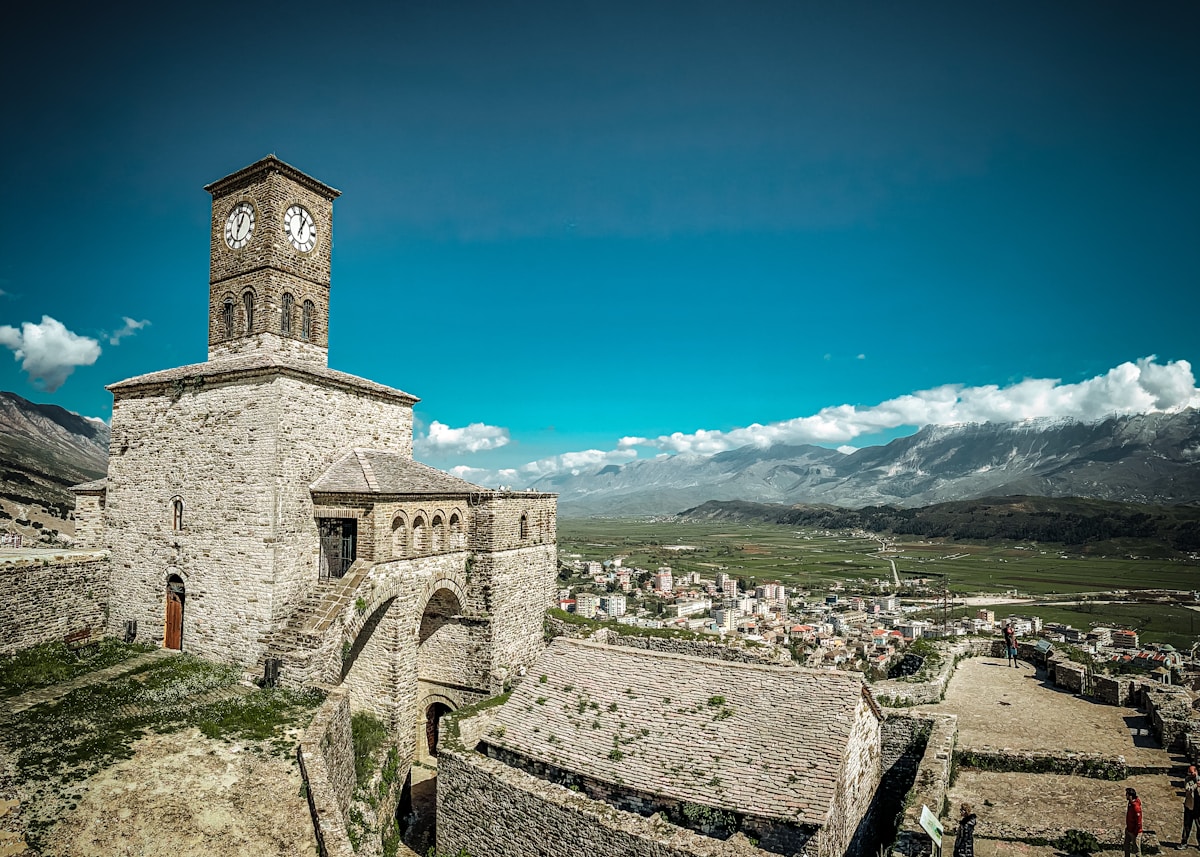
Gjirokaster’s cuisine leans on mountain lamb, wild greens, rice, and sheep dairy. The dishes are slow-cooked, herb-led, and tied to Ottoman recipes that have remained largely unchanged. Mint, cinnamon, and olive oil are the defining flavours.
Signature Gjirokaster dishes
Qifqi (€3–5/plate) - Gjirokaster’s most famous and locally specific dish. Rice balls fried in seven-socket pans with mint, butter, fennel, and pepper. Crisp outside, fluffy inside. Found almost exclusively in this region; try at Restorant Gjoca or Taverna Tradicionale Kardhashi. This is the one dish to seek out specifically in Gjirokaster.
Oshaf (€2–4) - The city’s signature dessert. Sheep milk pudding baked with dried figs, sugar, cinnamon, and cloves. Thick and comforting. Argjiro Patisserie is the most cited source; also available at bazaar stalls.
Lakrori me thember (€8–12) - Turkey pie made with one-year-old bird, onions, filo, and spices. The most substantial traditional main in Gjirokaster. Best at Restorant Tradicional Urat or Odaja; pair with raki (€3/glass).
Byreku qahi (€3–5) - Spinach pie with dill, olive oil, and pepper. A locally specific twist on byrek using qahi spinach. Available fresh at Snack Bar Simple or Gjoca.
Shapkat (€4–6) - Sorrel and corn pie; tangy and seasonal. Found at the bazaar and Taverna Tradicionale Kardhashi.
Mains and meats
Pasha qofte (€7–10) - Meatball soup with rice. Gjoca’s version is the most recommended.
Qofte fërguara (€6–9) - Spiced meatballs fried crisp. Available at Te Fucite and Kujtim.
Stuffed peppers (€5–8) - Rice, onion, and herbs baked in peppers. Common at Odaja; vegetarian-friendly.
Imam bajaldi (€5) - Aubergine stuffed with tomatoes. Kujtim’s version.
Hand-rolled pasta with lamb (€10–14) - Available at cooking classes (GetYourGuide, approx. €30) and a few traditional restaurants.
Street snacks and sides
- Tarator (€3) - Cold cucumber and walnut yoghurt soup; refreshing
- Japrak/sarma (€4) - Rice and mint stuffed in grape leaves; mint-forward
- Petulla (€2) - Fried dough with jam; standard bazaar breakfast
- Hot-sand coffee (€1) - Slow-brewed at Gjyshi Café; a ritual worth joining
Sweets and drinks
- Trileçe (€3) - Three-milk soaked cake; Argjiro Patisserie’s version
- Baklava / sheqerpare (€2–4) - Nut-honey layers or syrup cookies
- Raki (€2/shot) - Grape firewater; the standard local toast
- Shesh i Zi wine (€3/glass) - Local red; pairs well with lamb and meats
Where to eat
| Dish | Restaurant | Price |
|---|---|---|
| Qifqi | Restorant Gjoca | €3–8 |
| Oshaf | Argjiro Patisserie | €2–4 |
| Lakrori | Restorant Tradicional Urat | €8–12 |
| Byreku qahi | Snack Bar Simple | €3–5 |
| Shapkat | Taverna Tradicionale Kardhashi | €4–6 |
| Pasha qofte | Odaja | €7–10 |
Sample day of eating in Gjirokaster
- Breakfast: Petulla and byrek at a bazaar stall - €4
- Lunch (post-castle): Qifqi and stuffed peppers at Gjoca - €12
- Afternoon snack: Tarator - €2
- Dinner: Lakrori and pasha qofte at Urat, with oshaf to finish - €20 per person
Daily food budget: €30–40. Portion sizes are generous - sharing 3–4 dishes between two is the standard approach. Book accommodation in Gjirokaster in the old bazaar or near the castle hill — the historic area puts you within walking distance of the best traditional restaurants.
Plan your trip: Browse guided tours of Gjirokaster - food tours and guided walks are a great way to get into the eating scene. Sort travel insurance before you fly, and grab a Balkans eSIM for data when you land.