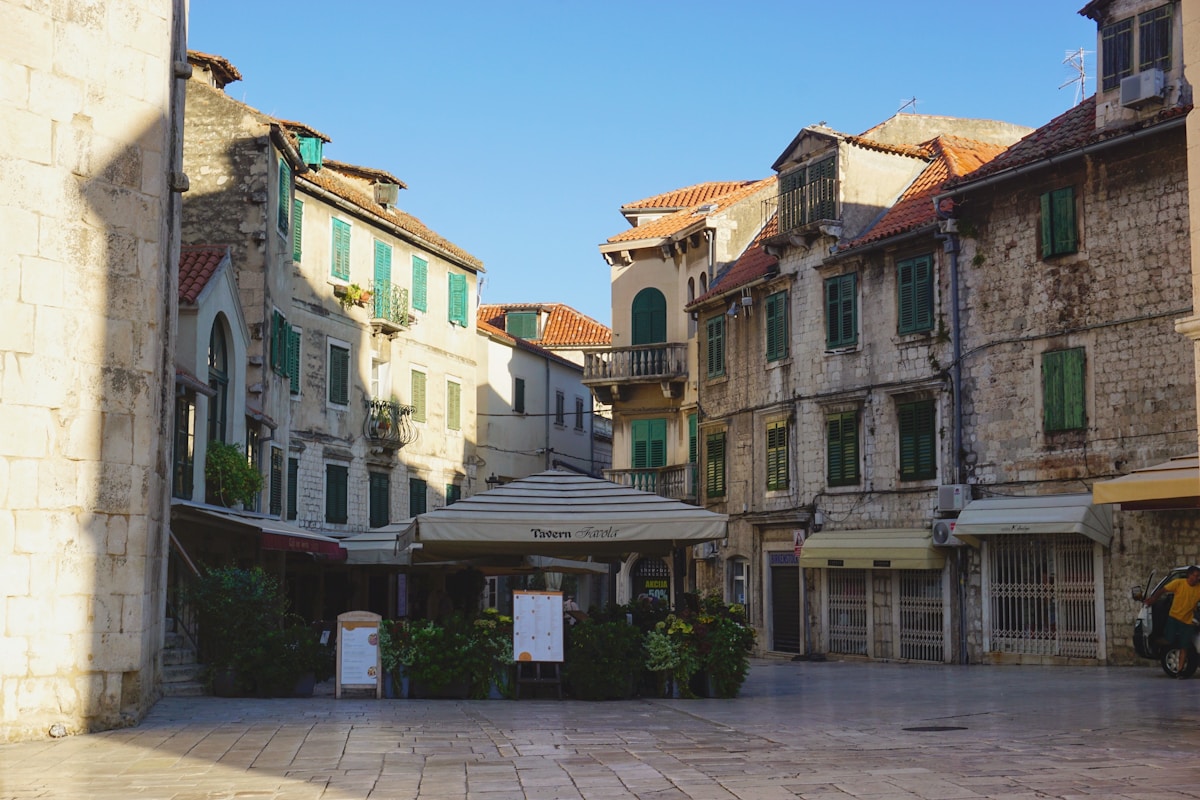
Split sits inside two thousand years of stone — Diocletian’s Palace is not a museum piece but a living neighbourhood where people hang laundry out of imperial-era windows and queue for coffee before work. The café scene that has developed here over the last decade reflects that duality: old walls, modern brewing standards, and a local population that takes its espresso seriously. All prices in euros (€).
The café culture in Split
Croatia’s coffee tradition runs long and deep, and Split is no exception. Locals call the morning ritual simply kava — a short, strong espresso consumed standing at a bar or seated at a terrace table. But over the past decade, a specialty wave has taken hold in the city, driven by a generation of baristas trained on SCA standards and sourcing beans from European micro-roasters. The result is a city where you can have an outstanding pour-over inside a Roman palace and pay under €4 for it.
The pace is unhurried by Northern European standards. You order, you sit, nobody rushes you. A second coffee is expected after an hour or two — that is the social contract in Croatian cafés, and it suits laptop workers just fine. The best spots fill with regulars before 9am: local architects, freelancers, students from the University of Split. Tourists arrive later.
The best cafés in Split
D16 Coffee — Old Town roastery
D16 is a small-batch specialty roaster with its flagship inside Diocletian’s Palace on Dominisova 16, named for the address. The setting is genuinely unusual: stone vaulted ceilings, a mural tracing the history of coffee, and a hatch-window that opens onto a narrow alley. D16 roasts 100% arabica beans in-house to SCA standards, and the result is some of the most technically consistent coffee in Dalmatia.
The oat cortado is the order regulars come back for. Croissants are available most mornings. The space is compact — a few tables inside plus a second quieter room across the alley — but the atmosphere is calm and focused, far from the tourist churn of the Peristyle square nearby.
- Coffee: €2.50–4
- Food: Croissants, pastries from €2
- Hours: Approximately 7:30am–6pm
- Neighbourhood: Inside Diocletian’s Palace, Grad (Old Town)
- What locals order: Oat cortado, single-origin espresso
Tinel Specialty Coffee — Križeva Street
Tinel sits on Križeva ul. 4, a short walk from the Palace in the Grad neighbourhood. Where D16 leans into its historic setting, Tinel is cleaner and more minimal — light wood, good natural light, air-conditioned in summer, and a menu that pulls from Slovenian roaster Stow and Croatian Kava Family. Cold brew with oat milk and the almond-pistachio croissant are the signature orders. Rating of 4.6 out of 5 across 500+ reviews reflects a consistent local following.
The atmosphere is notably calm — this is not a social space for catching up with friends but a place where people arrive with laptops or books. Mornings are the most productive window.
- Coffee: €2.50–4.50
- Food: Almond and pistachio croissants, seasonal pastries
- Hours: Approximately 8am–7pm
- Neighbourhood: Grad, near Old Town edge
- What locals order: Cold brew with oat milk, flat white on Stow beans
Cookie Lab — Bačvice
Cookie Lab is five minutes from Bačvice Beach in the Manuš neighbourhood south of the Old Town. The connection to Cogito roastery (based in Zagreb, one of Croatia’s most respected specialty roasters) gives the coffee genuine quality. The pastry offering is the strongest of any café on this list — local regulars treat it as a proper breakfast stop.
The atmosphere is relaxed and slightly more neighbourhood-feeling than the Old Town spots. Come here for a mid-morning session when you want sea proximity, lighter foot traffic than the Palace, and a genuinely good kouign-amann or cinnamon roll with your espresso.
- Coffee: €2.50–4
- Food: Excellent pastries, €3–5
- Hours: Approximately 8am–5pm
- Neighbourhood: Manuš, near Bačvice Beach
- What locals order: Cortado plus a pastry for breakfast
Kazališna Kavana — Croatian National Theatre
Inside the building of the Croatian National Theatre (HNK Split) in the city’s Stari Pazar area, this café has an entirely different register from the specialty spots above. High ceilings, velvet-adjacent seating, a quieter clientele — academics, theatre staff, older regulars who read newspapers rather than scroll phones. Coffee is traditional rather than specialty; the espresso is solid rather than exceptional. The real draw is the atmosphere and the low noise level.
- Coffee: €2.50–4
- Hours: Approximately 8am–10pm on performance days; check ahead
- Neighbourhood: Grad, near Stari Pazar market
- Best for: Writers, anyone needing sustained quiet
VOGA Specialty Coffee — quieter alternative
VOGA is a smaller specialty café recommended by local freelancers as a calmer alternative to D16 when the Old Town gets crowded. Details are less publicly documented than the above, but reviews consistently flag the quiet atmosphere and solid coffee quality. Good for a 1–3 hour morning block.
- Coffee: €2.50–4
- Best for: Light work sessions; quieter than D16 at peak times
Bepa — neighbourhood breakfast
A small café-bar near the Old Town popular for morning work sessions. The coffee is traditional rather than specialty, the prices are the lowest on this list, and the atmosphere is entirely local — no filtered light or exposed-beam aesthetic, just good coffee at good prices.
- Coffee: €2–3.50
- Best for: Early starts; budget-conscious regulars
Remote work practicalities
WiFi: Split’s café WiFi has improved significantly. D16 and Tinel both offer free WiFi on request; speeds are typically adequate for document work and video calls. Mobile data via a Croatian SIM (A1, HT Mobile) provides a more reliable backup for anything bandwidth-intensive — a week-long data plan costs €5–15 and covers the whole city well.
Power outlets: Not every table has socket access. At D16 specifically, arrive before 9am to secure a wall-side seat with charging. At Tinel and Cookie Lab, outlets are more consistently available.
Best working hours: Before 10am for quiet conditions across the board. The post-lunch 2–5pm window is productive at Tinel and Bepa. Avoid D16 mid-morning in July and August when the Palace fills with day-trippers.
No dedicated coworking: Unlike Zadar (COIN) and Rovinj (Coworking Rovigno), Split has no established day-pass coworking space. Hotel lobbies at the Cornaro, Radisson Blu, and Ambasador are the practical alternative for full-day sessions.
Quick reference
| Café | Coffee price | Neighbourhood | Best for |
|---|---|---|---|
| D16 Coffee | €2.50–4 | Inside Diocletian’s Palace | Focused morning work |
| Tinel | €2.50–4.50 | Grad, Križeva Street | Long productive sessions |
| Cookie Lab | €2.50–4 | Manuš / Bačvice | Breakfast + beach proximity |
| Kazališna Kavana | €2.50–4 | Near Stari Pazar | Quiet concentration |
| VOGA | €2.50–4 | City centre | Quieter alternative |
| Bepa | €2–3.50 | Near Old Town | Early starts, local vibe |
Book accommodation in Split inside Diocletian’s Palace or in the neighbourhoods north of the Old Town for walking access to every café on this list.
Plan your trip: Pick up a Balkans eSIM before arrival - essential for remote work across multiple countries. Travel insurance that covers laptop and equipment is worth adding too. Browse activities in Split for days when you’re off the laptop.