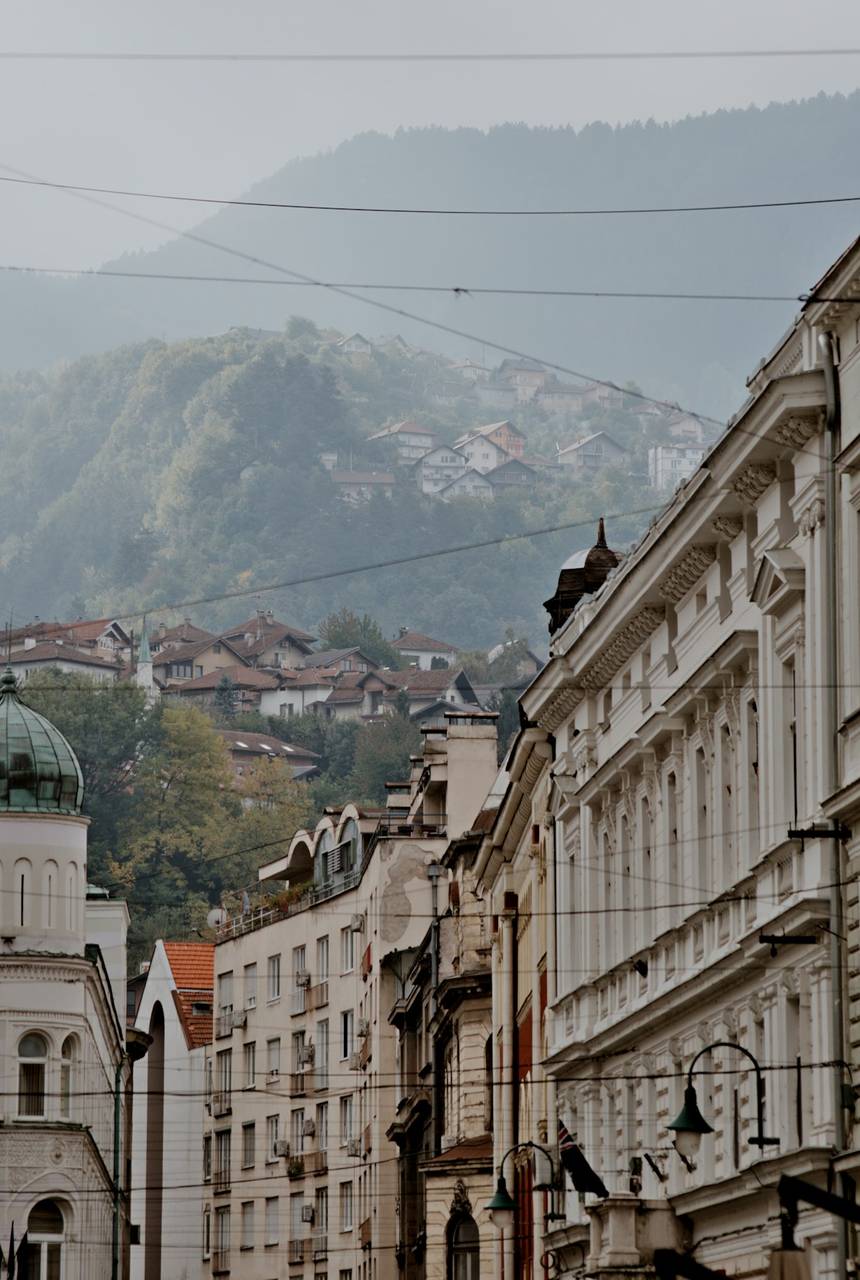
Sarajevo had a coffee culture before Vienna did. The Ottoman coffeehouses that spread through the city from the 16th century made Bosnia one of the earliest places in Europe where sitting over a cup for hours was not just acceptable but expected. That spirit has never left. Today, cafés in Baščaršija and across the centre are places where regulars spend a morning over a single džezva, nobody checks your watch, and the pressure to leave or reorder is almost nonexistent. For remote workers, that tolerance is a practical asset.
The Bosnian Coffee Ritual
If you have not ordered traditional Bosnian coffee before, understanding the serving format matters. It arrives on a small copper tray: the džezva (the pot, already brewed), a fildžan (the small handleless cup), a šećerluk (a small container of sugar cubes), and often a piece of ratluk — Turkish delight — on the side. You pour slowly, let the grounds settle for a moment, then sip. The whole thing is designed to take time.
This is not the place for a quick espresso on a laptop. But it is exactly the mindset that makes Sarajevo cafés comfortable for long working sessions — locals already assume you will be there a while.
A traditional Bosnian coffee costs 2–3 BAM (≈1–1.50 €). Specialty espresso drinks run 3–5 BAM (≈1.50–2.50 €) at third-wave spots. Either way, it is among the most affordable café working in Europe.
Best Cafés for the Full Experience: Atmosphere and Work Combined
Kawa — Specialty Coffee, Dženetića čikma, Centar
Kawa is widely credited as Sarajevo’s first serious specialty coffee shop, operating out of a compact space in the Centar district. The interior is open-plan with warm lighting, and the menu runs through single-origin filters and espresso-based drinks alongside carefully chosen teas and pastries. Opening hours run from 8:00 to 22:00 most days.
Locals and remote workers alike land here for morning sessions. The seating is plug-friendly around the edges, and the Wi-Fi is reliable. Coffee runs 3–5 BAM (≈1.50–2.50 €). Arrive before 10:00 for the most productive hours — afternoons fill up with a social crowd who come for the quality as much as the caffeine.
- Work practicalities: Free Wi-Fi, power outlets at edge tables, best before 11am
- What to order: Single-origin filter or flat white; fresh pastries in the morning
- Best for: Writing, focused reading, and short-to-mid work sessions
Habitus — Modern Brunch Café with Dedicated Digital Nomad Setup, Baščaršija
Habitus sits in Baščaršija and occupies a different category from most cafés on this list: it formally offers digital nomad packages, with a dedicated workspace separate from the café floor. Half-day, full-day, and weekly options give access to stronger connectivity and a quieter seating zone.
The café side is design-focused and comfortable, with a menu that stretches through brunch dishes — salmon brioche, omelette, avocado toast — alongside expertly made flat whites and cappuccinos. The vibe is friendly and international, with staff accustomed to hosting laptop workers from morning through mid-afternoon.
- Work practicalities: Strongest Wi-Fi of any café in the area, formal workspace available, power throughout
- What to order: Flat white with a salmon brioche for a sustained work morning
- Price: Coffee 4–6 BAM; brunch dishes 12–20 BAM (≈6–10 €); nomad workspace from approximately 10–15 BAM for a half-day
- Best for: Full-day remote work, video calls, anyone needing guaranteed connectivity
Ministry of Ćejf — Craft Coffee, Quieter Crowd
Around the SCC area and city centre, Ministry of Ćejf is a carefully curated space that attracts a quieter, coffee-literate crowd. The name itself — ćejf is a Bosnian word meaning pleasurable leisure, ease, unhurried enjoyment — signals what you get here: good coffee at a slow pace, with no pressure to rush.
The space is compact but calm, staff are English-speaking, and the coffee selection is serious. This is not a café people drop into for a quick cup; it is where locals come for extended sit-and-talk sessions, which makes it naturally suited to long working hours.
- Work practicalities: Good Wi-Fi, staff comfortable with laptop campers, small but quiet
- What to order: Craft espresso or batch brew filter
- Price: Coffee 3–5 BAM (≈1.50–2.50 €)
- Best for: Writing, coding, long-form work in a genuinely calm environment
Cafés with Character: The Old Town Working Spots
Fabrika Dalmatinska — Industrial Style, Less Tourist Traffic
Fabrika Dalmatinska sits near the city centre with a converted-industrial aesthetic that appeals to focus-oriented remote workers. It is noticeably quieter than the Baščaršija cluster, which means fewer distractions when the Old Town heats up with midday visitors.
The practical setup — reliable Wi-Fi, plug access, good seating layout — makes it a solid choice for deep-work days when atmosphere matters less than productivity. Coffee costs 2–4 BAM.
- Best for: Deep-work days, longer coding or writing sessions
- Best time: Mornings and early afternoons
Caffe Bar Andar — Traditional Bosnian Coffee Experience
For an authentic traditional coffee experience, Andar is a family-run spot that regulars praise for its Dibek coffee — a coarsely ground traditional blend with a slightly different preparation to standard Bosnian coffee. The space is modest and the prices are very low (coffee from 2 BAM). It is not a laptop powerhouse, but for a morning spent on lighter tasks or reading while drinking genuinely traditional coffee, it earns its place.
- Best for: Experiencing traditional Bosnian coffee culture between work blocks
Remote Work Practicalities
Neighbourhood Strategy
| Area | Best cafés | Suited to |
|---|---|---|
| Baščaršija / Old Town | Kawa, Habitus, Ministry of Ćejf | Atmosphere-plus-work, all-day sessions |
| City centre / Centar | Fabrika Dalmatinska, Metropolis | Quieter focus work, tram access |
Practical Tips
- Best working hours: 8:00–11:00 is the quietest window across all cafés. The 13:00–15:00 lunch rush makes Baščaršija spots busier and noisier.
- Laptops are normal: You will not be the only person working. Sarajevo has a growing freelance and startup community and cafés have adapted.
- Coworking when you need it: For video-call-heavy days or guaranteed silence, Sarajevo has several dedicated coworking spaces in the city centre with proper desks and meeting rooms. Ask at your accommodation for current options.
- Connectivity backup: A local eSIM or SIM card is useful if café Wi-Fi is slow. Bosnia uses BAM; there are no surcharges for card payments at most cafés.
Book accommodation in Sarajevo in Baščaršija or the Centar district — every café on this list is within easy walking distance of both neighbourhoods.
Plan your trip: Pick up a Balkans eSIM before arrival - essential for remote work across multiple countries. Travel insurance that covers laptop and equipment is worth adding too. Browse activities in Sarajevo for days when you’re off the laptop.